

NEW GENESIS-TESTED GLASS TECH TO SOLVE WINTER WINDSHIELD WOES
SEOUL, Oct. 31, 2024 — There’s nothing more aggravating than starting off a bad morning with a frosted windshield. Climbing into the car, already behind schedule, only to be greeted with an ice-covered window can be infuriating.
Hyundai Motor Group (the Group) hopes to tackle this universal inconvenience with its latest technology called Metal-Coated Heated Glass, which is designed to self-heat using a 48-volt power system, melting frost within minutes. It also resists solar radiation without compromising visibility, making it an effective solution for both harsh winters and scorching summers.
Tests on both the Genesis Electrified GV70 and the GV60 have shown promising results.
Metal-Coated Heated Glass
Defrosting windshields in sub-zero temperatures can be a challenging task. Relying solely on heating, ventilation and air conditioning (HVAC) systems is barely enough, mainly because the low thermal conductivity of air hampers the quick circulation of warm air throughout the cabin.
In today’s era of autonomous driving, this issue becomes even more critical, as sensors attached to the windshield play a vital role in collecting essential data for self-driving systems. Any residual frost or moisture on the windshield can impede sensors’ ability to gather crucial information on the road, impacting the reliability and performance of autonomous vehicles.
This is where the Group’s Metal-Coated Heated Glass comes in.
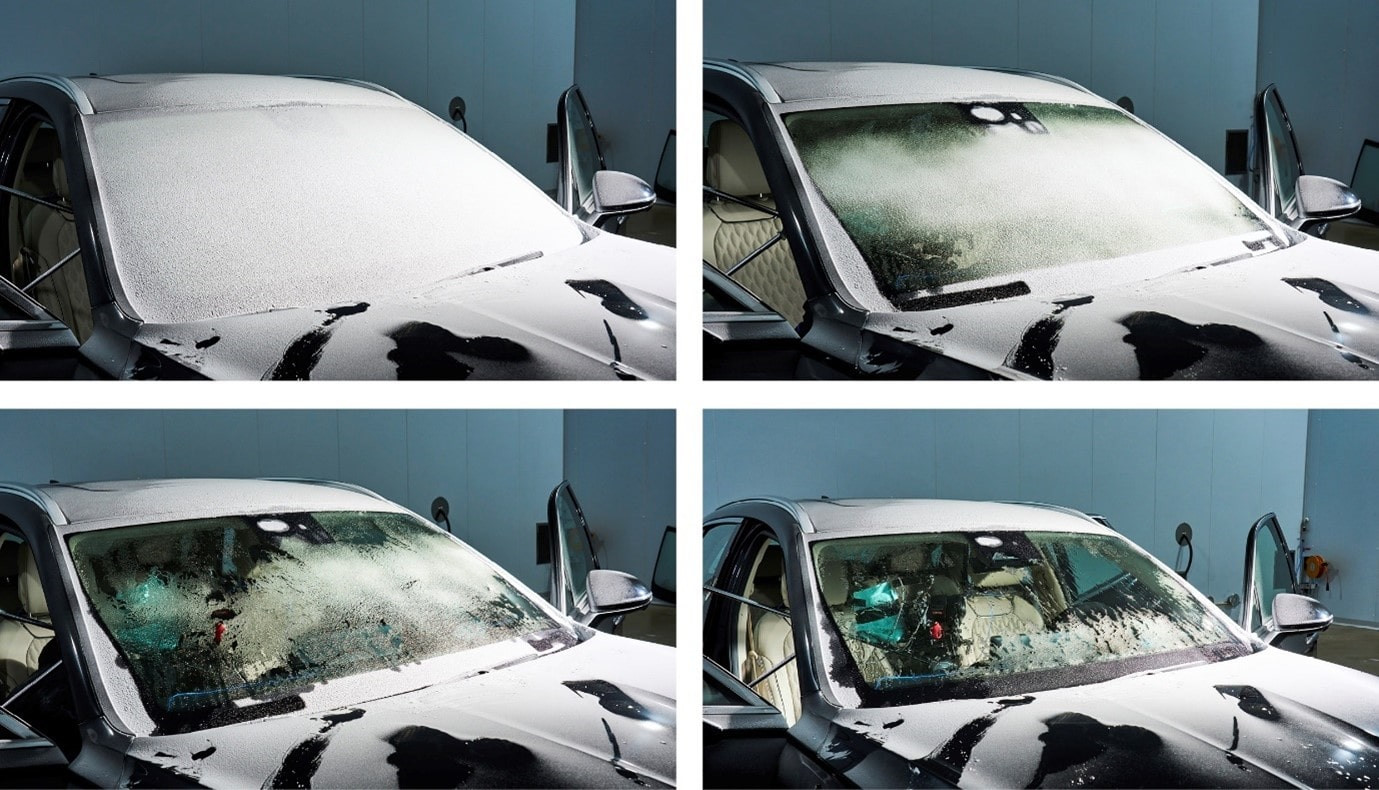
The technology features an inherent glass-heating capability, offering superior defrosting performance. In other words, this special type of glass raises the temperature of the glass itself, allowing for the complete removal of frost.
48-Volt Power System
The key to achieving exceptional defrosting performance with Metal-Coated Heated Glass lies in the adoption of a world-first 48-volt power system, which quickly transmits heat from the electrically powered metal coating to the glass.
The coating applied inside the glass, which consists of nearly 20 layers of metal components including silver, enables the glass to heat up when current passes through the windshield.
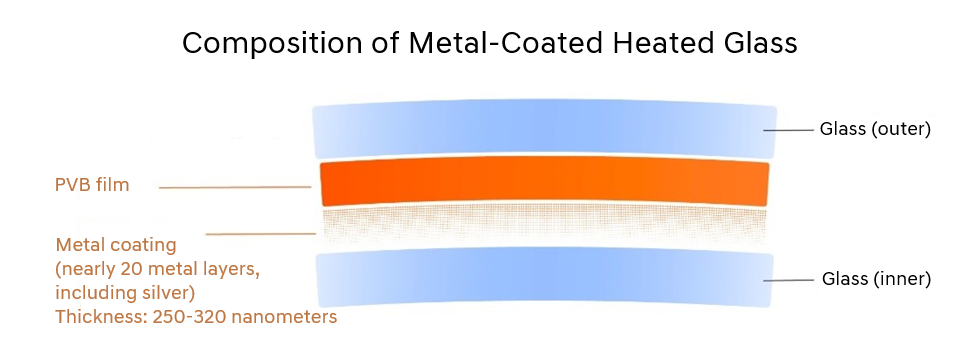
“The 48-volt power system is optimized for electric vehicles (EVs) and plug-in hybrids, which utilize high-voltage battery power,” says Giheon Jeong, Senior Research Engineer at the Group’s exterior engineering design team for mid- and large-sized vehicles, who developed the technology. “It applies higher voltage than the Group’s conventional 13.5-volt power system.”
With a 48-volt power system, Metal-Coated Heated Glass can reach up to 75 degrees Celsius from room temperature. While it’s technically possible to achieve even higher temperatures, the Group has decided to limit the range out of safety precautions, Jeong explains.
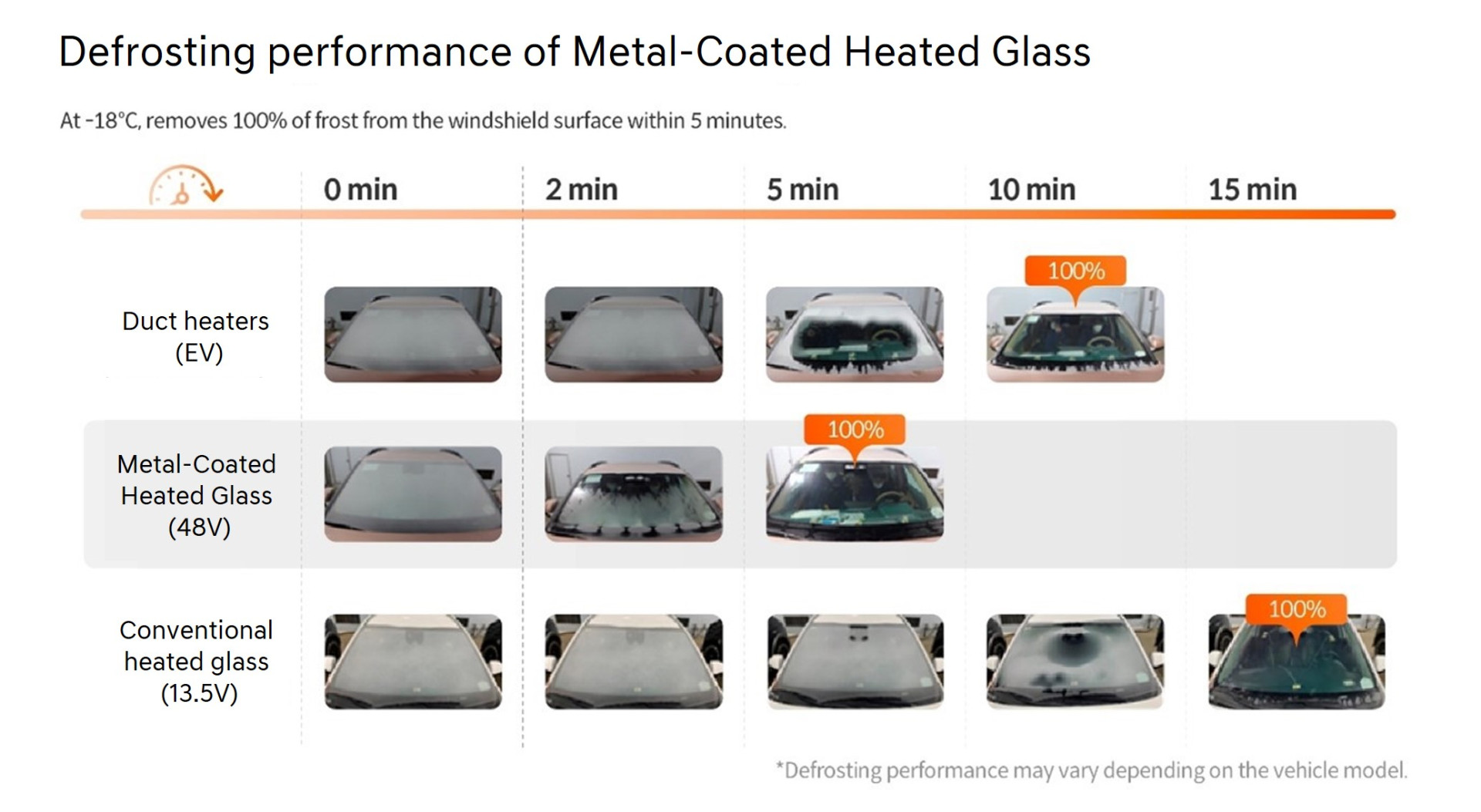
Metal-Coated Heated Glass can remove frost in as little as 5 minutes at temperatures as low as minus 18 degrees Celsius. In comparison, it takes the 13.5-volt power system more than 15 minutes to remove the frost in the same environment.
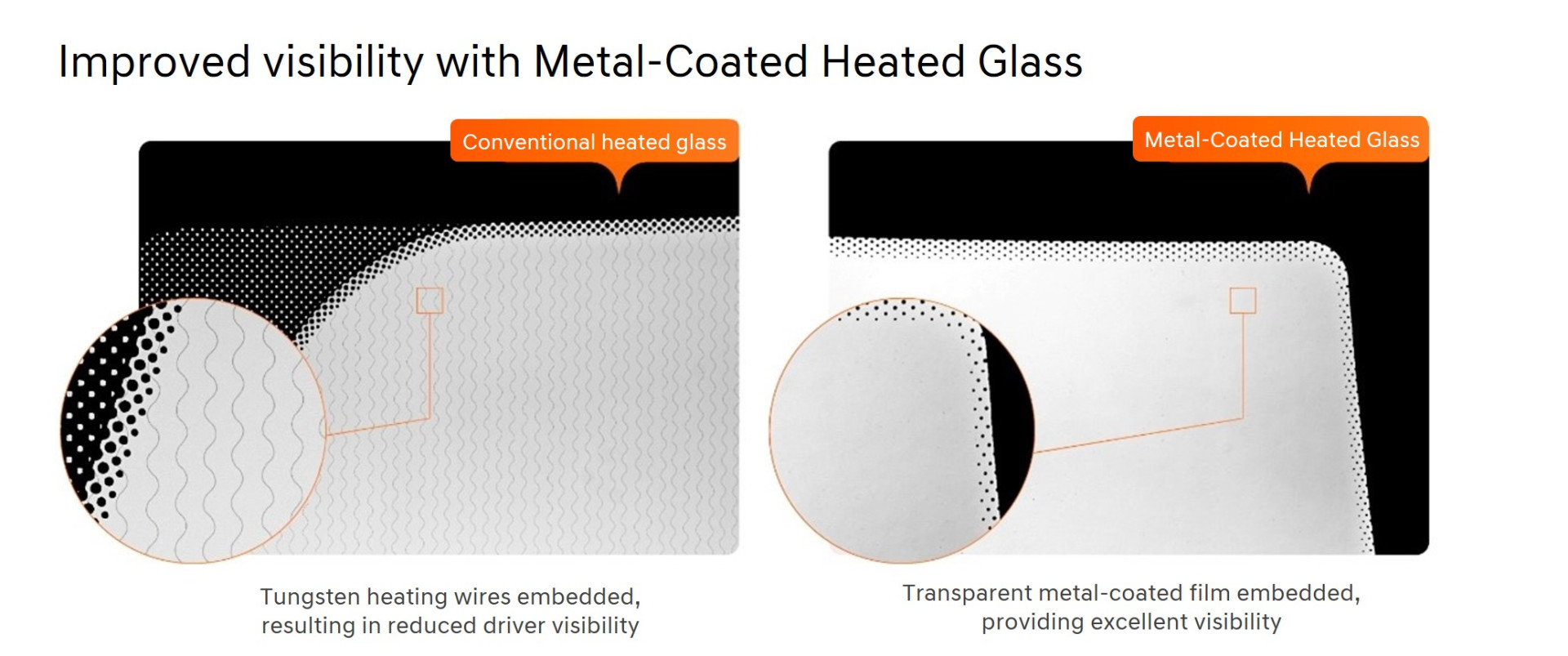
Another notable feature of Metal-Coated Heated Glass is its excellent forward visibility. Conventional heated glass often comes with the drawback of visible tungsten wires, which obstruct the driver’s vision. The Group’s Metal-Coated Heated Glass, on the other hand, features a transparent metal coating, thus providing a clear, undistorted view without any glare or distortion.
The Group has filed for patents for Metal-Coated Heated Glass in Korea and other major foreign markets, with plans underway to incorporate it into future vehicles.
Solar Heat Rejection
Metal-Coated Heated Glass is effective during summer as well.
By reflecting infrared radiation and emitting its own heat, the technology can reject at least 60 percent (according to ISO13837 standards) of the solar heat striking the glass, limiting the rise of cabin temperatures by up to 2 to 3 degrees Celsius.
The technology stands out even when compared to general heat-blocking tinting films.
Most thermal insulation tinting films with the equivalent performance as Metal-Coated Heated Glass have a visible light transmission rate below the standard requirement of 70 percent. As a result, installing such tinting films makes it difficult for drivers to maintain clear vision in adverse weather conditions. In contrast, Metal-Coated Heated Glass not only meets the visible light transmission rate of 70 percent, but also ensures bright and clear visibility.
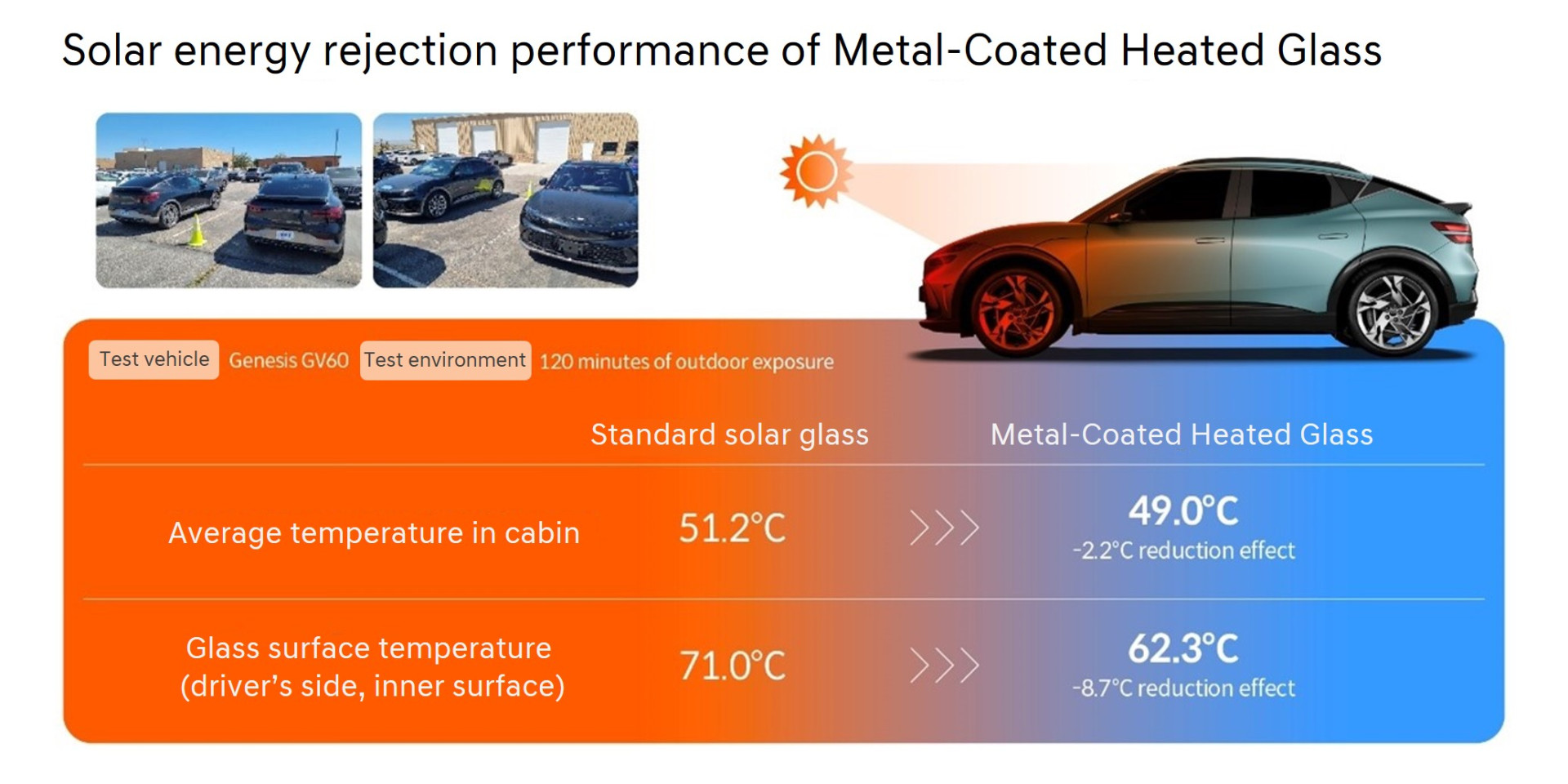
Metal-Coated Heated Glass is also free from the issue of communication interference that’s often found in tinting films. The metal components contained in tinting films can disrupt radio waves and infrared communication, occasionally leading to abnormal operations of cellular communication and GPS signals inside the vehicle.
Metal-Coated Heated Glass, however, leaves areas where heating is unnecessary uncoated, and employs pattern-processing techniques on the metal-coated surface. This effectively allows the glass to maintain the same level of radio wave reception performance as regular glass.
A Step Forward
Looking into the future of mobility design, Metal-Coated Heated Glass could have profound implications.
There’s the potential elimination of air vents on the upper crash pad, used for defrosting and dehumidifying. This could open exciting possibilities for cutting-edge innovations like full head-up displays leveraging the entire windshield, or the integration of big-screen augmented reality navigation systems.
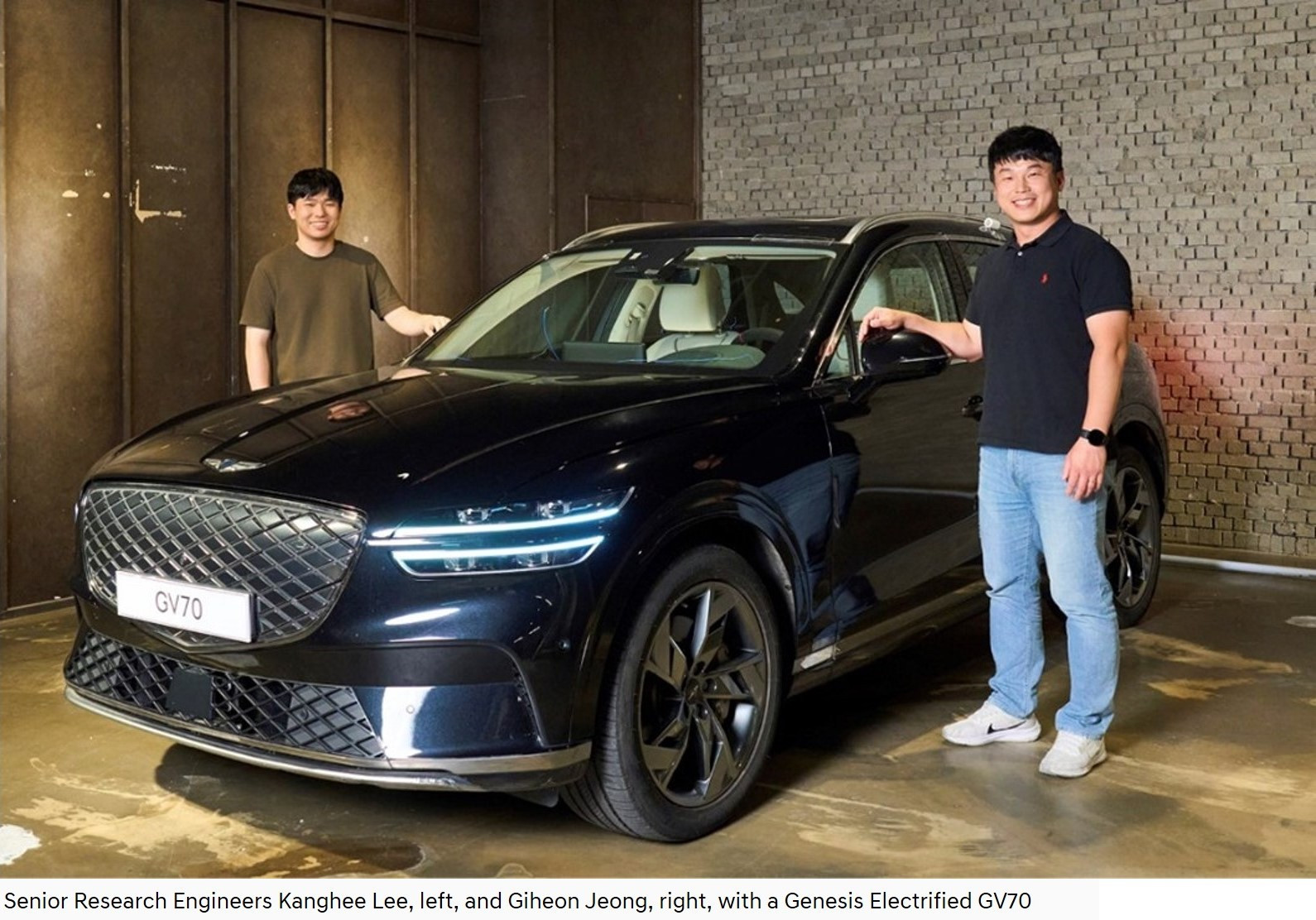
Going forward, Jeong says he anticipates Metal-Coated Heated Glass to play a particularly important role in EVs.
“Efficiently managing thermal energy in EVs not only allows for greater utilization of convenience features inside the cabin, but also helps to increase driving range,” he notes. “We are taking a significant step toward the future of mobility.”