

DRIVING WITH CLEAN SENSORS ON THE ROAD, RAIN OR SHINE
SEOUL, May 10, 2024 — Sensors play a vital role in the smooth operation of vehicles. When self-driving cars are in the picture, safety could depend on them. That’s why keeping them free and clear of any dirt, snow or debris is essential.
To ensure safe driving in any weather condition, Hyundai Motor Group (the Group) is spearheading efforts to create advanced sensor cleaning solutions.
Sensor Cleaning Research
In the case of autonomous vehicles, sensors serve as the eyes of various features like advanced driver assistance systems (ADAS), including automatic braking and lane tracking. Just as foggy glasses can impede vision, the presence of dirt or moisture on sensors can significantly undermine the navigation capabilities of a car.
Much of the Group’s research revolves around providing better solutions to the shortcomings of existing technologies and features.
One has to do with washer fluids. Autonomous vehicles tend to have more sensors than conventional cars, which requires the use of larger amounts of washer fluids — hence, more frequent refills. With washer fluids, the Group is researching ways to reduce fluid consumption per clean while ensuring efficient and effective cleaning.
Recognizing the varying shapes and sizes of sensor types, the Group is also dedicated to developing a universal sensor cleaning system that can adapt to different sensor configurations. This is particularly crucial for cameras and lidar sensors installed in autonomous vehicles, as their shapes and installation locations depend on their specific detection range and characteristics. Having a one-size-fits-all sensor cleaning system would benefit these vehicles by ensuring optimal sensor cleaning regardless of their designs.
Another key research focus is the establishment of domestic production capabilities for sensor cleaning parts, such as nozzles, which are currently sourced from abroad. This initiative, driven by insights gained from the disrupted supply chains during the Covid-19 pandemic, highlights the critical need to secure core technologies to ensure sustainable supply diversification.
Fluid-Based Cleaning Vs. Physical Cleaning
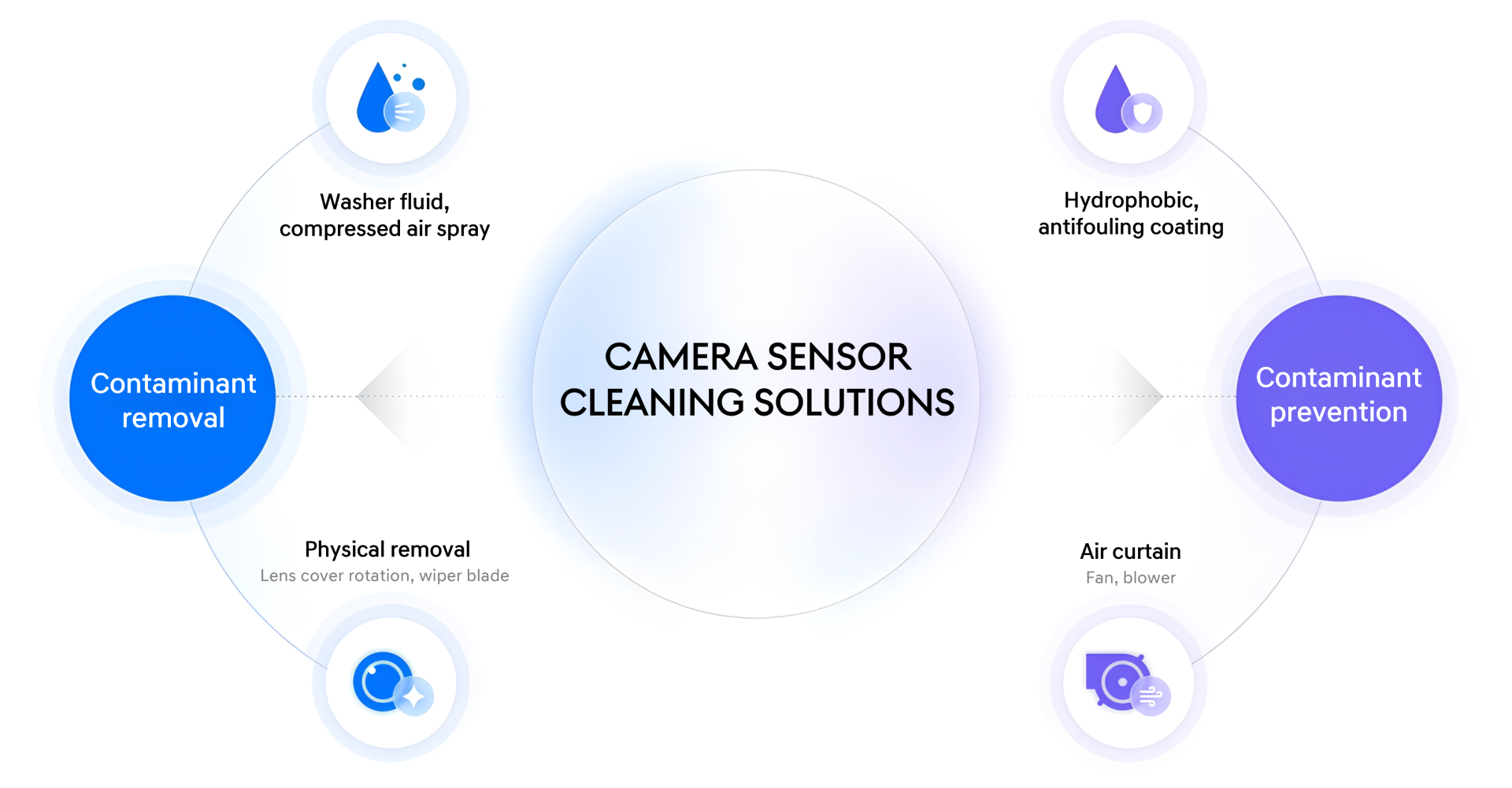
Current technology for cleaning sensors can largely be divided into two methods: physical cleaning and fluid-based cleaning. Physical cleaning involves rapidly rotating lens covers or wiper blades to brush off debris. Fluid-based cleaning involves spraying washer fluids or compressed air to remove contaminants.
The Advanced Body Development Team within the Group’s Mobility Technology Center mainly researches fluid-based cleaning and physical cleaning involving rapidly rotating lens covers.
Fluid-Based Cleaning
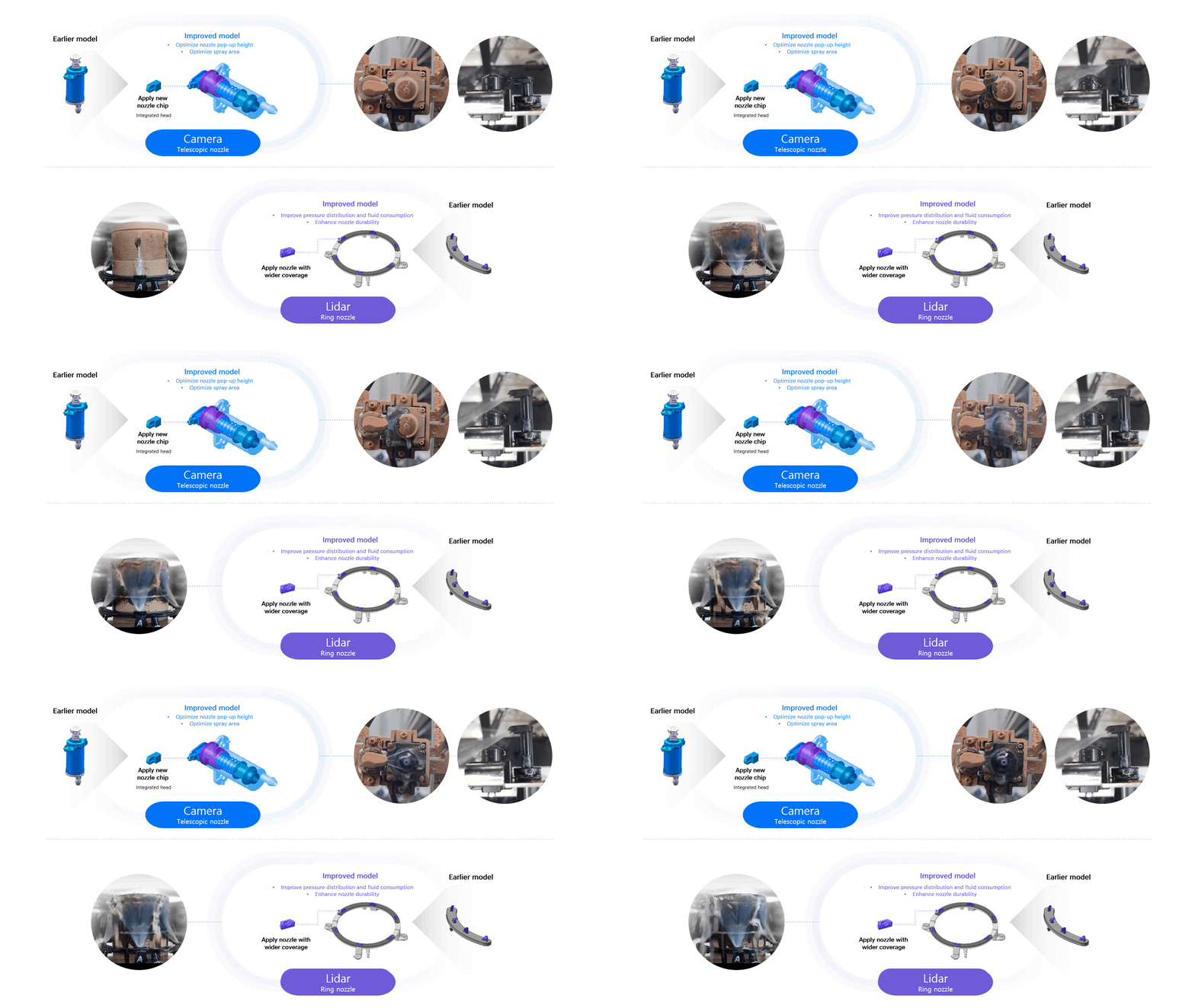
Fluid-based cleaning mainly comprises two methods: one using a “telescopic nozzle” that allows for adjustable height, and the other incorporating a “ring nozzle” that arranges nozzles in a circular shape around the lidar.
The ring nozzle method ensures that the entire 360-degree range of the lidar’s detection area is covered. Unlike cameras, which typically have a detection range of 180 degrees, lidars utilizing the ring nozzle method can measure distances within a maximum angular range of 360 degrees.
The wide angle of cylindrical lidars makes it challenging to evenly spray washer fluid using conventional ring nozzles, which typically spray washer fluid on the lower part of the lidar and rely on pressure to clean the rest of the cylinder. As washer fluids can only be sprayed in narrow areas, this requires the use of multiple ring nozzles.
To tackle this issue, the Group has developed a new ring nozzle that can simultaneously spray the lower and middle sections of the lidar. This technology expands the coverage area, resulting in reduced fluid consumption.
The Group has also further upgraded the telescopic nozzle, which is normally concealed around the camera and pops up only when in use to spray washer fluids on the camera. Unlike conventional telescopic nozzles, the Group’s enhanced version is equipped with an extended guiding line. After reaching the desired spot, the nozzle connects to the fluid supply and releases fluid, enabling more accurate spraying.
Physical Cleaning
While fluid-based cleaning methods typically involve the removal of dirt or other debris, wiping off water droplets on a rainy day necessitates alternative approaches. In response, the Group has turned to physical cleaning techniques utilizing rapidly rotating lens covers.
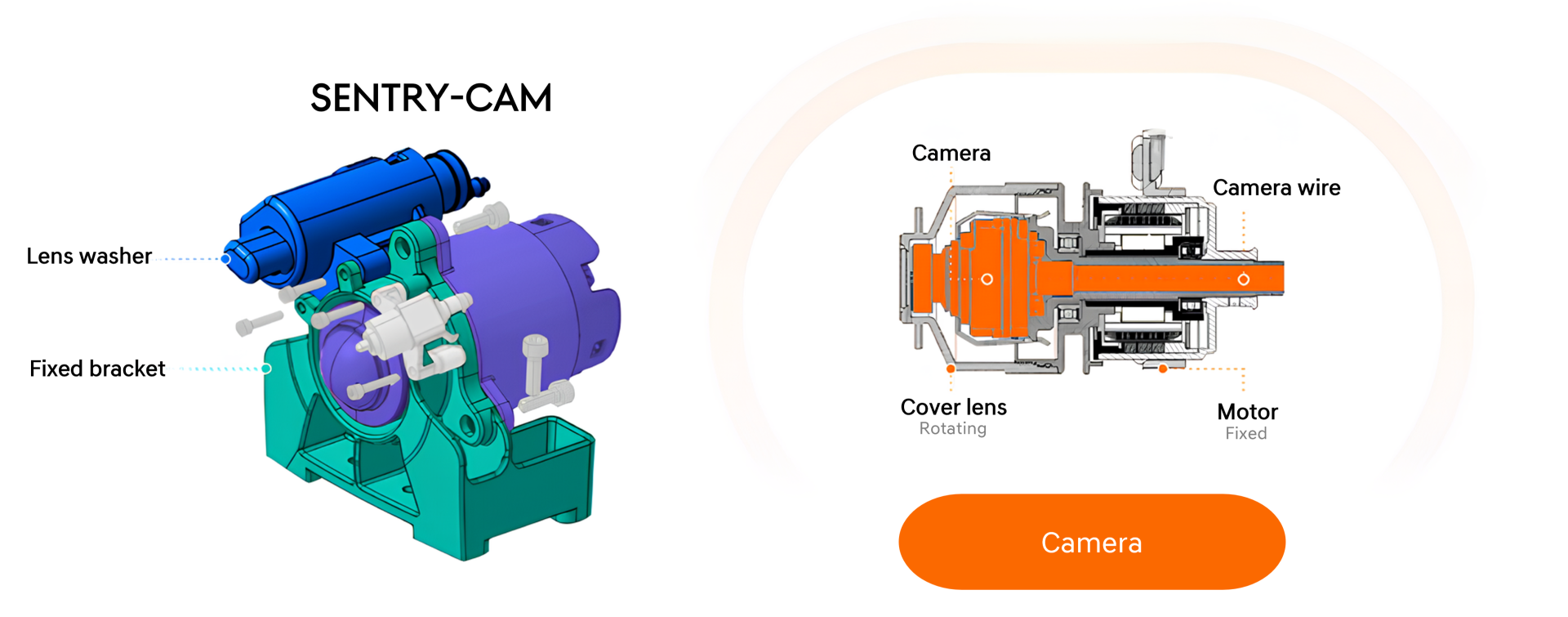
Largely two types of rapidly rotating lens covers have been examined thus far: one called the “Sentry-Cam,” which removes contamination with high-speed rotations of the cover glass, and the “Rotator-Cam,” which combines the rotation of the cover glass with a wiper.
In the Sentry-Cam technique, the cover glass rotates up to 10,000 revolutions per minute.

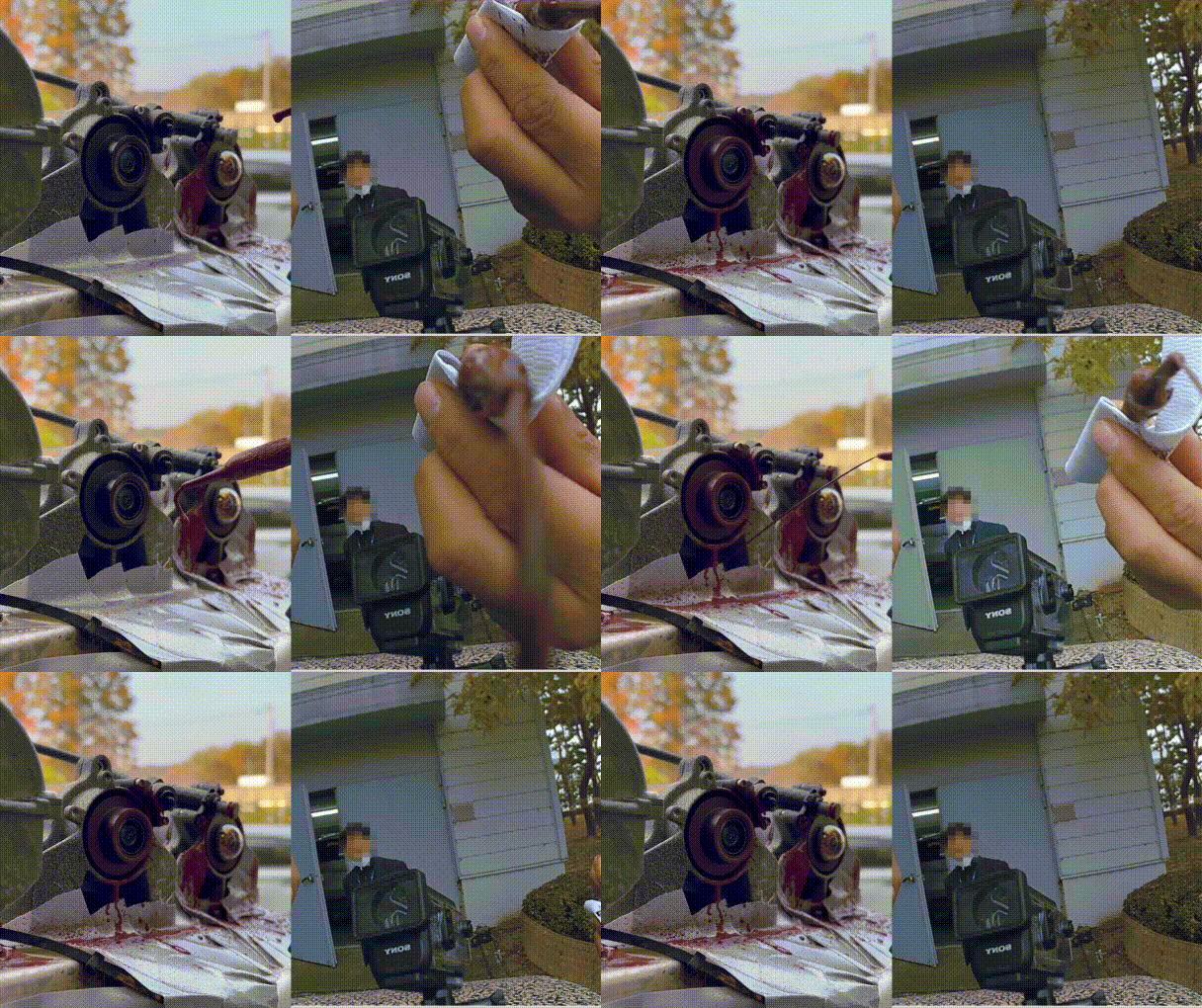
The cover glass in the Rotator-Cam technique rotates at a lower speed but utilizes a washer nozzle and miniature wiper blade. Both techniques can differentiate between dirt and rain using image software, which ensures that the washer fluid step is skipped during a downpour.
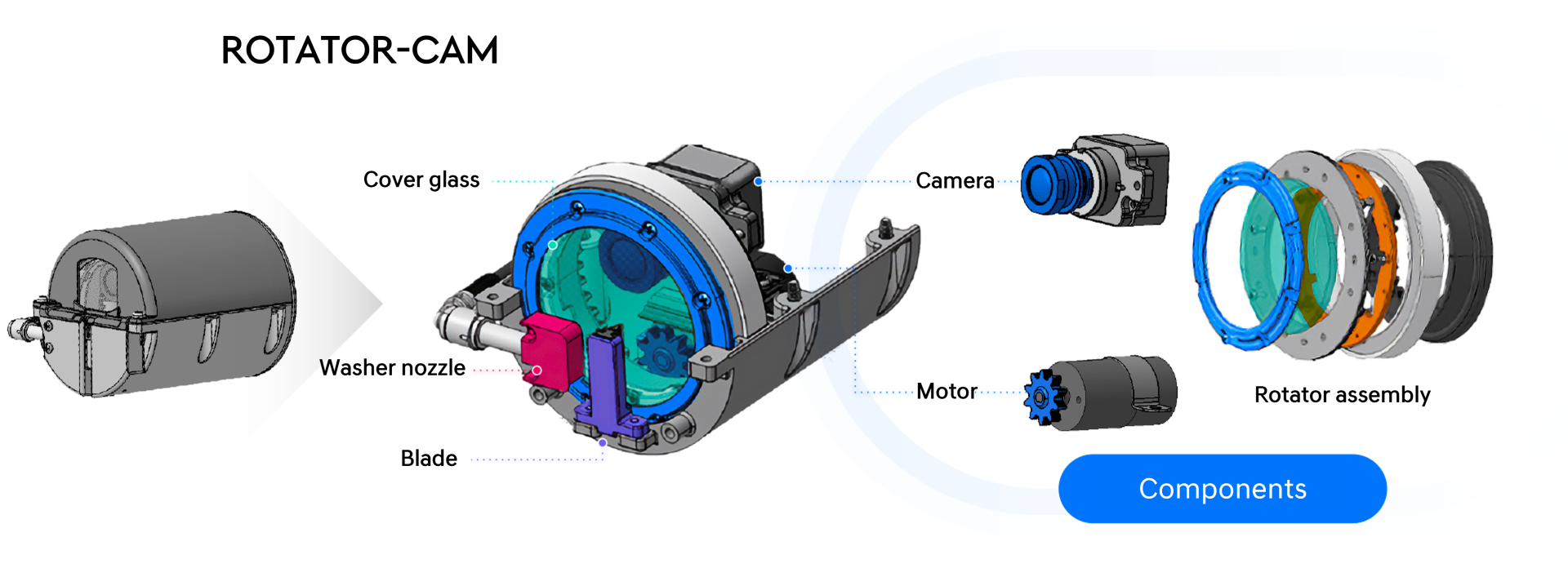

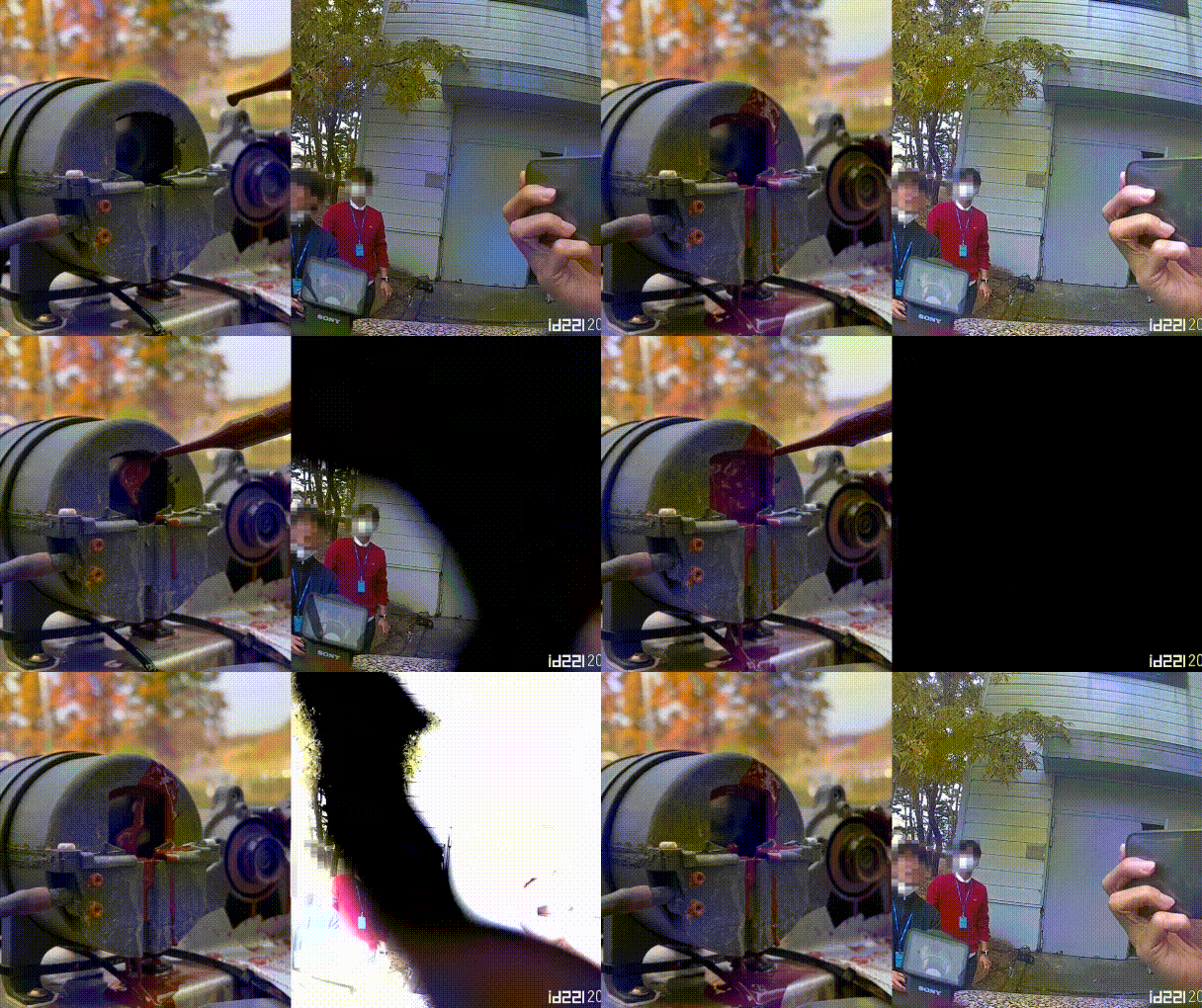
After extensive research, the Advanced Body Development Team has concluded, based on numerous factors, that each method has its advantages and disadvantages. The Sentry-Cam removed raindrops better than it did mud. The Rotator-Cam showed the opposite results.
Based on the test results, both techniques are now being optimized for further improvement.