

NEW LOW-BAKE PAINT TECHNOLOGY TO REVAMP GENESIS COATING OPERATIONS
SEOUL, June 11, 2024 — In the meticulous world of car manufacturing, painting stands out for two big reasons.
One, it accounts for nearly half the time involved in the entire car-making process. It also contributes to about half the carbon emissions generated.
Hyundai Motor Group (the Group) is about to change that.
Cutting Carbon Emissions
The painting process of a car can be divided into four main steps: pre-treatment, primer, basecoat and clearcoat.
In the clearcoat stage, the final color is applied and enhanced with gloss. The car then undergoes a high-temperature treatment in an “oven,” which is called the baking stage.
Although baking is essential in preventing discoloration and ensuring the paint layer’s durability, it comes with serious drawbacks.
It reduces the lifespan of painting equipment and significantly increases energy consumption in the car manufacturing process. A standard oven on the Group’s factory line operates at temperatures up to 180 degrees Celsius, emitting about 873 tons of carbon dioxide annually. It additionally consumes a large quantity of gas, amounting to 92.5 cubic meters per hour.
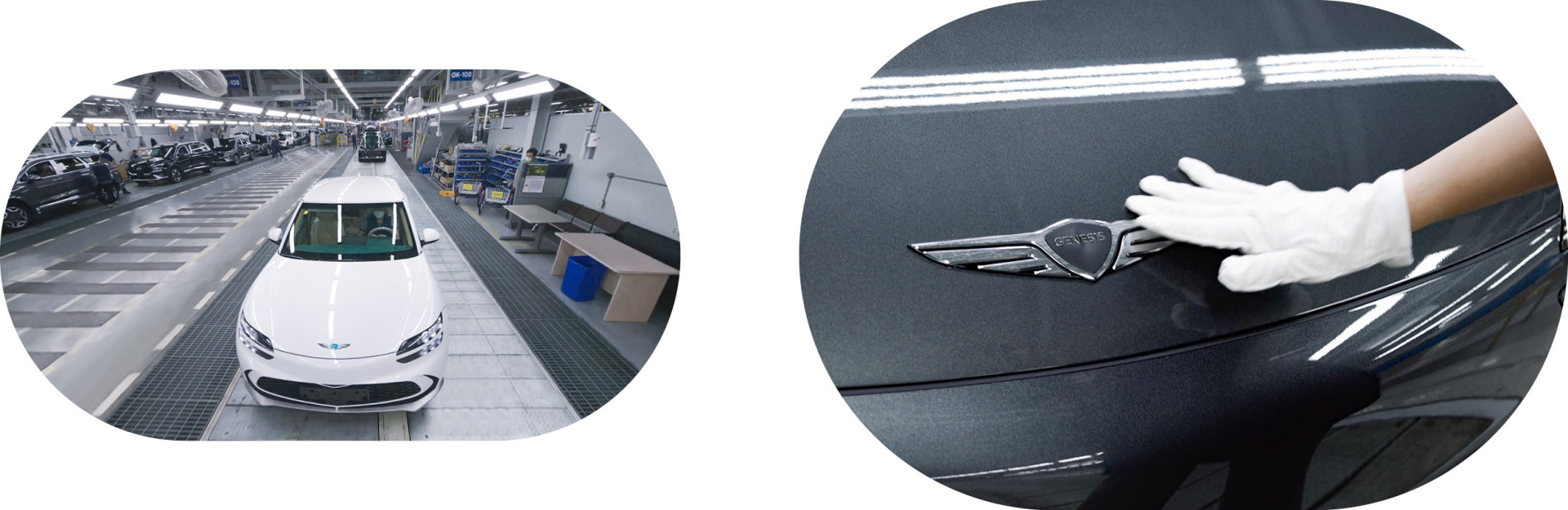
To solve these issues, the Group has developed a new painting technology that utilizes urethane-based coatings, which undergo curing reactions at much lower temperatures than traditional coatings. When mixed with synthetic resin, they solidify at 80 to 90 degrees Celsius, greatly reducing the amount of heat consumed in clearcoats.
A simple and cost-effective solution, the new method does not require additional infrastructure, only necessitating an adjustment to the oven temperatures and a change in paint. The lower temperature environment even extends the oven’s lifespan.
Low-Temperature Paint Solution
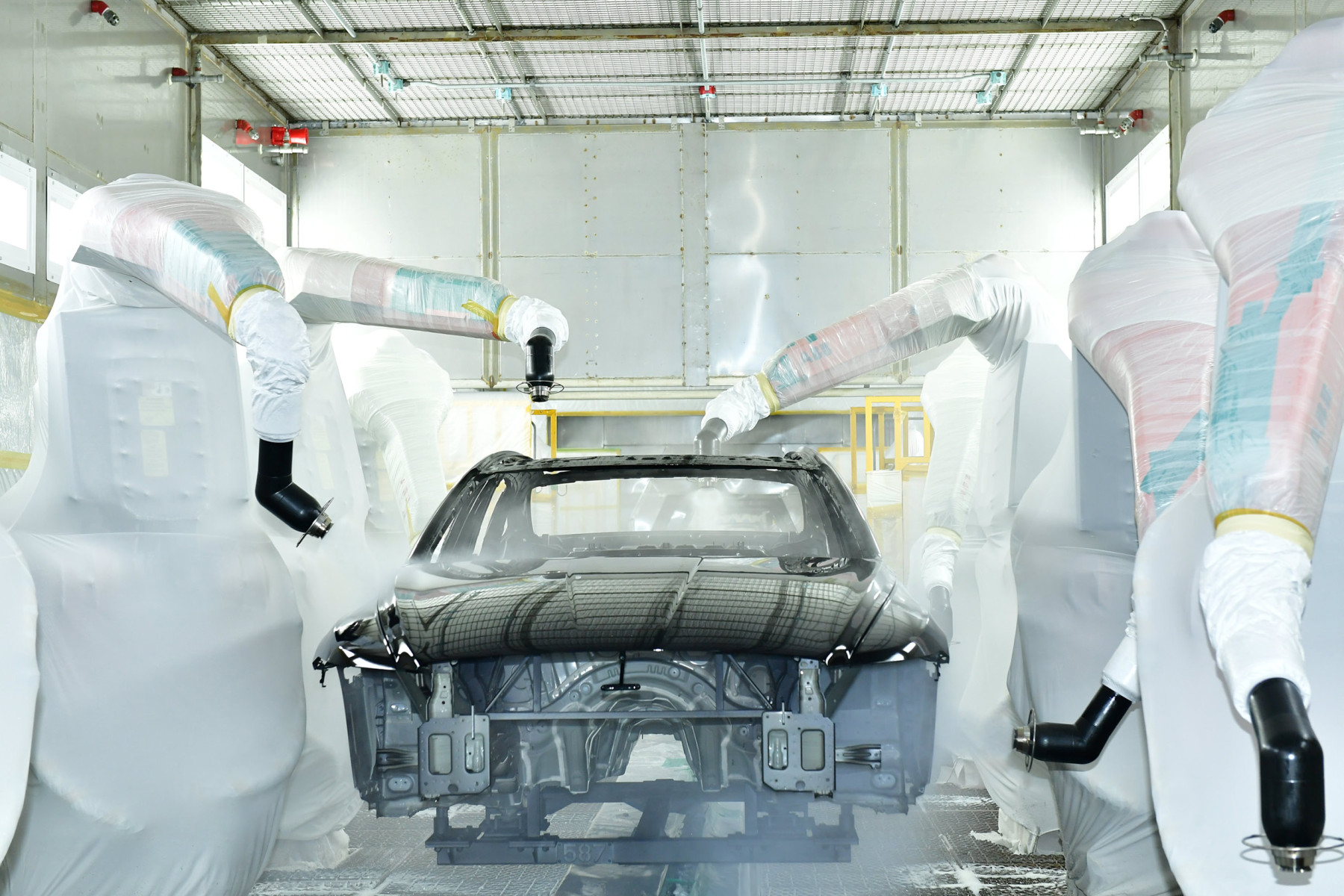
By applying the Group’s latest technology, it’s also possible to simultaneously paint different materials.
With body shells composed of both metals (like iron and aluminum) and non-metals (like plastic), the conventional painting method has made it difficult to paint these two together given that plastics undergo heat distortion at around 130 degrees Celsius.
The fact that the Group’s low-temperature paint method heats the oven up to only 90 degrees Celsius allows plastics and other materials to be painted at the same time without having their properties altered, ultimately saving time and energy costs.
Overcoming Challenges
The Manufacturing Solutions Division, responsible for the overall vehicle body production process at the Group, has been applying these low-temperature curing coatings on test materials that are identical to the actual body panels, continuously working on material improvements and conducting various tests to meet production standards.
Although the Division was able to confirm the new coating’s physical durability, its application to the actual body shell has faced challenges due to the characteristics of the body structure. The uneven heat transfer within the body shell has hindered the proper drying of the internal coating, making it susceptible to scratches and damage caused by external factors.
To address this issue, the Division adjusted the ratio of resins composing the coatings and the added amount of slip agents that improve adhesion. They also re-calculated the drying temperature and heat supply in the interior and exterior of the body shell, to make sure that the interior and exterior materials could still be painted simultaneously.
Testing of the first prototypes revealed that vehicles manufactured utilizing this new technology exhibited an impressive 96 percent gloss level when compared to current production vehicles. Although the difference is not easily discernible with the naked eye, the Group remains committed to refining the new technology until the gloss level matches that of the traditional method.
From Testing Grounds to Production Line
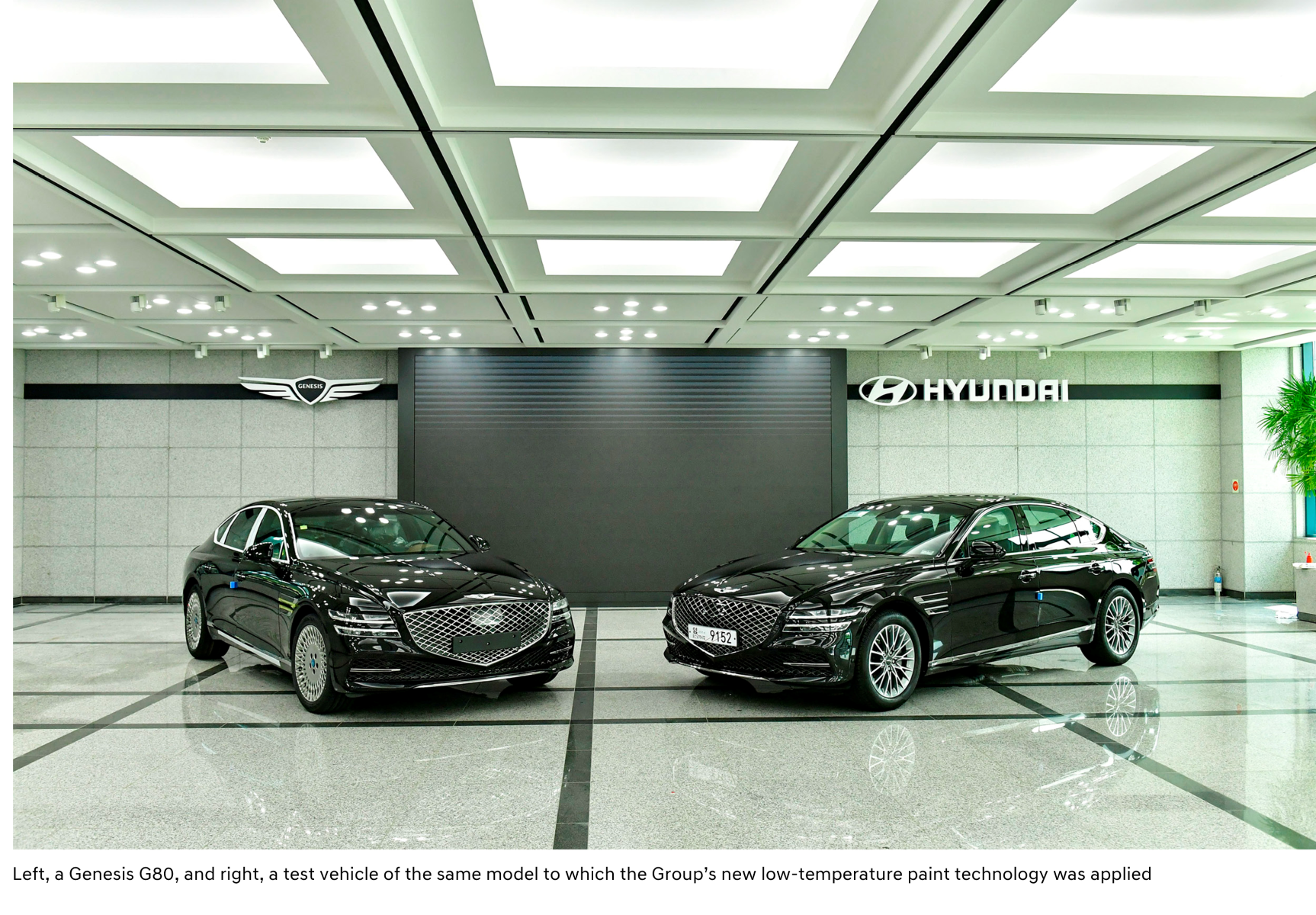
Since July 2023, the Genesis G80 has undergone extensive testing with this new painting method, showcasing its capabilities across over 18,000 kilometers in real-world road conditions.
The Group is fully committed to integrating this technology into production vehicles within the next two years and, in the longer term, implementing it across all global manufacturing plants.