

THE REDESIGNED GENESIS ELECTRIFIED G80: FROM UPGRADED SUSPENSION TO ADDED CHAUFFEUR MODE
SEOUL, Nov. 14, 2024 — What does an extended wheelbase say about ride and handling?
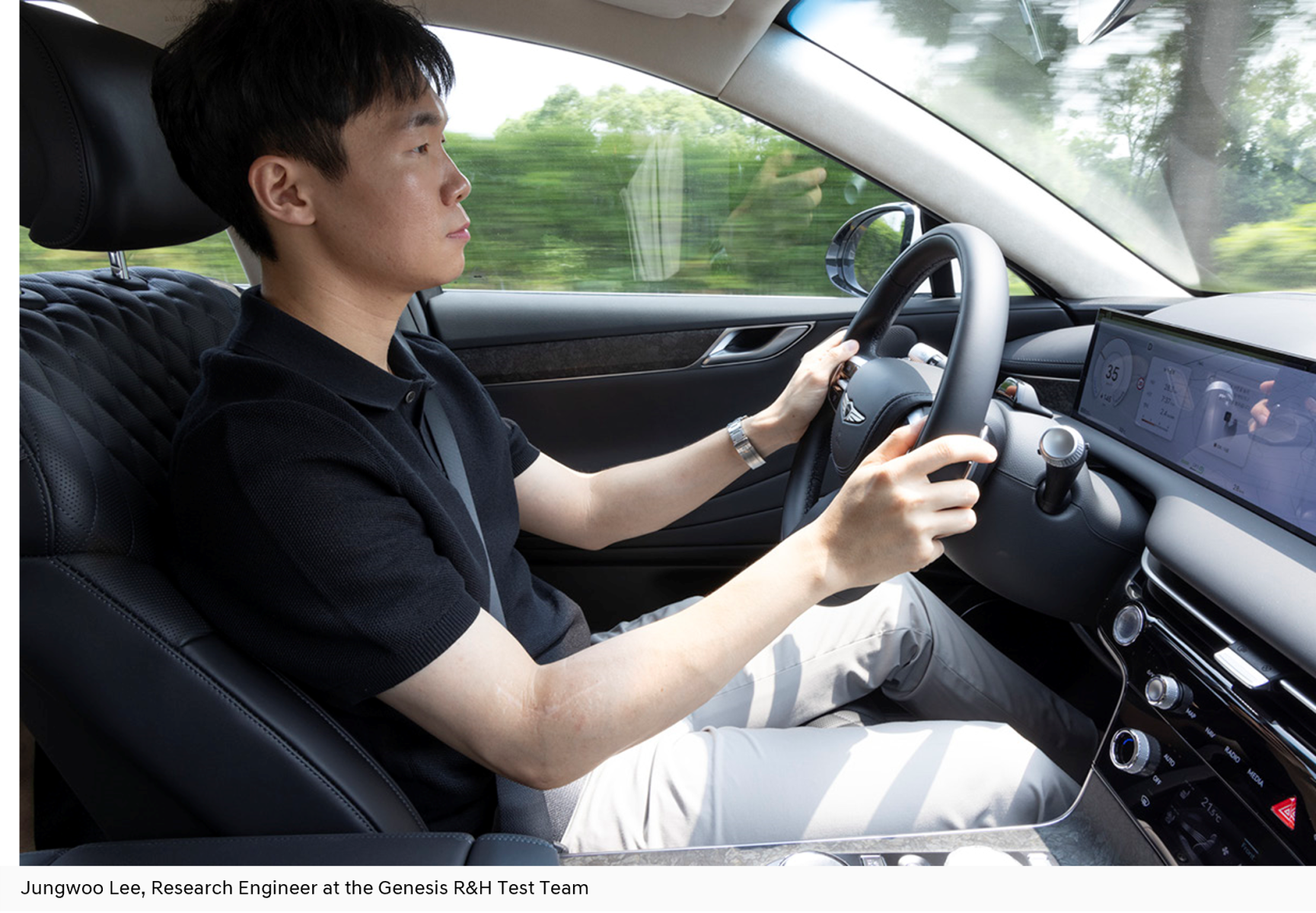
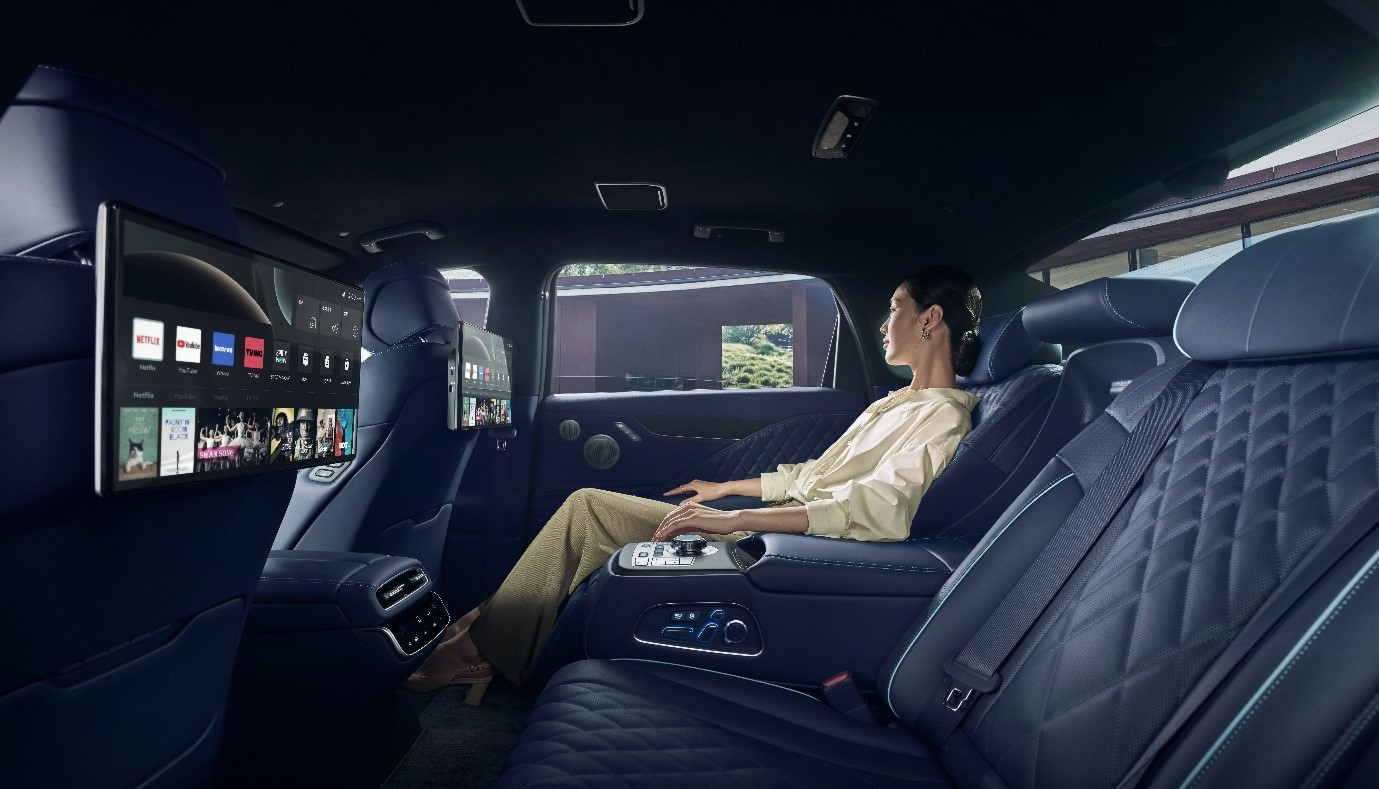
With the redesigned Electrified G80 being 130 millimeters longer than its predecessor, Jungwoo Lee, Research Engineer at the Genesis R&H Test Team, explains how he and his colleagues approached a core mission for the brand’s latest EV sedan: enhancing comfort in the back row.
What was the key focus in improving ride and handling for the redesigned Electrified G80?
When I first laid eyes on the redesigned model, the extended wheelbase immediately caught my attention. Our focus for this model quickly became recreating the exceptional ride comfort of our flagship Genesis G90, particularly in the back seats. We wanted to make a rear space where people could attend to their personal business and truly relax. To achieve this, we significantly upgraded our suspension system, allowing the vehicle to effectively absorb road vibrations and jolts, resulting in a smooth and comfortable ride under any circumstances.
The redesigned model is heavier, too, with all the added convenience features and increased high-voltage battery capacity. How did this affect the model’s overall ride and handling?
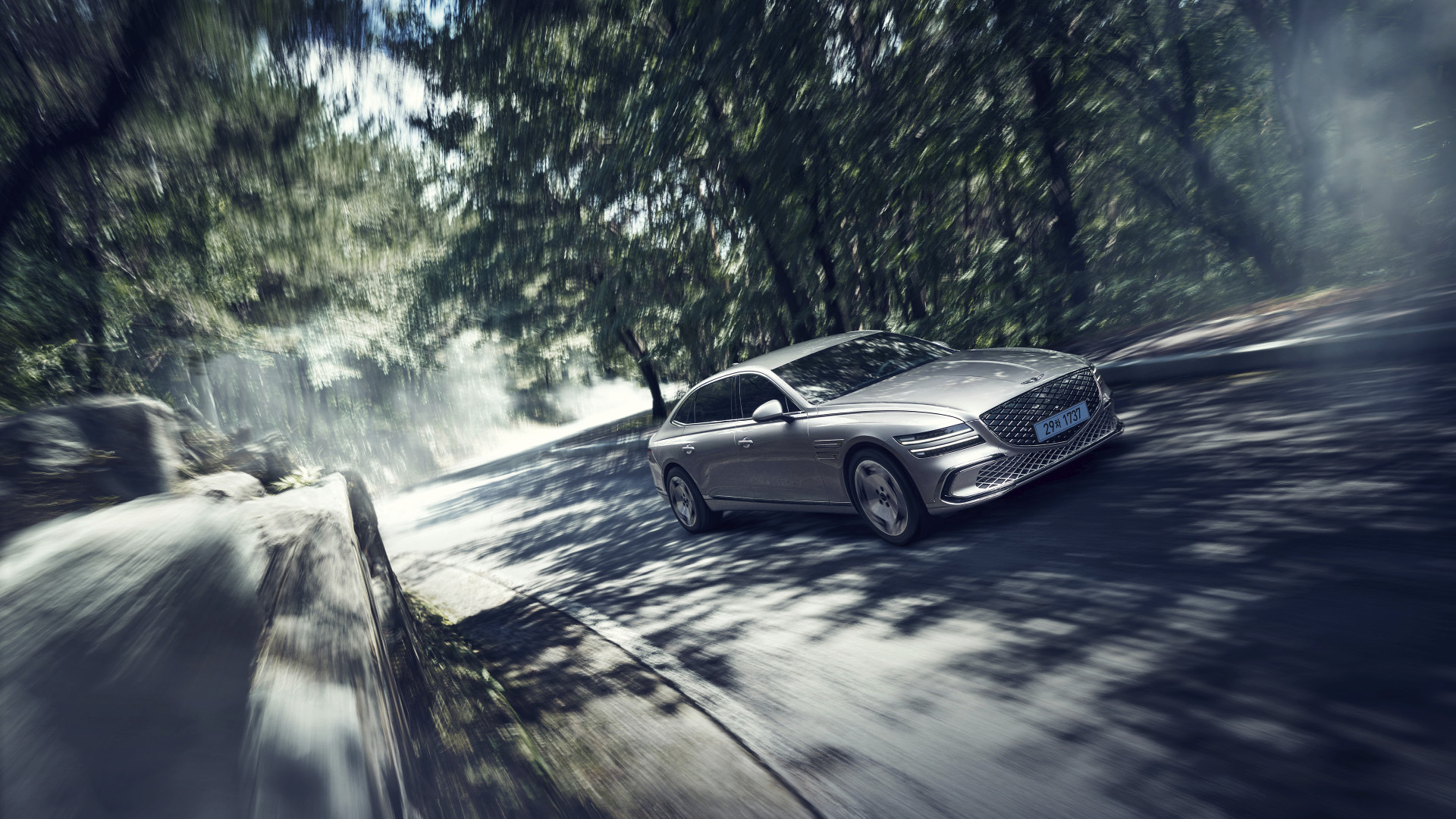
The redesigned Electrified G80 weighs 2,365 kilograms, which is 90 kilograms, or 4 percent, heavier than the previous model. From an engineering perspective, this increase in mass results in greater inertia, which means that more control is required to effectively handle the vehicle. In other words, more force, such as engine output and brake force, is needed to initiate and stop the vehicle. In terms of ride comfort, this weight increase leads to a more sensitive response to different road surfaces. As for handling, even subtle changes in steering can easily destabilize the car, requiring the driver to remain vigilant to maintain control. To address these challenges, we implemented a robust suspension setup.
How exactly was the suspension improved?
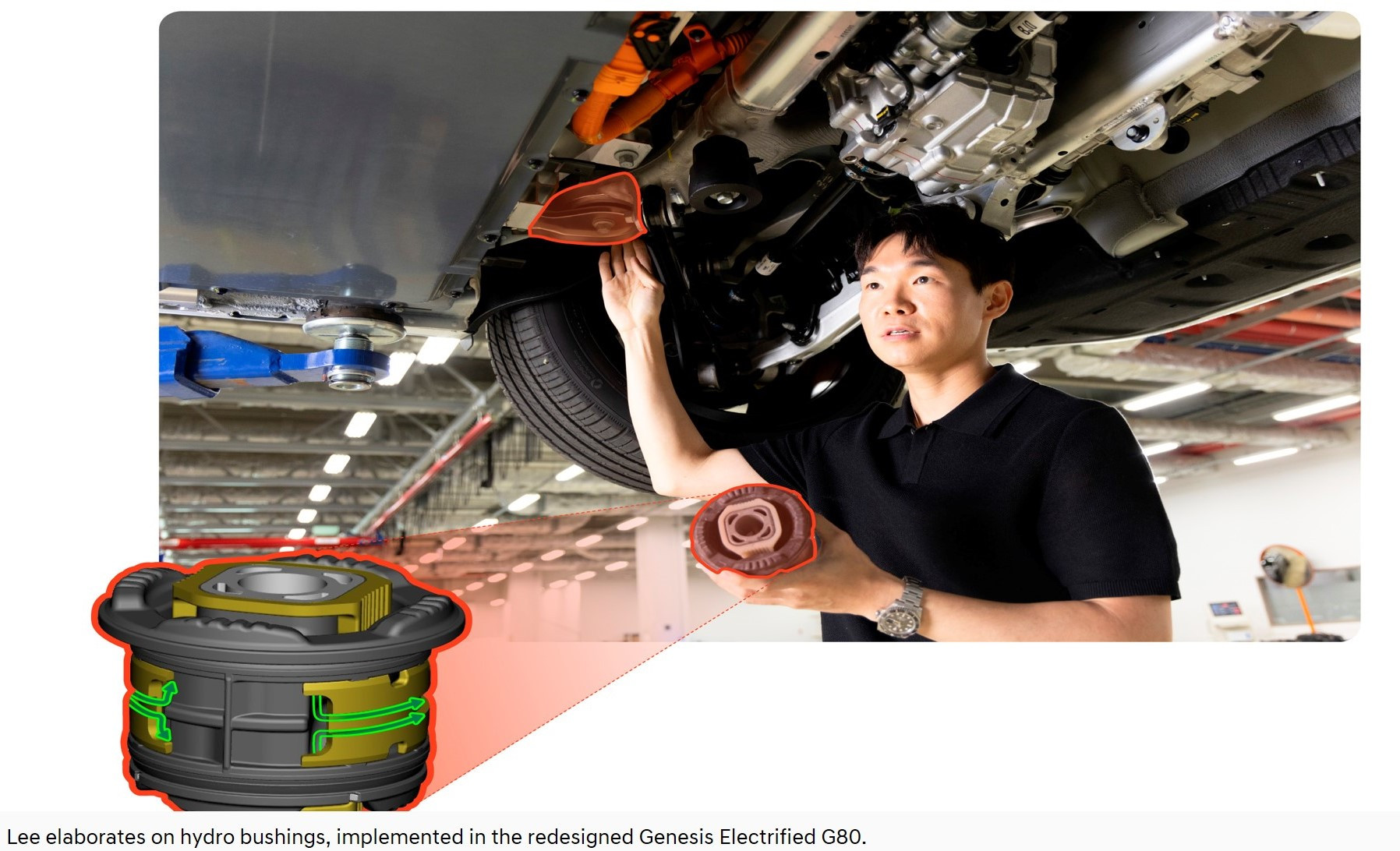
Among significant upgrades, the replacement of the rubber bushing — mounted on the front side of the rear crossmember — with hydro bushing proved to be particularly effective in upgrading the comfort of the rear seats. Suspension bushings have non-linear characteristics, which means that the frequency range of resonance induced by vibrations on the road varies. Resonance leads to increased noise transmitted to the interior. But hydro bushings improve driving vibration and rear-seat comfort by creating a fluid circuit to attenuate external vibrations at a specific peak frequency. Stabilizer bars, which control the vehicle’s roll [lateral movement], were also upgraded with newly applied steel-cut bushings that reduce vertical stiffness to offset road vibrations.
Other efforts we undertook to improve suspension include installing various bushings in the front and rear suspension systems to minimize road noise, as well as applying rebound springs to the rear shock absorbers to lessen the impact of compression and expansion during vertical movements.
What can drivers expect from the newly adopted Rear Wheel Steering system?
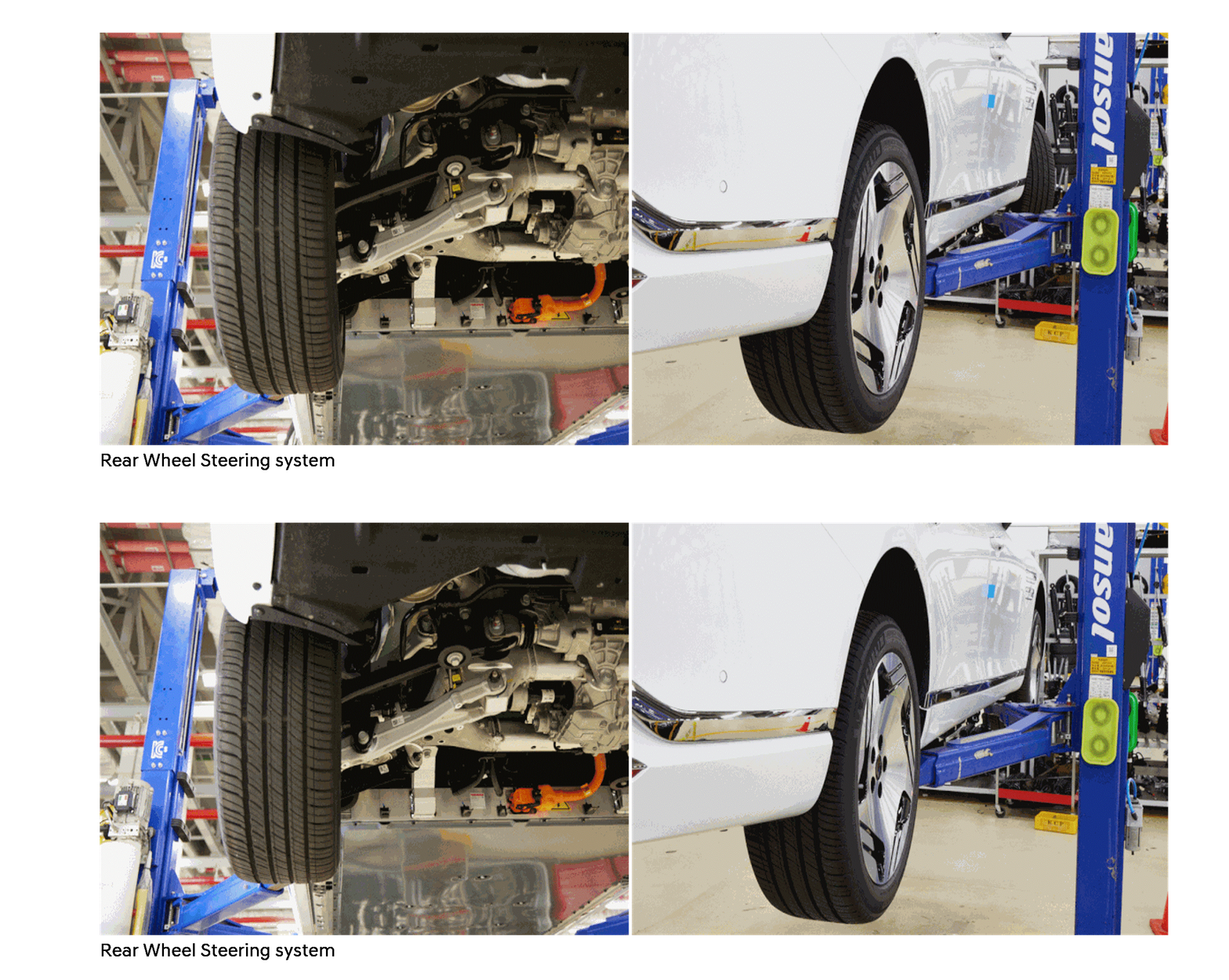
The Rear Wheel Steering system operates in two main modes: reverse phase, where the front and rear wheels turn in opposite directions; and parallel phase, where the front and rear wheels turn in the same direction. These modes are designed to provide improved handling and maneuverability during low-speed and mid- to high-speed driving, respectively. While the specifications and functionality of the Rear Wheel Steering system in the Electrified G80 are the same as the ones in the G90 and the G80 Sport models, the one in the Electrified G80 has undergone specific tuning to optimize back-seat comfort.
How much of a difference does this Rear Wheel Steering system make?
The reverse phase mode of the Rear Wheel Steering system allows the rear wheels to turn up to 3.5 degrees in the opposite direction of the front wheels. This reduces the turning radius of the vehicle, providing greater convenience in situations like U-turns, navigating narrow streets, parking and exiting parking spaces. It’s almost like you forget the car is even 5.1 meters long. Without such a Rear Wheel Steering system, the previous Electrified G80 had a minimum turning radius of 5.81 meters. Now, even with a 130-millimeter longer wheelbase, the minimum turning radius of the redesigned model is 0.38 meters shorter than before. This allows for far more precise maneuvering on tight roads.
And what about the parallel phase mode?
The parallel phase mode of the Rear Wheel Steering system allows the rear wheels to turn up to 2 degrees in the same direction as the front wheels. This increases driving stability and rear-wheel tracking when making high-speed turns or quick lane changes at speeds of 60 kilometers per hour or above. The threshold for switching between the reverse phase and parallel phase modes also varies depending on the driving mode, adding to the excitement and enjoyment of driving. For example, in Comfort Mode, the mode switches to parallel phase mode once the speed exceeds 60 kilometers per hour. However, in Sport Mode, the mode switches at speeds of 80 kilometers or above, offering a dynamic and exhilarating driving experience when taking corners quickly.
The redesigned Electrified G80 also comes with the newly applied Chauffeur Mode.
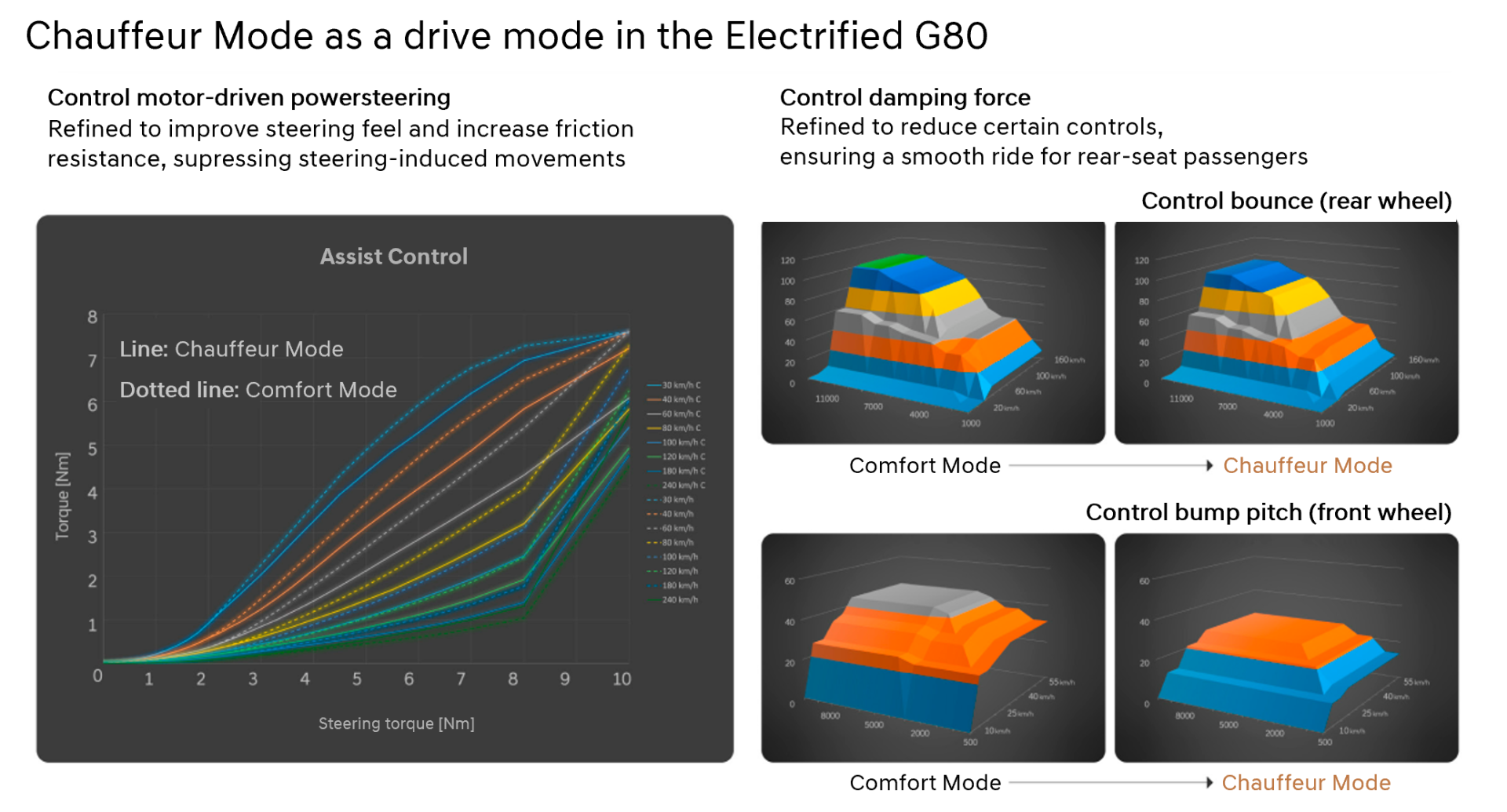
The new model is fitted with Electronically Controlled Suspension with Road Preview (Preview ECS), which scans the road ahead with a forward-facing camera and navigation map data. Preview ECS preemptively detects ridges and automatically adjusts the suspension’s damping force to minimize abrupt bounces and jolts. Chauffeur Mode utilizes the damping control function of this Preview ECS to minimize the rear-end movement of the vehicle. It effectively controls bounce [vertical movement of the vehicle's center] and bump pitch [forward and backward tilting movement], providing a significantly smoother ride when encountering large shocks.
The redesigned model has further been refined to enhance the motor torque and friction resistance of the motor-driven power steering system. This modification effectively minimizes the yaw motion [rotational movement around the vehicle's center axis] of the vehicle, especially during turns.
Was the added Chauffeur Mode for the brake system also intended to increase comfort in the back row?
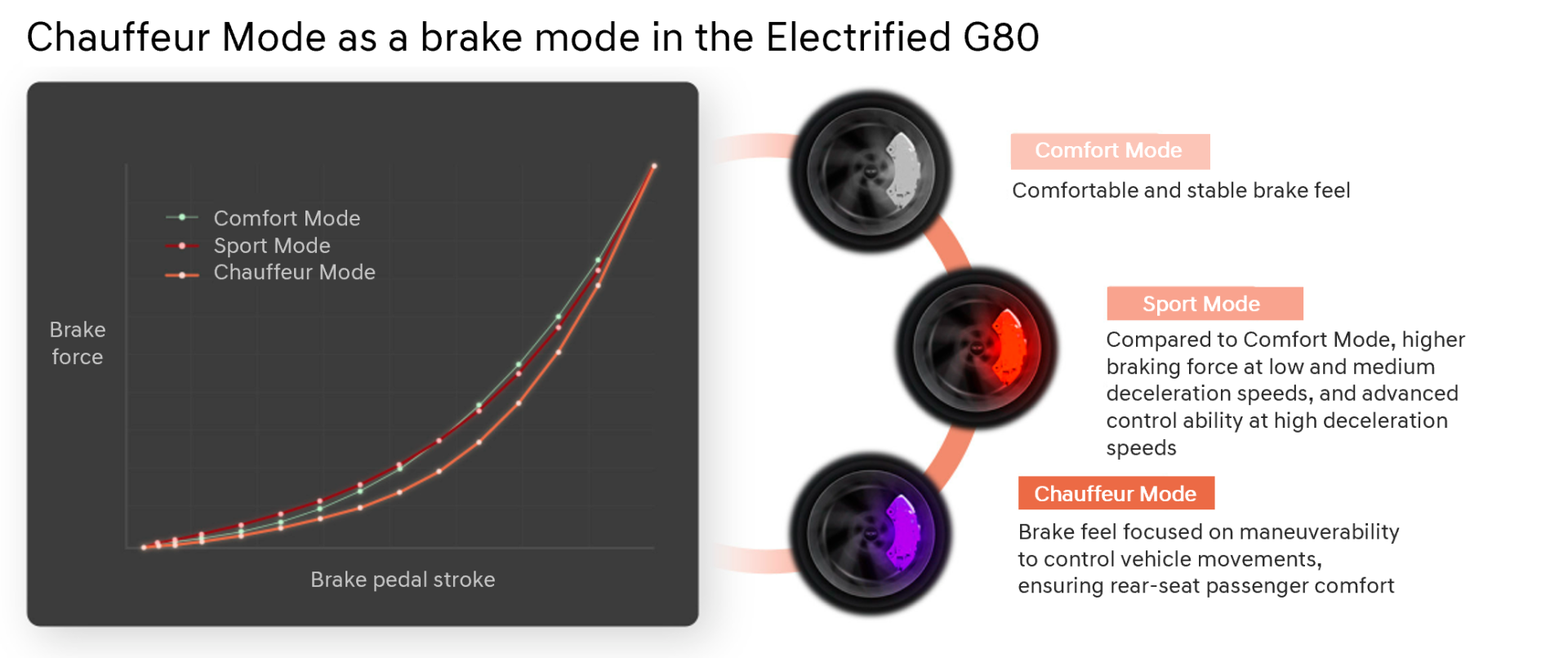
Brake modes can be independently configured by the driver through the infotainment monitor. Using the Integrated Electronic Brake (IEB), the driver can separately adjust the pedal stroke and brake hydraulic pressure to create a unique braking feel. The redesigned Electrified G80 is equipped with a recalibrated IEB that befits its stature as the brand’s flagship EV sedan.
The newly added Chauffeur Mode provides a focused braking feel that boosts maneuverability, allowing for even smoother and more comfortable control over the vehicle's movement. While the Chauffeur Mode functions differently as a driving mode compared to the Chauffeur Mode as a brake mode, both ultimately contribute to enhancing rear-seat comfort.
Disclaimer: Specifications may vary depending on region. Please contact your local Genesis retailer for more information.