


GENESIS UNVEILS NEXT-GEN HYBRID SYSTEM ENGINEERED FOR EV-LIKE DRIVING EXPERIENCE
2.5 Turbo Hybrid System delivers combined output of 352 PS, nearly 16% more than gasoline model
Internal tests on 19-inch, 2WD model show approximately 25% improvement or higher fuel efficiency compared to gasoline model
First Hyundai Motor Group hybrid system to feature a liquid-cooled hybrid battery, enabling higher maximum discharge output
Expanded electric motor engagement across a broader range of driving conditions enables quieter operation and smooth, linear acceleration for an EV-like driving experience
Optimized engine clutch control delivers rapid acceleration response and robust reacceleration performance
Features a range of hybrid-specific technologies, including Stay Mode, Hierarchical Predictive Control and Smart Regenerative Braking
Genesis to introduce the 2.5 Turbo Hybrid System in GV80 Hybrid model next month
SEOUL, Aug. 13, 2026 — Genesis has unveiled its next-generation hybrid system, engineered to deliver an electric vehicle (EV)-like driving experience.
Developed to provide customers with a refined electrified driving experience befitting the Genesis brand, the next-generation hybrid system will debut in the GV80 Hybrid, which is scheduled to launch next month.
The Genesis 2.5 Turbo Hybrid System adopts a parallel hybrid configuration consisting of a starter-generator motor (P1), which handles engine starting and power generation, and a drive motor (P2), which provides propulsion and regenerative braking.
The 2.5 Turbo Hybrid System featured in the Genesis GV80 Hybrid delivers a combined maximum output of 352 Pferdestärke and maximum torque of 54.0 kilogram-force meters, representing increases of approximately 16% and 26%, respectively, over the GV80 2.5 Turbo model.
With these advancements, the GV80 Hybrid delivers a 0–100 kilometers per hour acceleration time of approximately 7.1 seconds from a standstill, based on internal testing standards.
Based on internal testing of the five-seat GV80 equipped with 19-inch wheels and two-wheel drive, combined fuel efficiency improved by approximately 25% or more compared to the 2.5 Turbo powertrain, enabling more efficient driving. *
The Genesis 2.5 Turbo Hybrid System is also the first hybrid system from Hyundai Motor Group to feature a liquid-cooled hybrid battery system.
Compared to an air-cooled system, the liquid-cooled battery system enables more efficient temperature management, allowing for higher maximum discharge output and more extensive use of the battery’s available power.
By expanding electric motor engagement across a broader range of driving conditions, the Genesis 2.5 Turbo Hybrid System delivers quieter operation and smooth, linear acceleration, creating a driving experience closer to that of an EV.
To minimize vibration and noise caused by engine operation during a cold start after the vehicle has been parked, Genesis developed the system to make active use of its EV Mode from initial departure until the vehicle reaches approximately 30 kilometers per hour.
This enables the vehicle to move in EV Mode in noise-sensitive environments such as underground parking garages. Once the vehicle enters regular road traffic and exceeds a certain speed, the engine engages, allowing occupants to begin their journey in a quieter and more comfortable environment.
Genesis has also optimized the system to maximize the use of EV Mode on urban roads with frequent traffic lights and during stop-and-go traffic, further enhancing the overall driving experience.
In addition, Genesis lowered the Final Drive Gear Ratio (FGR) — the reduction ratio between the transmission and the wheels — compared to the 2.5 Turbo model to reduce drivetrain noise.
The luxury marque also introduced a new engine crankshaft damper pulley technology designed to reduce both torsional and bending vibrations, helping to minimize engine noise transmitted into the cabin. A Centrifugal Pendulum Absorber (CPA) damper has also been applied to the new seven-speed rear-wheel-drive transmission to counteract engine rotational vibrations with opposing-phase forces, further enhancing cabin comfort.
Another key feature of the Genesis 2.5 Turbo Hybrid System is its immediate acceleration response, which is similar to that of an EV.
When the driver depresses the accelerator firmly while driving in EV Mode, the system simultaneously performs a downshift and engine clutch engagement, allowing the engine to provide immediate, additional acceleration.
According to internal testing, when the accelerator is depressed while traveling 100 kilometers per hour, the system can resume acceleration approximately 18% faster than the 2.5 gasoline turbo model — delivering responsive performance in situations such as overtaking.
Genesis has also optimized the transmission architecture by enabling the vehicle to reverse using the P2 motor rotating in the opposite direction. This eliminates the need for components associated with a dedicated reverse gear in the transmission. The first-gear ratio has also been set higher to efficiently transmit power from the P2 motor to the wheels while reversing.
The resulting reduction in transmission weight and frictional components improves power transmission efficiency. At the same time, the higher first-gear ratio enhances acceleration performance when pulling away from a standstill.
The Genesis 2.5 Turbo Hybrid System also incorporates a range of hybrid-specific features, including Stay Mode, Hierarchical Predictive Control (HPC) and Smart Regenerative Braking.
Stay Mode uses the high-voltage battery to operate all in-vehicle comfort and convenience functions, including climate control and multimedia systems without starting the engine. This allows occupants to remain comfortable inside the stationary vehicle before and after a journey.
Hybrid HPC predicts the driving route and road conditions to the destination and optimally manages the battery’s state of charge. This allows the system to select and operate the most efficient driving mode, including EV Mode, Hybrid Mode and Regenerative Braking Mode.
Smart Regenerative Braking uses navigation data (including speed-camera information) and the distance to vehicles ahead to automatically determine and apply the optimal level of regenerative braking. By reducing the need for brake pedal input, the system helps reduce driver fatigue while increasing the amount of energy recovered through regenerative braking — contributing to improved fuel efficiency.
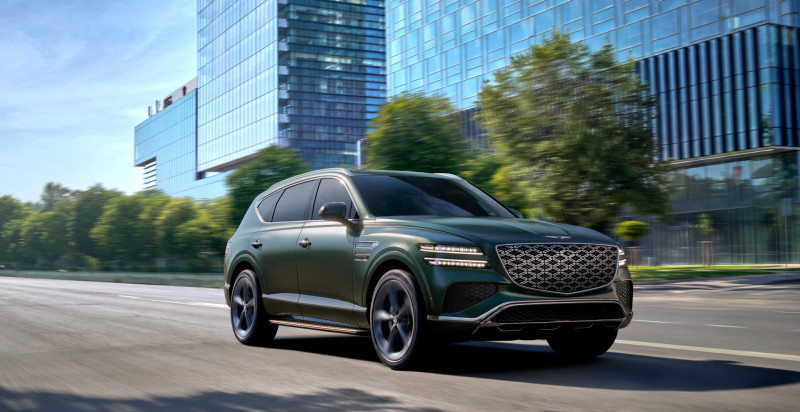
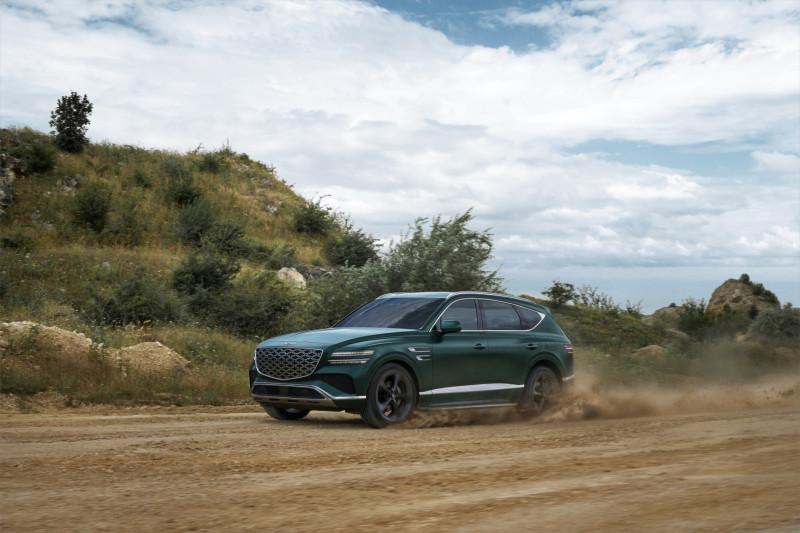
Genesis also unveiled the design of the upcoming GV80 Hybrid. The GV80 Hybrid features a newly designed exterior grille and wheels, giving the model an even more premium appearance.
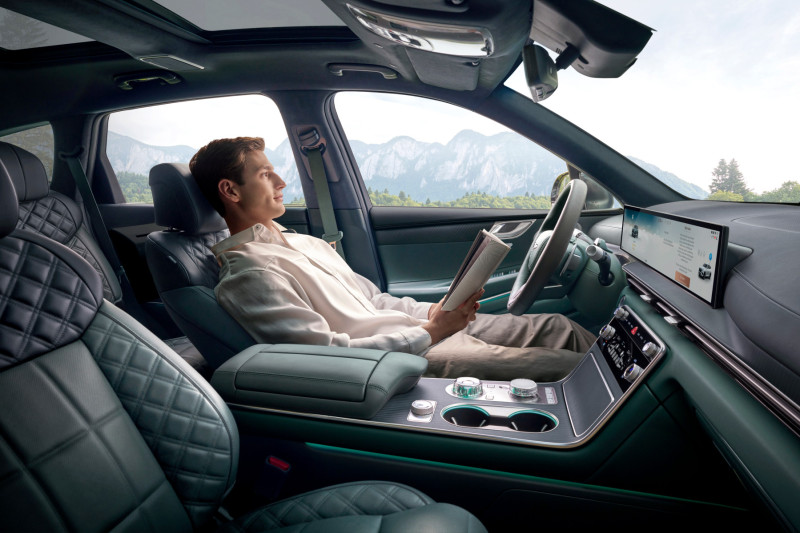
Inside, four new two-tone color combinations have been introduced, including Obsidian Black with Taiga Green, and Ultramarine Blue with Travertine Beige. Two new real wood trim options are also available, together with new quilting patterns, offering customers a wider range of interior choices.
“We expect the new powertrain to deliver a differentiated driving experience by achieving a finely tuned balance of efficiency, refinement and performance,” said Sean Lee, global head of Genesis. “Beginning with the GV80 Hybrid, Genesis will continue to respond proactively to evolving market conditions and customer needs while introducing innovative technologies that embody the brand’s distinctive character and philosophy.”
* Official fuel economy figures will be announced following certification by the relevant Korean government authorities.