

GV90 DEEP DIVE PART 2: ENGINEERING INVISIBLE ARMOUR FOR GENESIS’ FLAGSHIP SUV
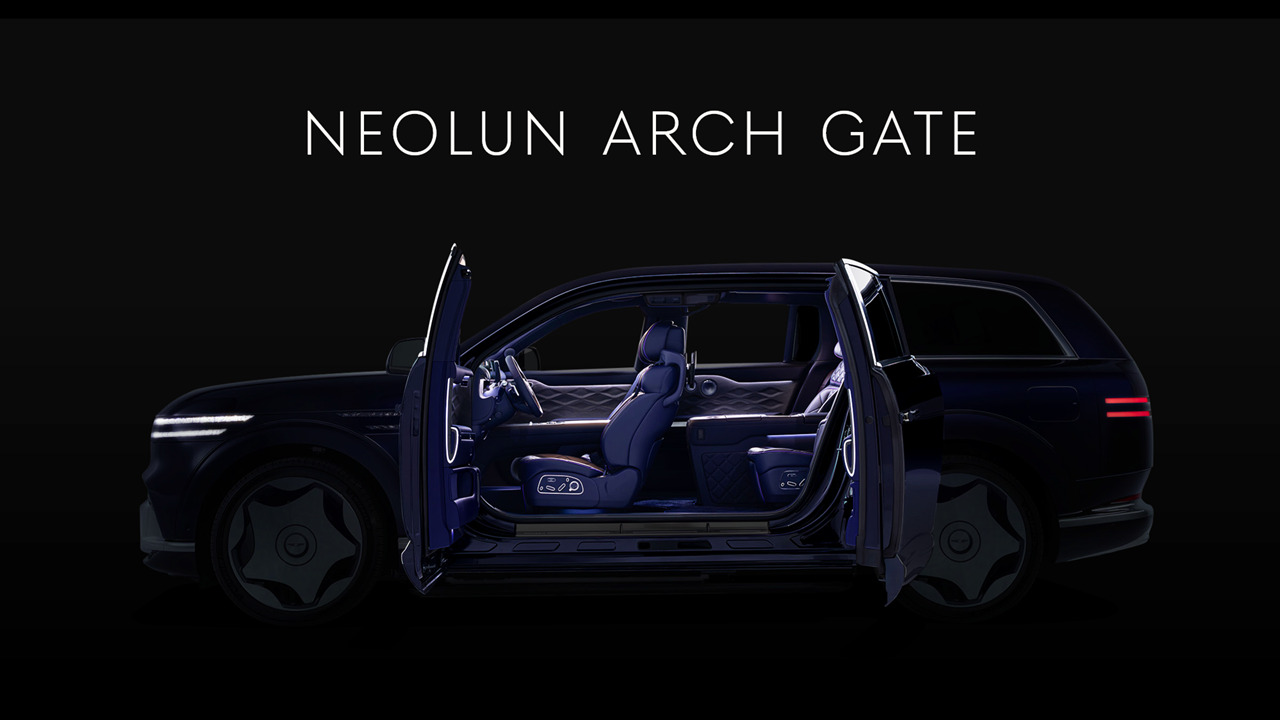
SEOUL, Oct. 13, 2026 — The eagerly awaited Genesis GV90 introduced a bold design proposition: independently opening coach doors that define the spacious entry experience of the marque’s luxury SUV.
Coach doors have long represented a design aspiration for luxury vehicles — yet they rarely survive the transition from concept cars to production due to the significant engineering challenges. The GV90 stands as a notable exception, bringing this design known as the Neolun Arch Gate to its Neolun variant.
However, this achievement introduces an engineering paradox: To create the GV90 Neolun’s unprecedented sense of openness, Genesis had to rethink the conventional B-pillar — the vertical support structure that has anchored vehicle safety for over a century. How does a vehicle maintain structural integrity and safety without this critical load-bearing component?
Genesis set out to overcome these constraints with the GV90 Neolun, creating the world’s first coach-door SUV with front and rear doors that open and close independently — without a conventional B-pillar.
Safe Entry and Exit
The mechanism behind the Neolun Arch Gate’s opening sequence is a dual-motion hinge applied to the rear doors. Rather than relying on a conventional opening action, the rear doors first slide slightly outward before opening with a smooth, rotating motion. This allows them to open independently without impeding the front doors.
This single, compact assembly is engineered to support a rear door weighing nearly 70 kilograms without wobbling while executing both sliding and rotating movements simultaneously. High-strength cast iron was used for the center block, where the door’s load concentrates at a single point, to prevent shaking.
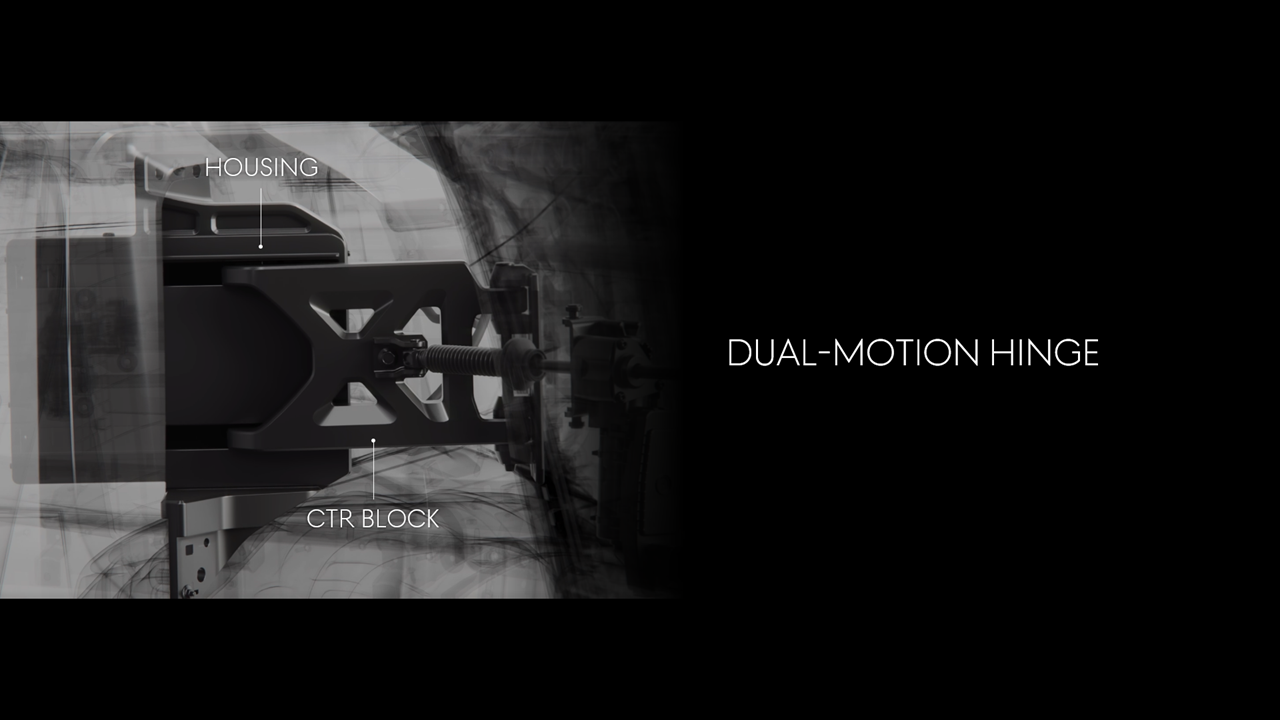
Aluminum was utilized for the largest housing component with its thickness precisely adjusted long the load-bearing path, achieving a weight reduction of approximately 20% without compromising target performance. As the door operates, more than 500 ball bearings roll along the rail, distributing the door's weight to ensure it opens and closes smoothly.
“Just as the Neolun Arch Gate offers a vast sense of openness, we really thought about safety,” said Daehee Lee, Head of Genesis Body Design Group. “We have designed a completely new structure, away from the conventional vehicle body.”
Rather than simply eliminating the pillar, Genesis integrated its protective functions directly into the vehicle's doors and body structure.
Hidden B-Pillar and Roll-Cage Architecture
The Neolun Arch Gate incorporates the world’s first hidden B-pillar structure. Inside each door, Genesis installed 1.8 GPa-rated ultra-high-strength steel dual beams in an intersecting vertical and horizontal configuration. To distribute and deflect forces during a side impact, four latches connect the body to the door, supported by an upper stopper and a lower impact hook.
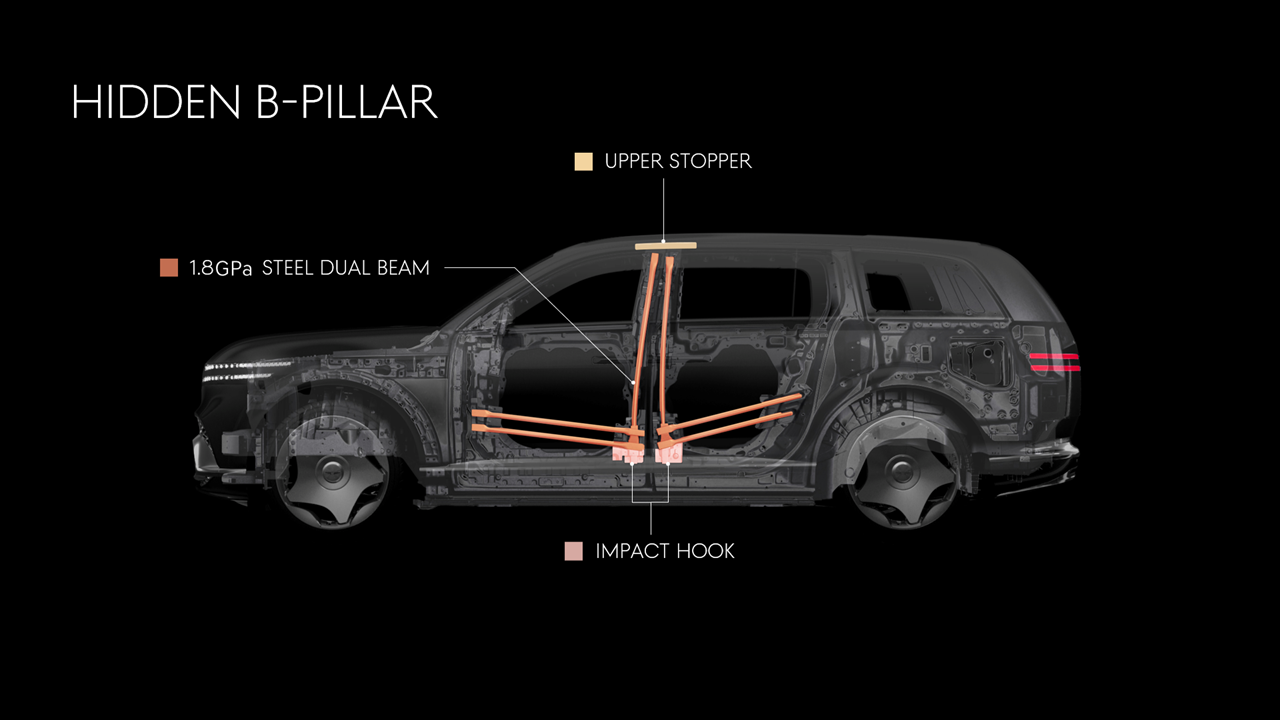
At the same time, Genesis increased the proportion of aluminum in the GV90’s body to 72%, up from 35% in previous models. To maintain rigidity with lighter materials, engineers adapted structural principles from motorsport.
“Race cars encase the cabin in a robust framework to protect the driver during collisions and rollovers,” Daehee Lee explained. “The GV90 Neolun reinterprets this roll-cage principle and integrates it into the vehicle's body structure. Although invisible from the outside, an additional framework has been constructed within the body structure to envelop the passenger space.”
This framework consists of 1.5 GPa-rated ultra-high-strength steel tubes, high-rigidity structural foam, and an integrated ring structure combining horizontal and vertical members. At key mounting locations, including the joints for the heavy rear door hinges, large high-pressure aluminum die-cast reinforcements provide additional stability.
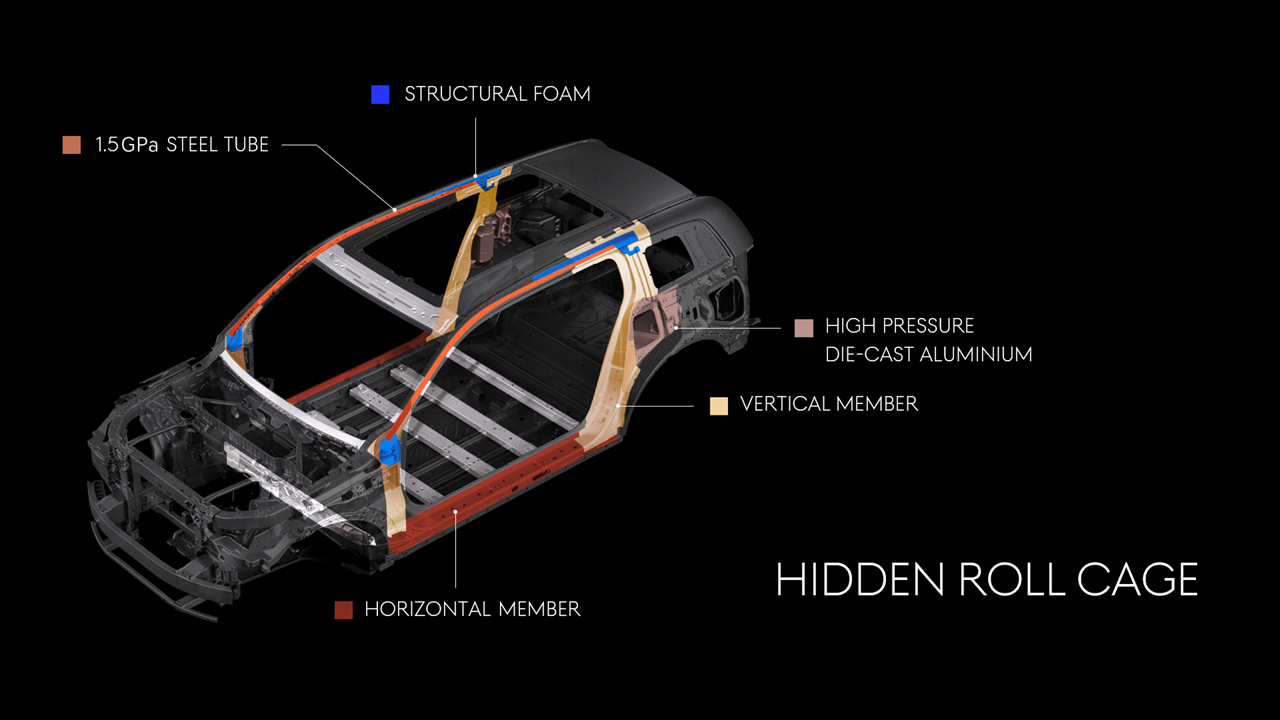
According to in-house testing, these measures ensure the GV90 Neolun achieves 12% higher body rigidity than the standard GV90 swing-door model, while matching its crash performance.
“It became lighter yet stronger. Despite adopting an entirely new structure without a conventional B-pillar, the structure is actually more robust,” Lee noted. “There has been absolutely no compromise on safety for the sake of achieving a sense of openness.”
Addressing Real-World Crash Scenarios
This focus on structural integrity builds upon Genesis's proven track record in automotive safety. Since 2021 — the luxury marque’s first year in the U.S. market — Genesis has earned the highest safety rating from the Insurance Institute for Highway Safety (IIHS) for every new model it has launched across its lineup of sedans, SUVs, and electric vehicles.
Yet, for the GV90, the engineering team aimed to go beyond standardized regulatory testing.
“Achieving the highest rating in global safety assessments is certainly a significant accomplishment,” stated Seungmok Lee, Vice President and Head of the Integrated Safety Development Group.
“No matter how robust the vehicle body is, passenger safety cannot be guaranteed once an occupant leaves the protective space of the cabin,” Seungmok Lee pointed out.
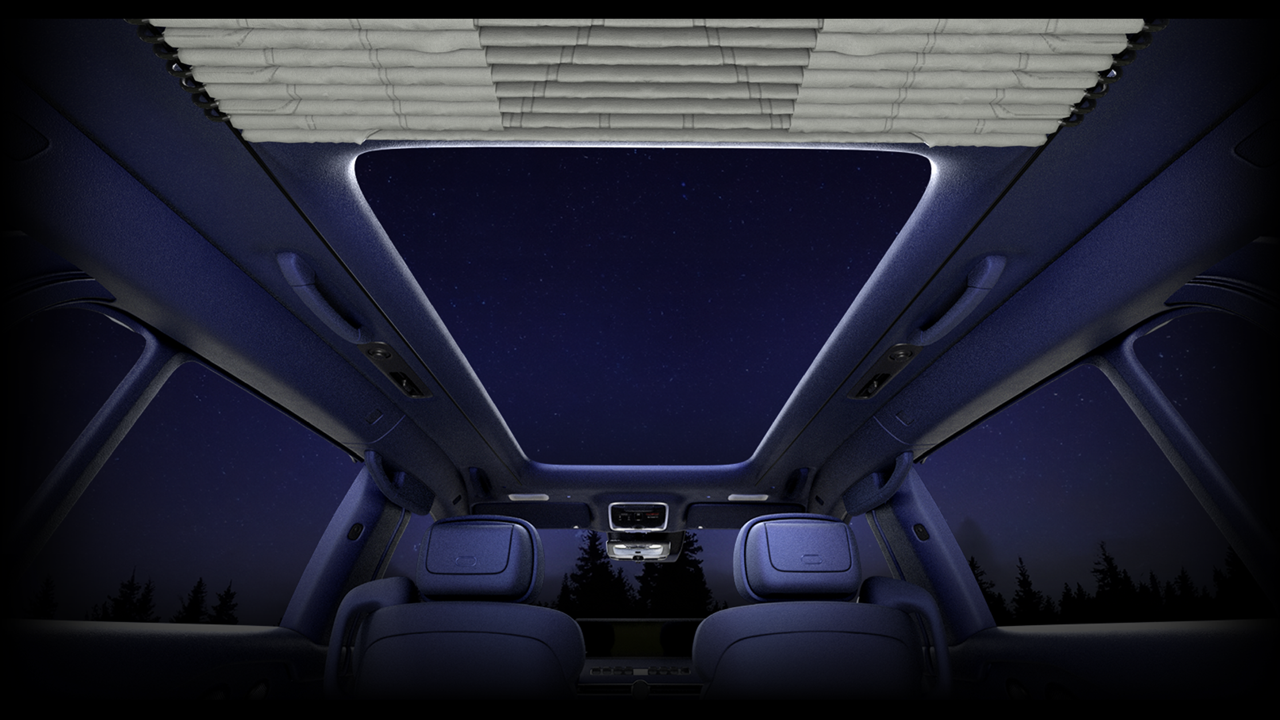
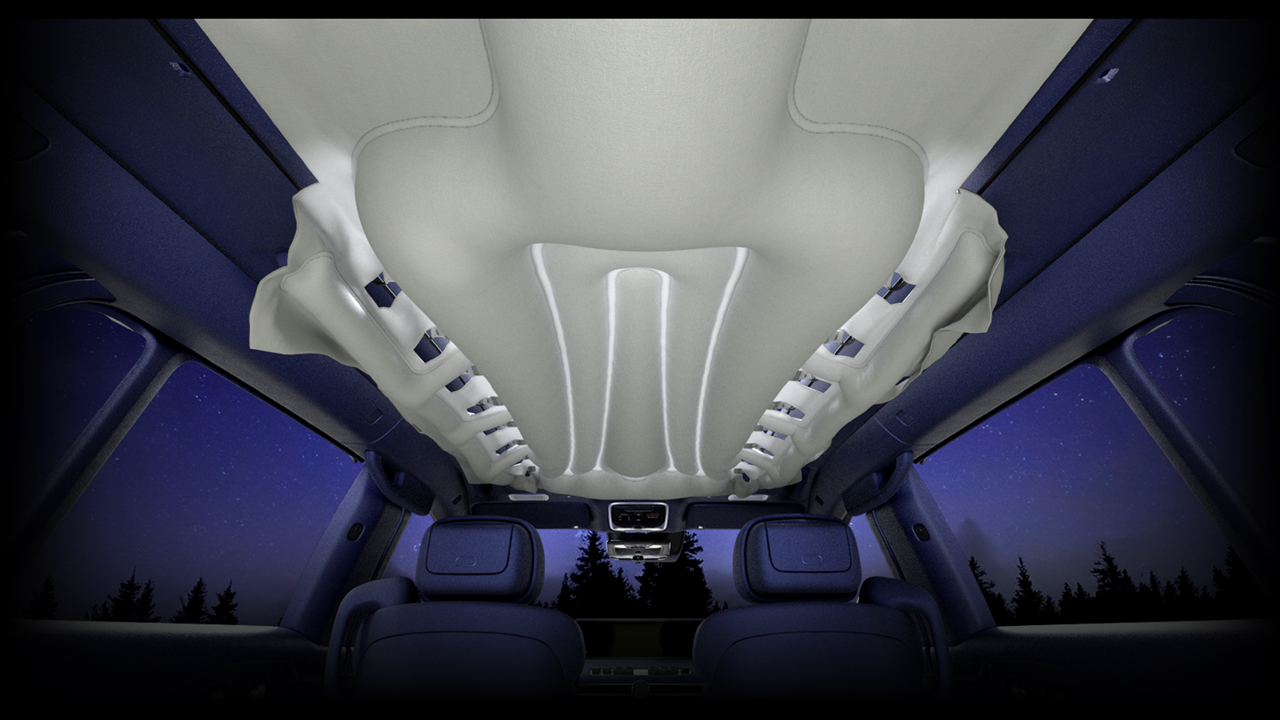
To mitigate this risk, Genesis developed and applied the world’s first roof airbag designed to cover the entire glass vision roof. The airbag deploys forward along side-mounted wires from the rear of the cabin when a rollover is detected. Tested under rigorous conditions — including lateral-tilt rollovers and 110-kilometer-per-hour ramp tests — the system helps prevent occupant ejection, shields passengers from glass fragments, and cushions impacts against the roof structure.
12-Airbag System and Structural Survival Margins
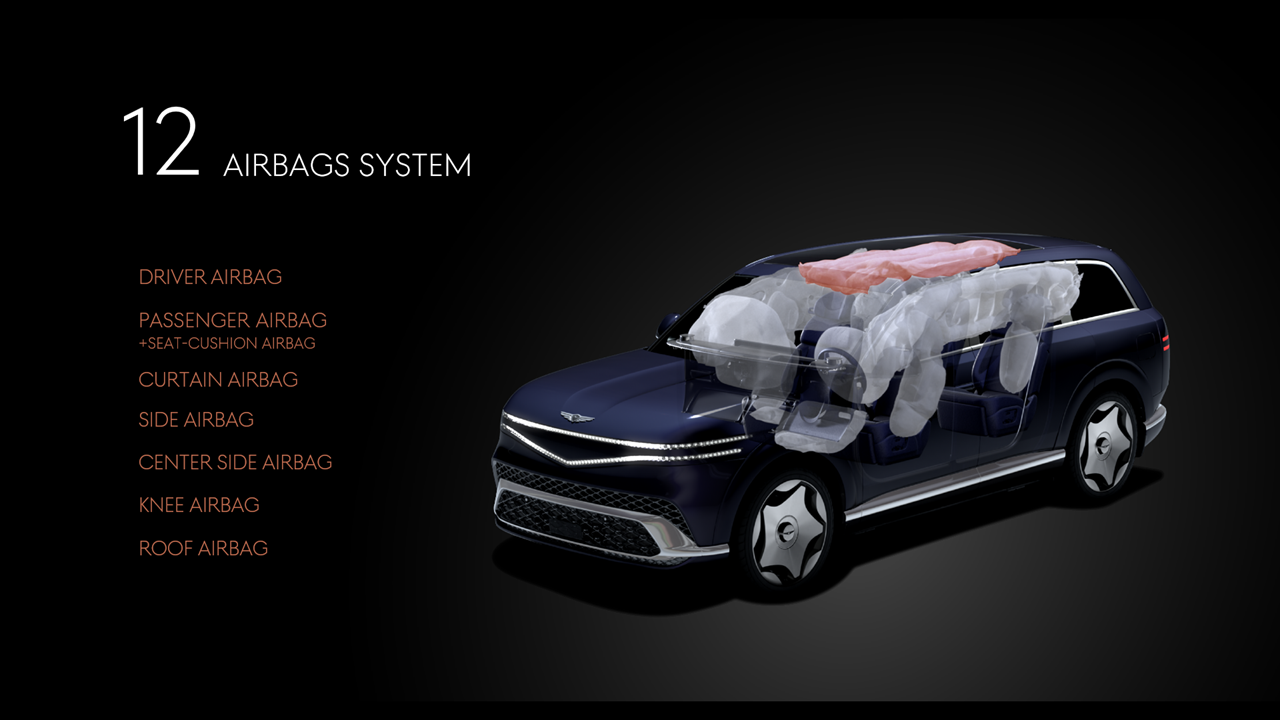
Complementing the roof airbag is an advanced 12-airbag system designed to protect passengers across a range of seating positions.
Dual-Depth Front Passenger Airbag: Deploys in two stages based on occupant posture, maintaining protection even when reclined in a relaxation position.
Seat Cushion Airbags: Prevent occupants from sliding beneath the seatbelt during a collision.
Extended Side and Curtain Airbags: First- and second-row side airbags feature expanded head coverage to protect passengers with reclined seatbacks, while curtain airbags extend to the third row.
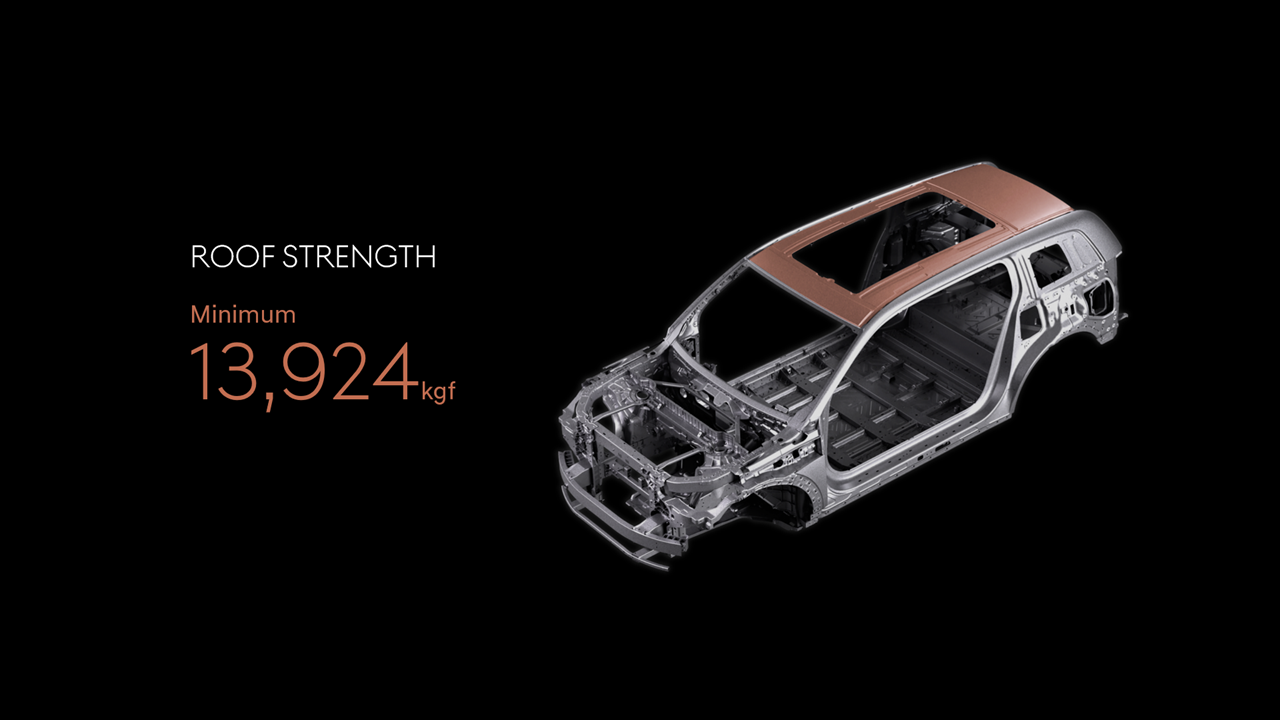
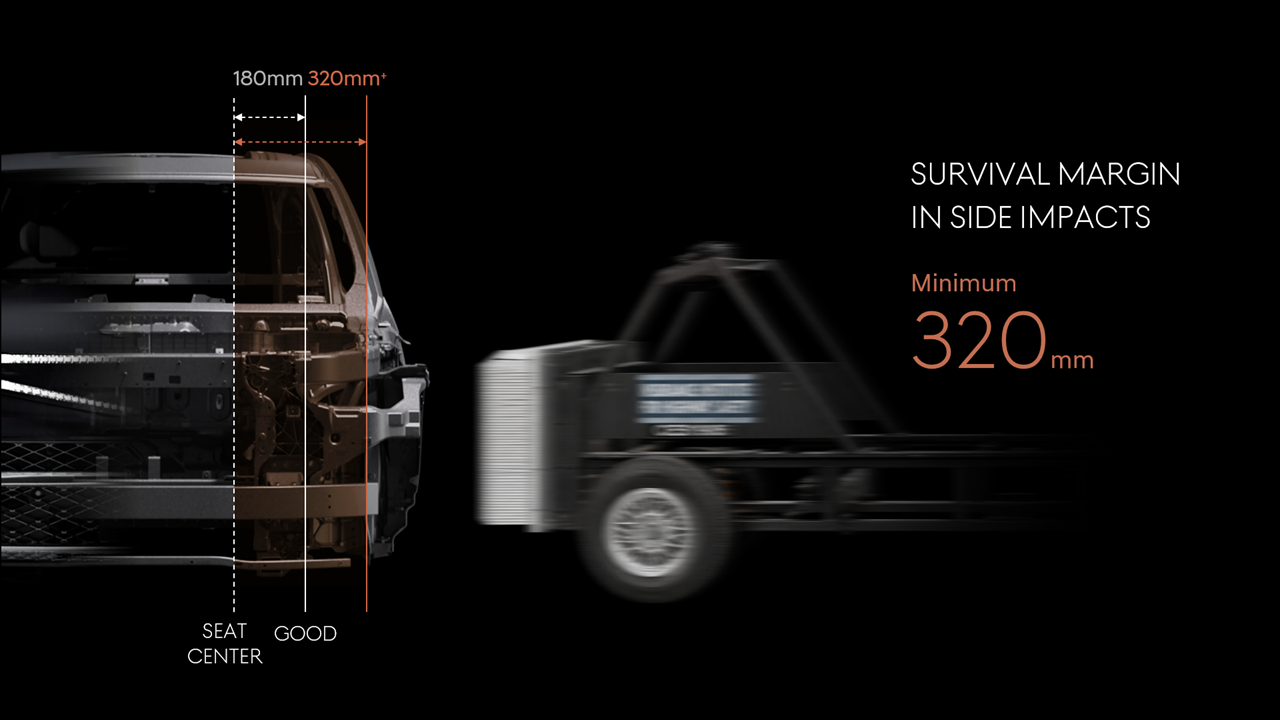
This restraint system is supported by substantial structural margins. The GV90 achieves a roof strength of 13,924 kilogram-force to maintain cabin space during rollovers. Additionally, in side-impact evaluations, the vehicle offered at least 320 millimeters of occupant survival space, well above the 180-millimeter standard required for an “Excellent” rating.
Underbody and Battery Protection
Developed on the Genesis-dedicated eMP platform, the GV90 also features specialized structures to protect its 123.5-kilowatt-hour high-voltage battery pack and cabin during frontal impacts.
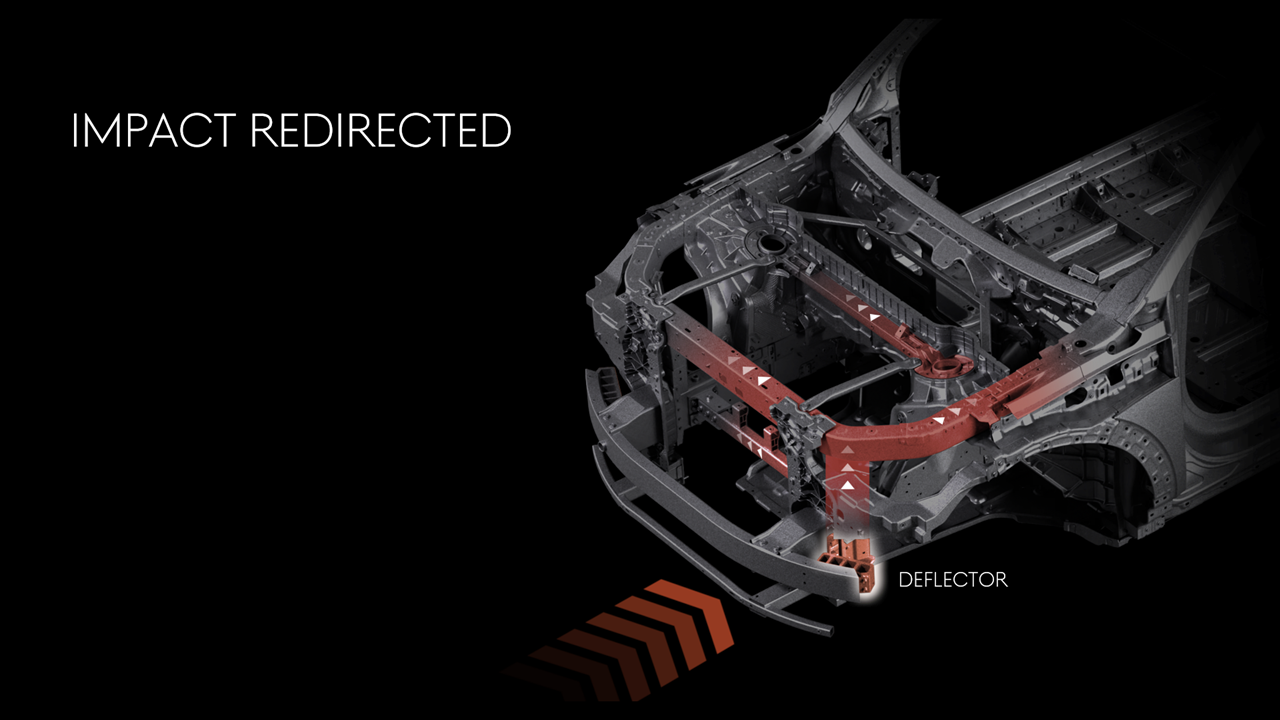
Frontal Deflector Structure: In small-overlap frontal collisions, front-mounted deflectors redirect impact forces sideways, helping guide the vehicle away from obstacles and preventing direct loads from penetrating the passenger cabin.
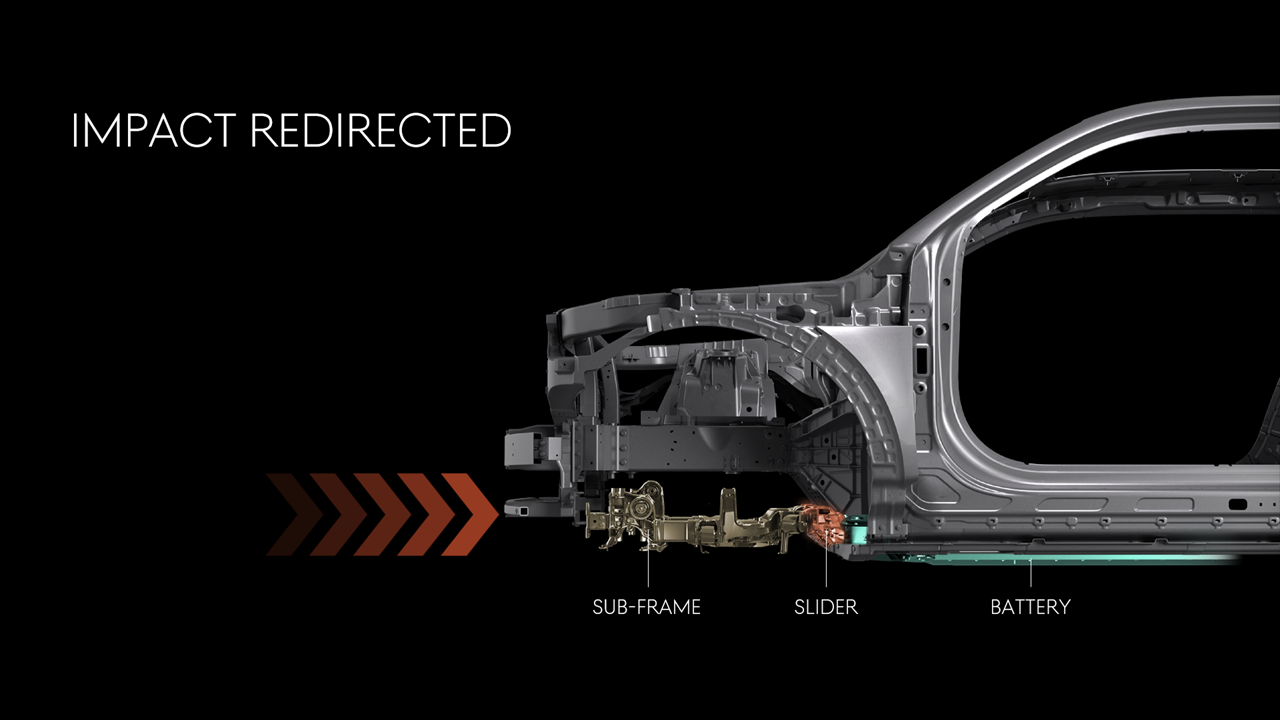
Slider and Protector System: During a high-speed frontal crash, a lower slider structure directs heavy subframe and motor components to slide underneath the battery pack. In front of the battery, a protective structural crossmember helps protect the battery pack from curbs and road obstacles, guiding the vehicle over them.
Cell Safety and Pre-Diagnostics: Within the battery pack, cell-to-cell thermal barriers prevent heat from spreading to adjacent cells, while a cloud-based Battery Management System (BMS) pre-diagnostic function monitors battery health and notifies drivers of potential issues in advance.
Prioritizing Customer Safety
The GV90’s “invisible armor” is more than a structural idea. It represents Genesis’ conviction that the most meaningful luxury technologies should work quietly, intuitively and with purpose — supporting the customer without demanding attention.
As the marque enters a new era of electrified flagship mobility, the GV90 demonstrates how sophistication can be expressed through both what is seen and what remains unseen, in line with the vehicle’s reductive design approach. Its design creates a sense of welcome, while its engineering helps sustain the confidence behind that experience. Together, they define an evolved expression of Genesis hospitality.
“From a 12-airbag system designed to respond to various collision scenarios to a robust body structure that protects the cabin against various impact scenarios, all these technologies were perfected under a single philosophy: prioritizing customer safety above all else. Even as we rapidly approach the era of future mobility, Genesis will steadfastly uphold its promise to deliver the safest vehicles,” concluded Seungmok Lee.
ㅤ