

GV90 DEEP DIVE PART 4: ACHIEVING BESPOKE-LEVEL QUALITY IN MANUFACTURING
SEOUL, Oct. 27, 2026 — In traditional luxury coachbuilding, craftsmanship has long been associated with the deliberate hand of the individual artisan — shaped by touch, inspected by eye, and finished in limited numbers. Replicating that level of material depth and tactile quality within modern, high-precision serial manufacturing is a technically complex challenge.
For the GV90, bridging this gap was the primary responsibility of Jaehun Jung and his team in the Genesis Manufacturing Engineering Group. Their objective was to translate the refined design, complex curves, and premium materials of Genesis’ flagship electric SUV into mass production without compromising quality.
“The GV90 is a flagship model born from the culmination of Genesis’s entire range of capabilities,” explains Jung.
“The role of our manufacturing technology was to deliver a level of craftsmanship — akin to that of a master artisan — consistently to every customer through mass production; in other words, to realize a standard of perfection befitting a flagship vehicle.”
That vision is realized inside Genesis’ GV90-dedicated EV plant in Ulsan, Korea. Drawing upon decades of manufacturing experience, the facility was designed to deliver consistent quality with an emphasis on the attention to detail associated with bespoke craftsmanship.
Precision-Molding Moon Jar-Inspired Aesthetics
The GV90’s exterior profile draws aesthetic inspiration from traditional Korean “dalhang-ari” or moon jars — ceramic vessels celebrated for their full, organic curves, restrained visual aesthetics and seamless surfaces. Producing those deep, continuous convex contours in structural metal, however, pushed conventional stamping methods past their limits, particularly given the extensive use of lightweight aluminum.
“The body of the GV90 extensively uses aluminum panels that are challenging to form,” notes Jung. “Conventional molding made it difficult to achieve the GV90’s deep, graceful curves which are reminiscent of a traditional Korean moon jar.”
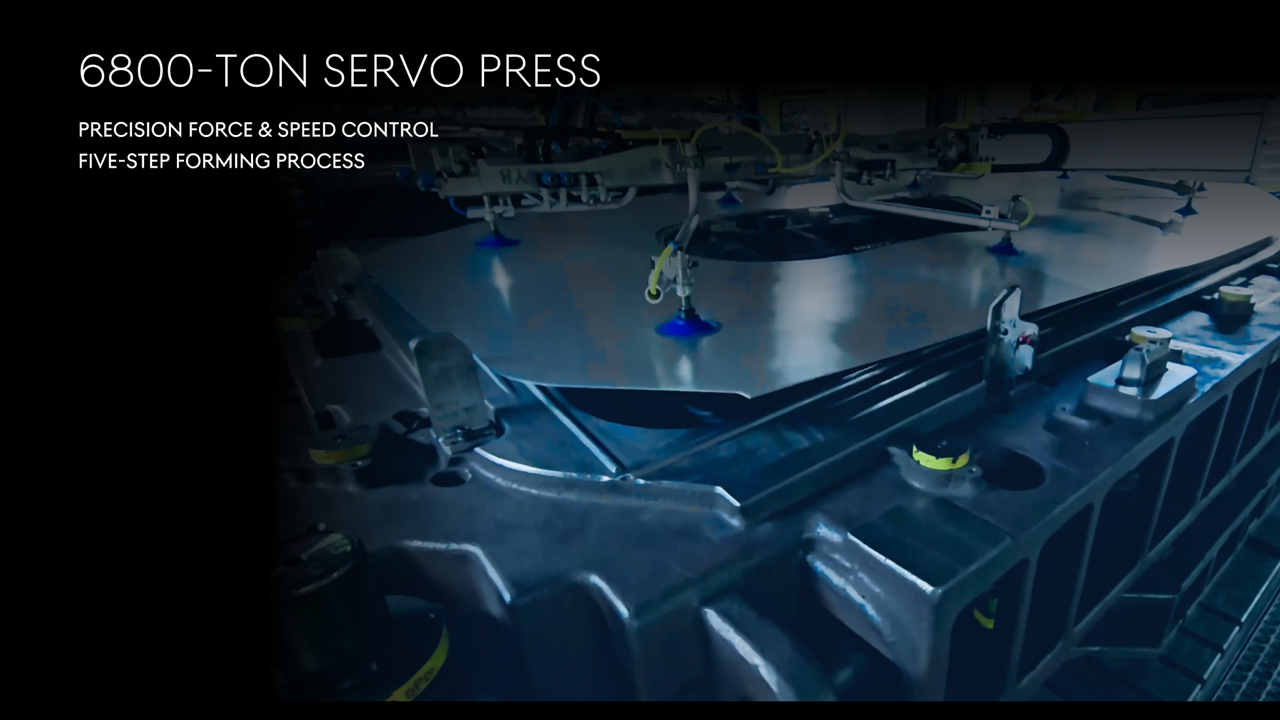
To overcome this, Genesis employed a specialized 6,800-ton servo press line. Unlike conventional mechanical presses that strike sheet metal with fixed velocity and force, a servo press allows engineers to program and vary both stamping force and speed throughout each stroke with precision.
The GV90’s primary exterior panels undergo a calibrated five-stage forming process. At each stage, the servo press applies tailored pressure profiles to draw and shape the aluminum gradually, preventing material tearing or uneven thinning.
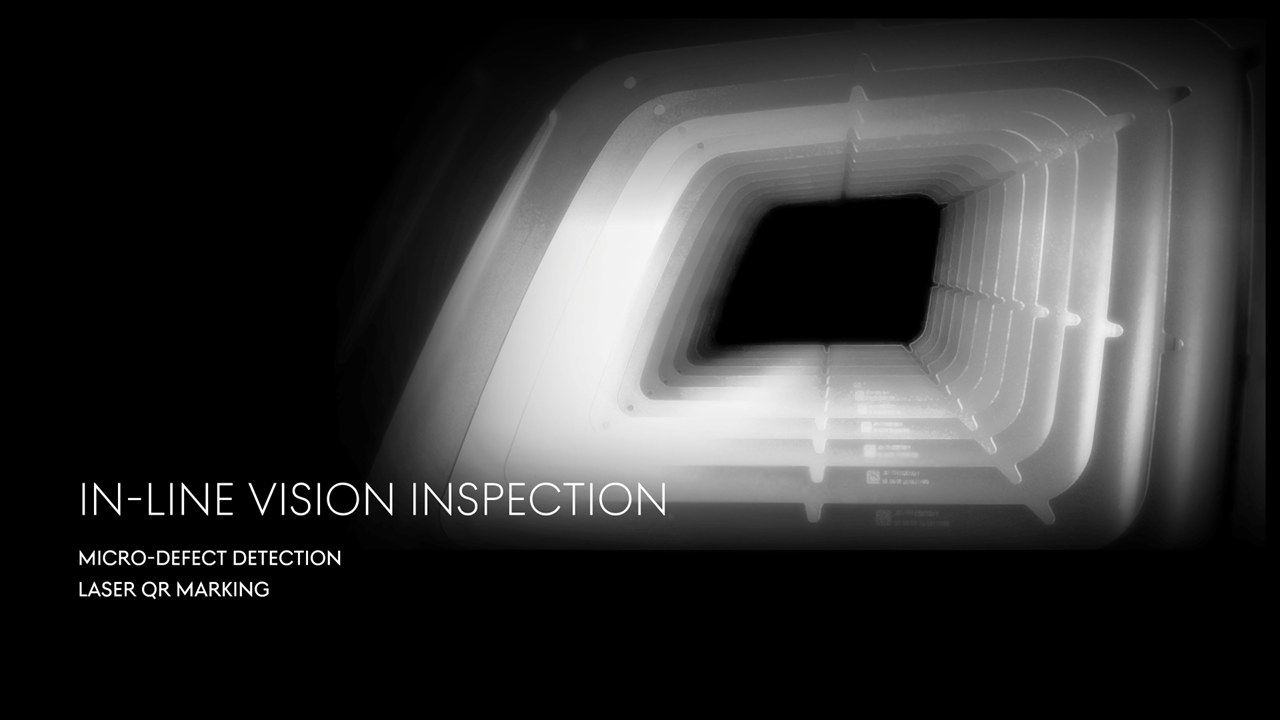
The formed panels undergo a camera-based visual inspection to detect small cracks or defects, ensuring that only flawless panels proceed to the next stage. Additionally, a unique QR code is laser-etched into each panel to track production history, making it possible to trace every single panel even after delivery to the customer.
Mastering Multi-Material Joinery
Beneath its exterior panels, the GV90 features a body structure composed of more than 70% aluminum — a significant increase from approximately 35% in previous Genesis platforms. This lightweighting strategy offsets battery pack mass, sharpens handling responsiveness and enhances driving efficiency.
However, combining high-strength steel with lightweight aluminum introduces a distinct metallurgical hurdle: the joining of the two metals is challenging when using conventional fusion welding.
“The extensive use of aluminum has resulted in approximately 720 joints where aluminum and steel are joined — more than four times the number found in the previous platform,” Jung explains.
“However, since aluminum and steel are difficult to join using conventional fusion welding was not enough to achieve the rigidity required for a flagship model.”
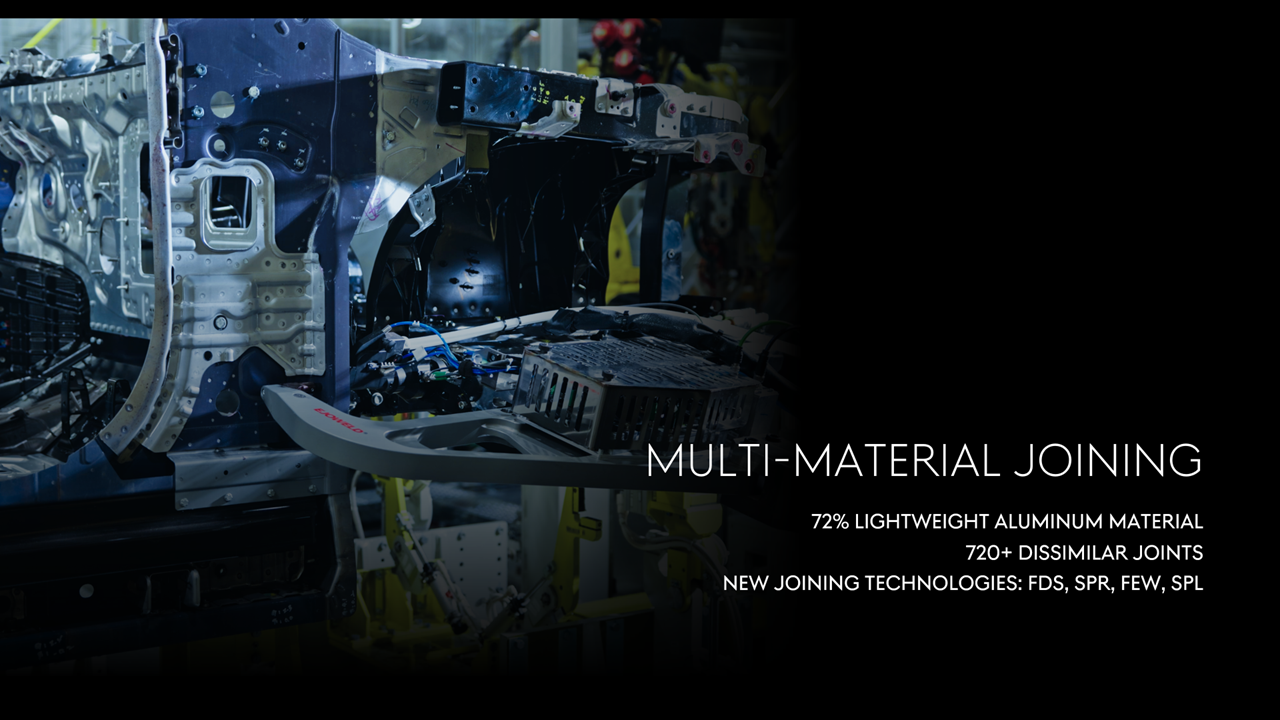
To build a rigid, lightweight body, Genesis introduced four distinct new joining technologies across these dissimilar joints including screws, rivets and laser welding.
Flow-drill screws (FDS) and self-piercing rivets (SPR) combined with friction element welding (FEW) mechanically fasten overlapping panels of sheet metals of different materials. with high joint fatigue strength.
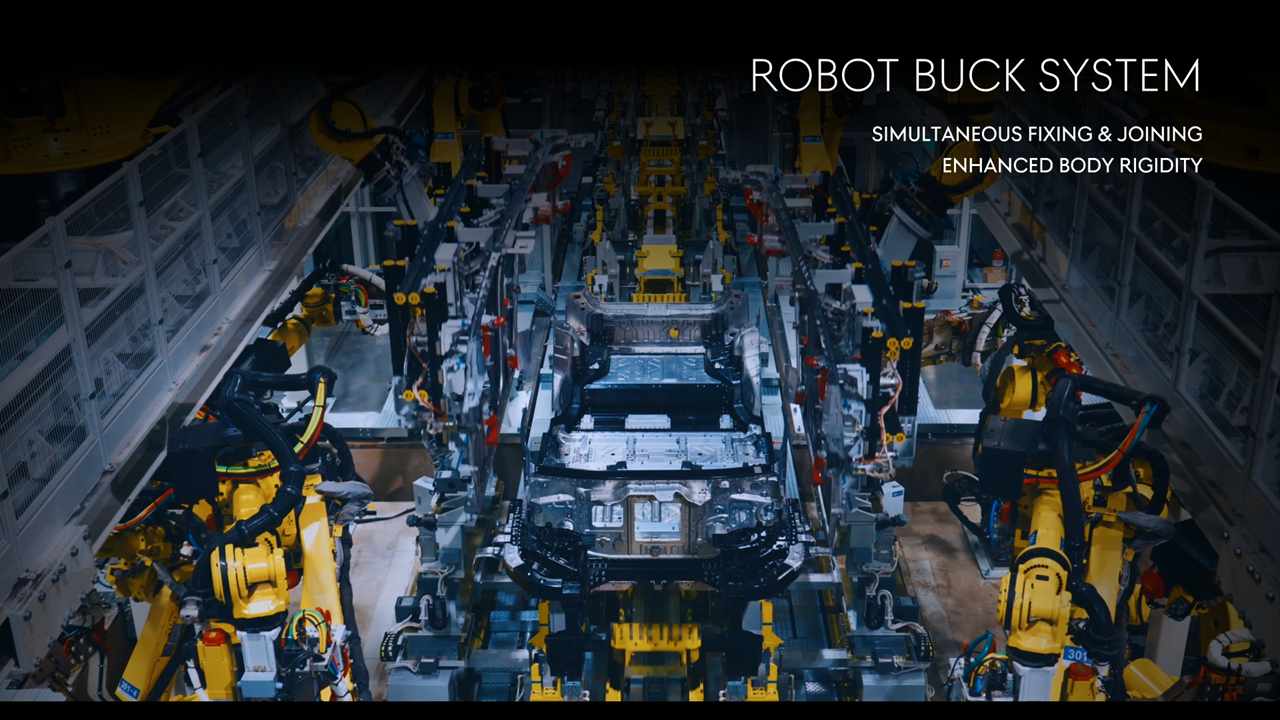
"This multi-material architecture is assembled using a robotic buck system and high-precision body measurement rigs. Vertically arranged robots hold side assemblies firmly while securing hundreds of connection points simultaneously, ensuring tight assembly tolerances and high torsional stiffness.
The 15-Micrometer Quality Standard
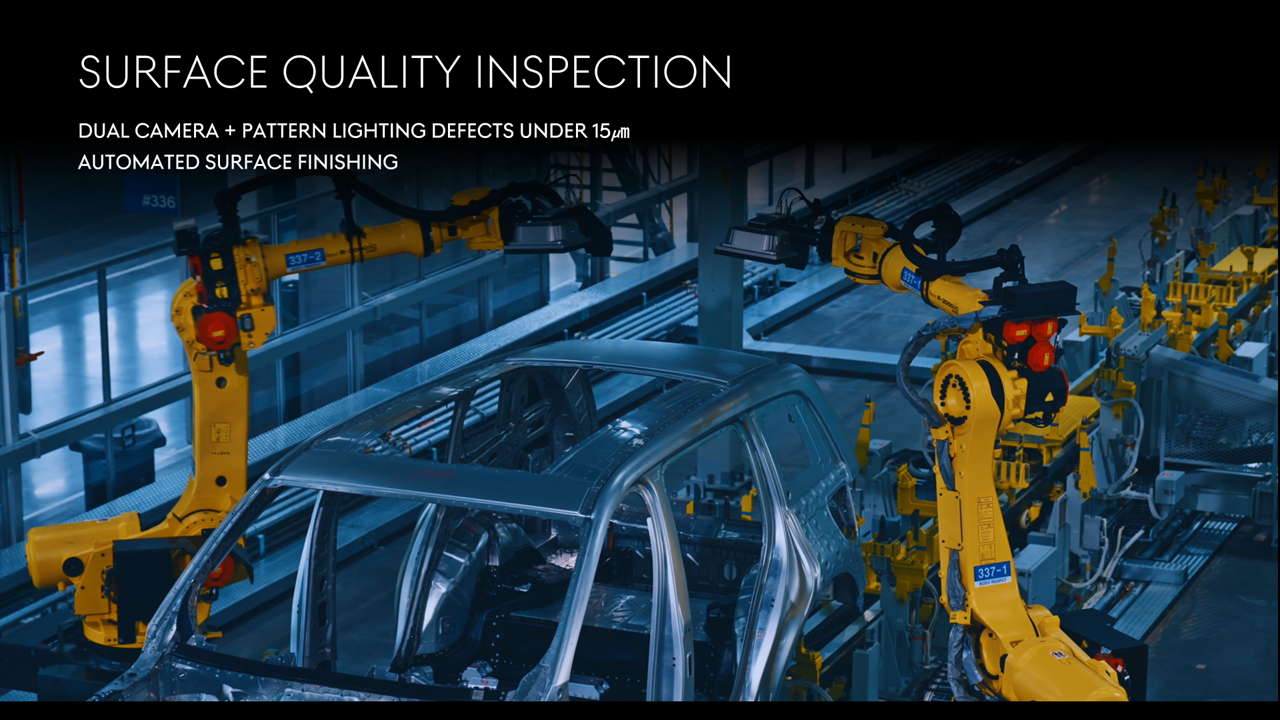
The completed vehicle body is then scrutinized using an advanced surface quality inspection system to ensure panel consistency before it enters the paint shop. This automated camera visual inspection system is calibrated to a fine, 15-micrometer threshold.
“The system offers precision six times greater than human vision, detecting defects as small as 15 micrometers,” Jung points out. “Although 15 micrometers is merely one-fifth the thickness of a human hair, these defects become visible once the light hits the painted surface so this should not be overlooked.”
The system utilizes dual optical cameras paired with structured pattern lighting that quantitatively measures minute deviations in panel height and curvature. After scanning, bodies pass through an automated finishing stage where even the tiniest irregularities are smoothed and corrected.
Robotic arms equipped with dual high-precision cameras and pattern lighting scan panels for micro-defects smaller than 15 micrometers — six times finer than human vision — before automated surface finishing smooths any irregularities prior to painting.
Luxury You Can Feel
This commitment to craftsmanship also comes alive through carefully considered interior appointments.
Seating surfaces and trim are wrapped in premium, semi-aniline leather tinted and conditioned using eco-friendly natural dyes extracted from pine trees, linseed, and rape flower oils. This specialized organic treatment minimizes the vehicle's production footprint while preserving the signature, ultra-soft texture of the hide. To further elevate the cabin's ambiance, authentic wool cashmere serves as a premium upholstery garnish, introducing a distinct sense of warmth and coziness to the interior space.
In the GV90 Neolun, this rich tactile experience extends from the seats down to the vehicle floor, where a genuine dark hardwood veneer conceals a modern interpretation of Korea’s traditional ondol heating system. Rather than relying solely on forced-air climate vents, a radiant heating system beneath the real wood floor gently warms the cabin from the ground up, uniting centuries of Korean architectural hospitality with contemporary industrial craftsmanship.
This organic warmth harmonizes beautifully with the cabin's layout. Directly below the expansive digital displays, real glass crystal buttons serve as premium physical shortcuts that deliver precise tactile feedback for everyday core controls.
This glass craftsmanship extends to the signature Crystal Sphere controller on the center console. When parked, it rests as a beautifully laser-engraved glass orb; upon activation, it automatically rotates to reveal the physical shift-by-wire drive selector, serving as the ultimate intersection of sensory art and advanced technology.
Individual Color Combinations from Dedicated Custom Paint Shop
To bring its nuanced palette to reality, the Ulsan plant incorporates a dedicated Special Color Booth within the automated paint shop.
“Genesis captures the customer’s personal taste through color,” explains Jung. “To meet the unique color combination preferences of every individual customer, we have established a dedicated special booth for custom color selections within the GV90 painting process. This is the moment a vehicle reflecting the customer’s individual aesthetic comes to life on the assembly line.”
When a personalized color combination order is placed, the body is automatically routed into this specialized facility, where paints and unique pigment layers are applied to match the customer’s selected color. Crucially, this personalized capability is paired with sustainable production methods.
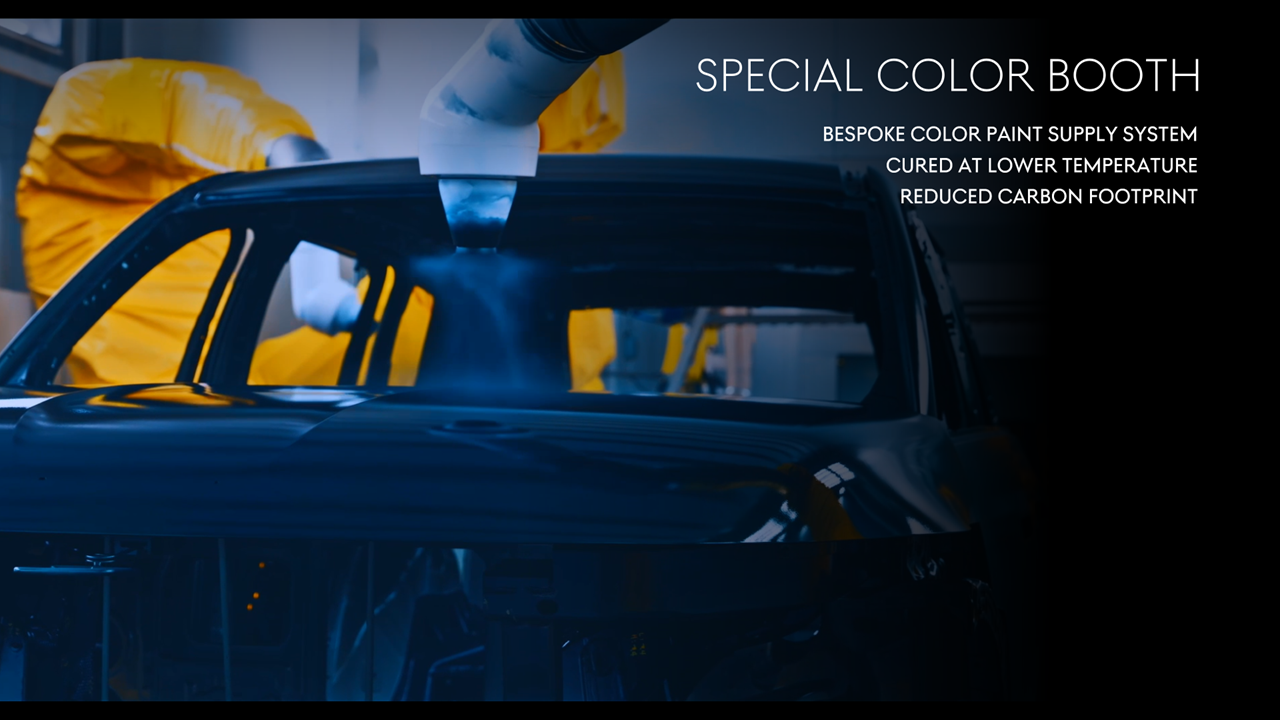
Traditional paint drying relies on high-temperature bake ovens that consume massive amounts of thermal energy. Genesis engineered a next-generation low-temperature curing paint system that dries the multi-layer finish at substantially lower temperatures.
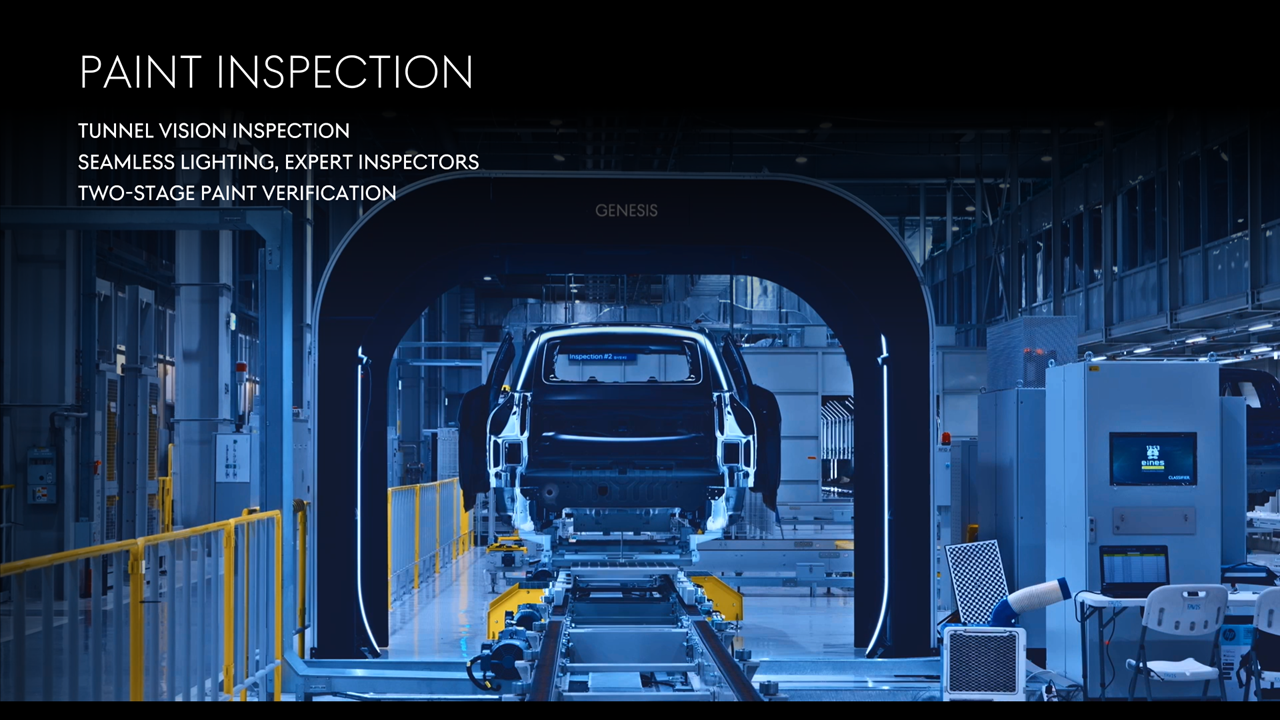
This process cuts paint-shop carbon emissions by up to 40% while delivering a smooth, high-gloss surface. After curing, the painted body passes through a dual inspection: automated camera tunnels check paint depth and uniformity, followed by skilled technicians who verify reflection clarity under continuous, seamless lighting tunnels.
A Quiet Cabin Even at 160 Kilometers Per Hour
Because a luxury vehicle is expected to remain quiet and composed under all driving conditions, final acoustic and dynamic testing occurs inside a controlled facility, shielded from fluctuating weather and road surfaces.
“On actual roads, wind and road surface conditions vary from day to day, inevitably altering the criteria for assessment,” explains Jung. “That is why we eliminated external environmental variables and verify every GV90 produced under identical conditions.”
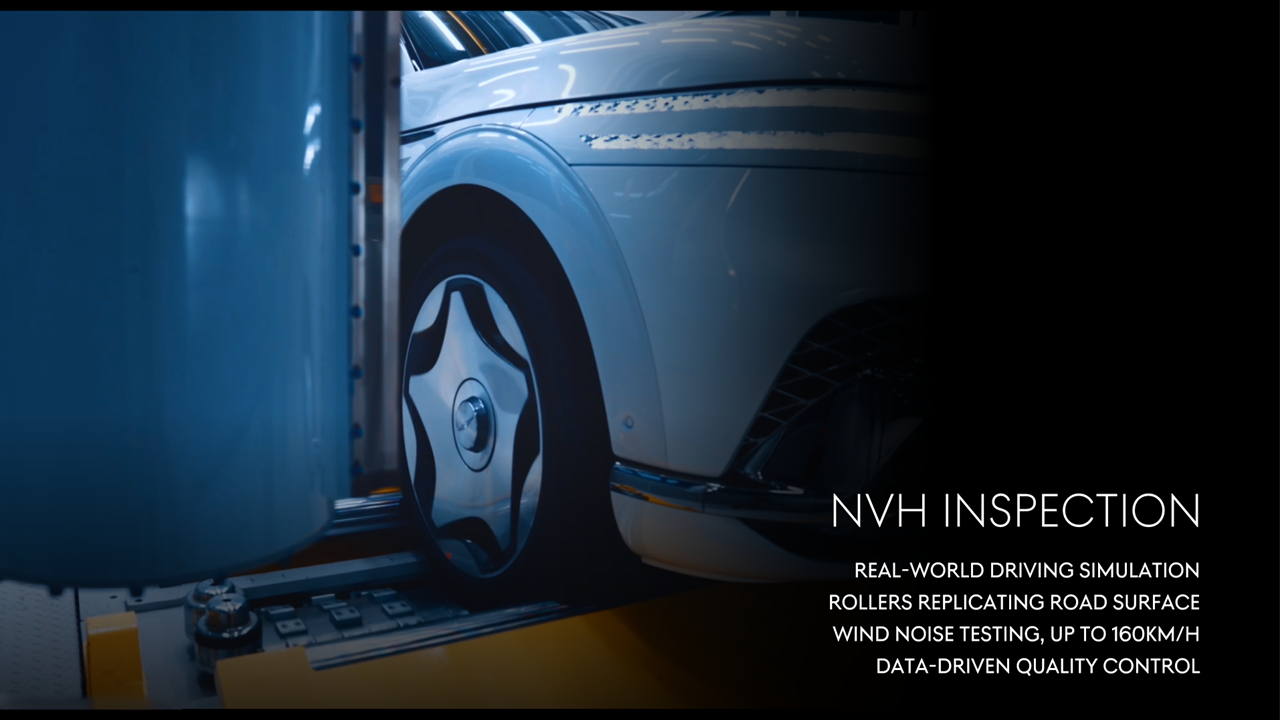
Every production vehicle is placed onto an enclosed roller inspection rig equipped with a variety of surface irregularities. High-powered wind blowers generate simulated highway speeds of up to 160 kilometers per hour, allowing automated acoustic sensors and quality inspectors to measure wind rush, tire harmonics, and driveline vibrations under repeatable conditions.
This process ensures the cabin delivers a consistently quiet and composed ride before leaving the line. The collected data is analyzed in real time and fed back to upstream stations to maintain consistent build standards.
The Evolution of Flagship Manufacturing
“All the processes that go into building the GV90 are in place for a single goal: perfect quality,” Jung concludes.
“From the pressing to the final inspection process, the GV90 was created by combining the know-how of skilled craftsmen with the precision of robots. Crafted with the dedication and expertise cultivated over time, the GV90 stands as the luxury flagship of Genesis. We invite you to look forward to the new future of Genesis that the GV90 will shape.”
| GV90 Manufacturing Highlights |
|
ㅤ