SURVIVING LE MANS: GENESIS MAGMA RACING’S HISTORIC 24-HOUR DEBUT
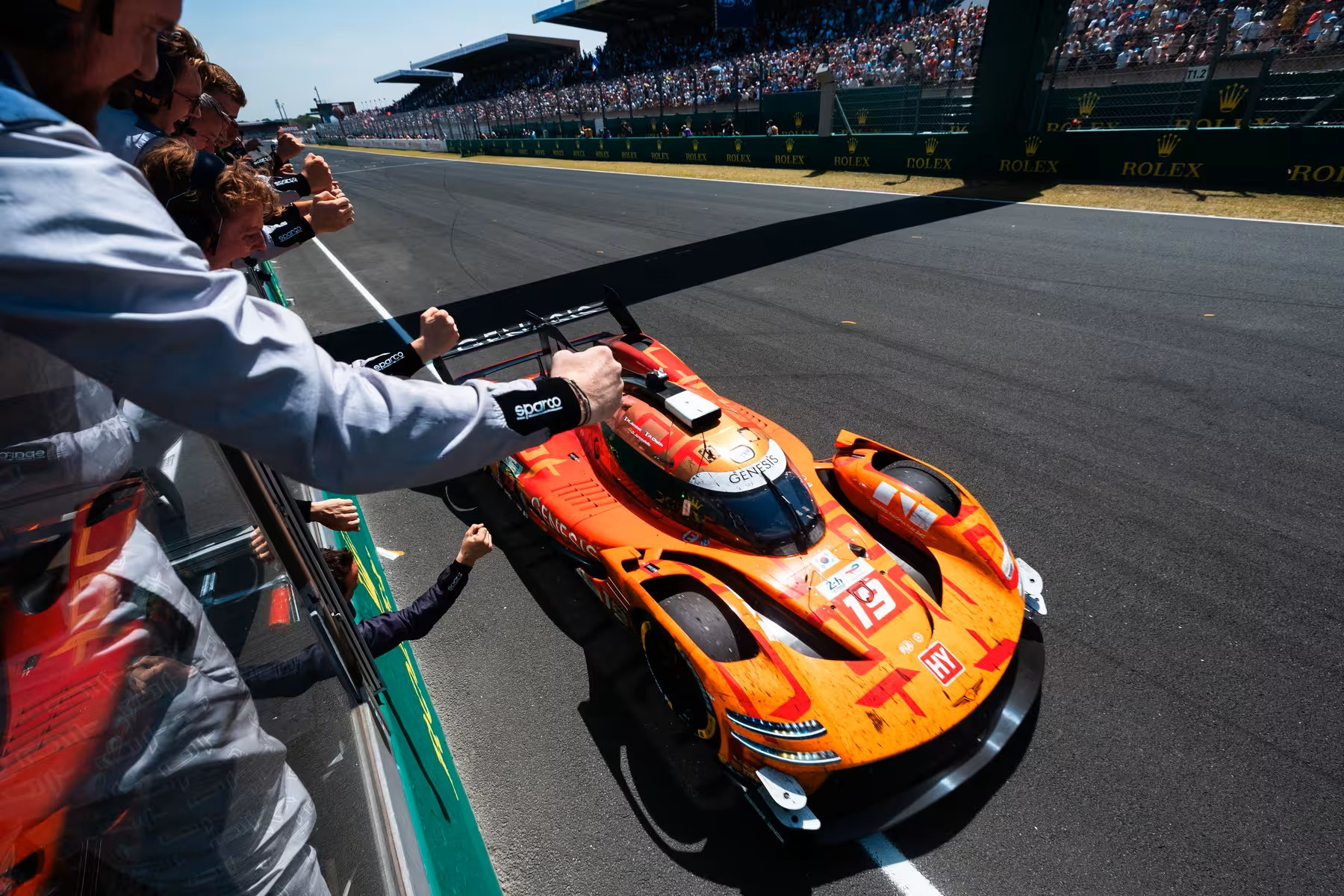
LE MANS, France, July 07, 2026 — As the unmistakable fiery orange and hangeul-liveried #19 GMR-001 Hypercar turned into the final straight at the Circuit de La Sarthe towards the checkered flag, the Genesis Magma Racing pit crew scrambled to the top of the pit wall. Shouting over the engine noise, waving wildly and capturing the historic moment on their phones, they raised their fists excitedly as the Hypercar crossed the finish line.
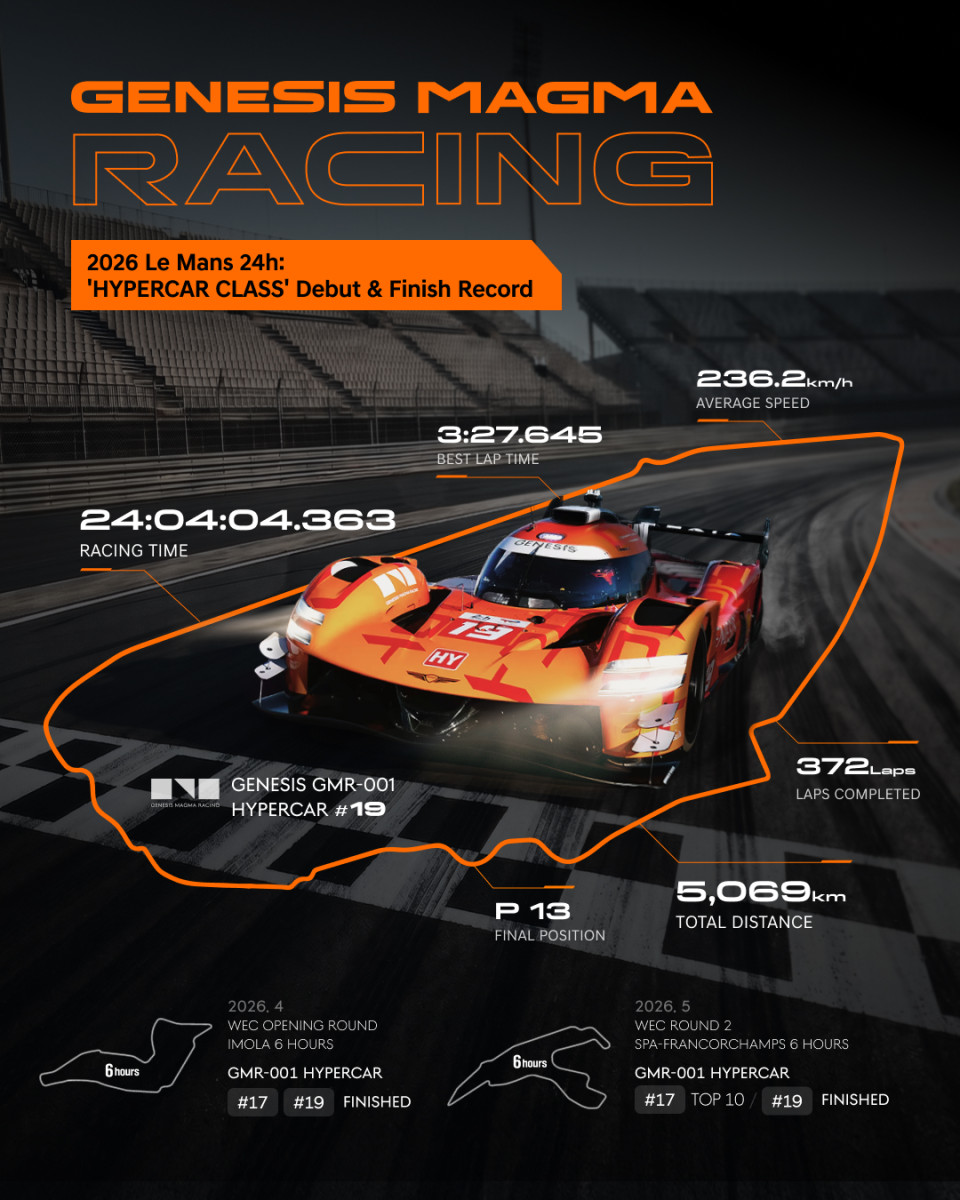
To the uninitiated, it may seem like a celebration of victory at the world’s most legendary race. The #19 Hypercar had actually finished in 13th place. But for a debutant team surviving their first brutal 24-hour endurance test, finishing 13th felt exactly like a win.
The #19 car had to be restarted three times during the 24-hour marathon, nevertheless it survived the demands of the ultimate endurance race. Genesis Magma Racing, a brand-new team in its inaugural year, had done something no other Korean manufacturer had ever done: raced the 24 Hours of Le Mans and finished.
Motorsport’s Most Hallowed Ground
Le Mans is the oldest continuously run motorsport event in the world, with its first race held in 1923. Among all global motorsport events, its legend is comparable only to the Monaco Grand Prix and the Indianapolis 500 in history, prestige and significance.
The race has elevated manufacturers and humbled others into obscurity. In its 100-year history, Le Mans was not held only twice: during a nationwide French labor strike in 1936 and during World War II, from 1940 to 1948. The race has evolved from a proving ground for production cars into the pinnacle of endurance racing, where the latest automotive technology — hybrid engines, direct-injection diesel powerplants and advanced materials — is pushed to its absolute limits.
Unlike modern closed racing tracks with uniform safety barriers and standardized features, the Circuit de la Sarthe is semi-permanent and untamed. It winds through the French countryside, connecting through the small city of Le Mans itself. At 13.626 kilometers, it is nearly three times longer than a standard racing circuit. Each corner of the track, named and famous on its own, demands unique approaches. Arnage is one of the most demanding corners on any track, a high-speed left-hander requiring absolute commitment and nerves of steel. Other turns like Porsche Curves, Indianapolis Turn and Mulsanne Corner each demand different skills, different levels of bravery and different calculations of risk.
The sheer length of the circuit creates unique logistical challenges, requiring three safety cars to be deployed across different sections to manage up to 62 simultaneously competing vehicles. Long periods of each lap are run at full throttle, placing an immense burden on engines and drivetrains that must endure this punishment for 24 consecutive hours.
Le Mans demands everything — physical, mental and mechanical — from the car and the team both. For a full day and night, drivers navigate the 13.626-kilometer circuit at speed through blinding daylight, pitch-black darkness, unpredictable weather, mechanical failures and exhaustion. Seventy percent of each lap is run at full throttle, with drivers making 78 gear shifts per lap on average, placing a load on each component beyond any other automotive environment. Teams must manage fuel consumption, tire degradation, pit stop strategy, mechanical and electrical failure as well as driver fatigue. Driving time is strictly limited: no driver can pilot the car for more than four consecutive hours, and no driver can exceed 14 hours total over the 24-hour period.
The most challenging portion of the race is during the “dead zone,” between 3 a.m. and 6 a.m. Fatigue peaks, temperatures drop and potential fog, frost or sudden rain exponentially increases the risk of accidents. Because the circuit is so large, rain often only falls on some sections of the track, meaning drivers can encounter sudden downpours while running on slick tires at dawn — a situation drivers describe as pure terror. A single mistake, one curb hit at the wrong moment, one sensor malfunction, one pit stop that takes too long, one mechanical defect in an air pipe can erase months of preparation.
Fewer cars finish Le Mans than start it. Even legendary manufacturers have sent multiple cars only to watch them all retire before reaching the checkered flag. Crossing the checkered flag does not necessarily guarantee a finish either; cars must cover at least seventy percent of the winning car's distance to be classified as a finisher. Success at Le Mans is measured in survival, not just podium position.
Monsieur Le Mans
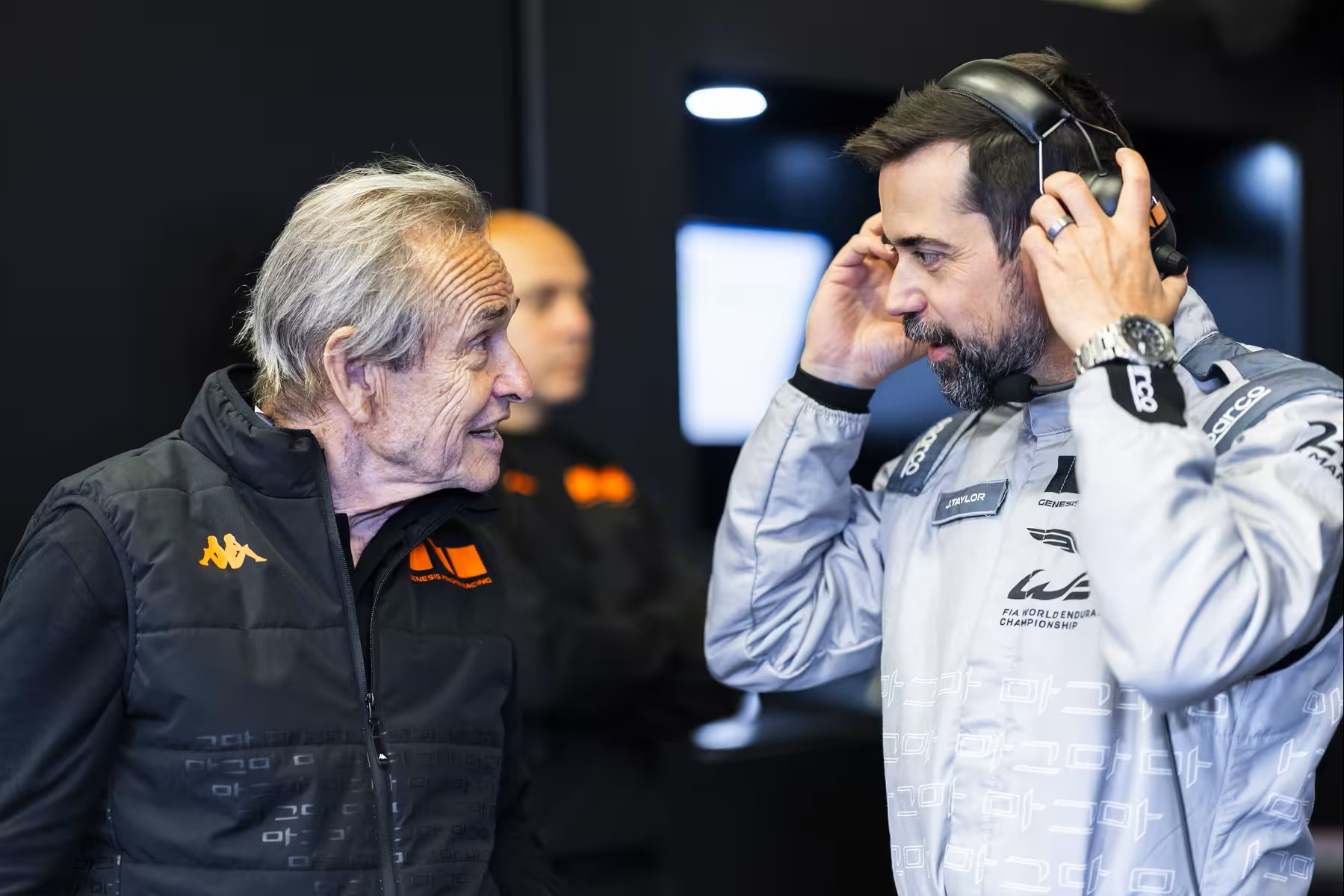
When Genesis decided to enter the world's most elite endurance series — the FIA World Endurance Championship — there was one voice they wanted in the paddock. Six-time Le Mans winner Jacky Ickx joined Genesis as Brand Partner and Racing Advisor, bringing unparalleled endurance experience and a lifetime of racing wisdom directly into the team.
Jacky Ickx is the name most synonymous with Le Mans mastery. The Belgian driver arrived at Le Mans when the race was in its infancy as a proving ground for automotive engineering. He returned again and again, and won — six times between 1969 and 1982, the first driver in history to win Le Mans that many times. He became known as “Monsieur Le Mans.”
The Ultimate Proving Ground
For Genesis, Le Mans was not just about racing — it was an audacious real-time stress test of the luxury marque’s engineering capabilities. Entering the world’s most punishing endurance arena meant going wheel-to-wheel with legacy manufacturers backed by decades of experience and data. Genesis Magma Racing were well aware of the massive operational and technical challenges ahead. Rather than chasing immediate podiums, the team set a pragmatic goal for their debut: to prove the reliability of the GMR-001 Hypercars by taking them across the finish line. At Le Mans, simply finishing is a triumph in itself.
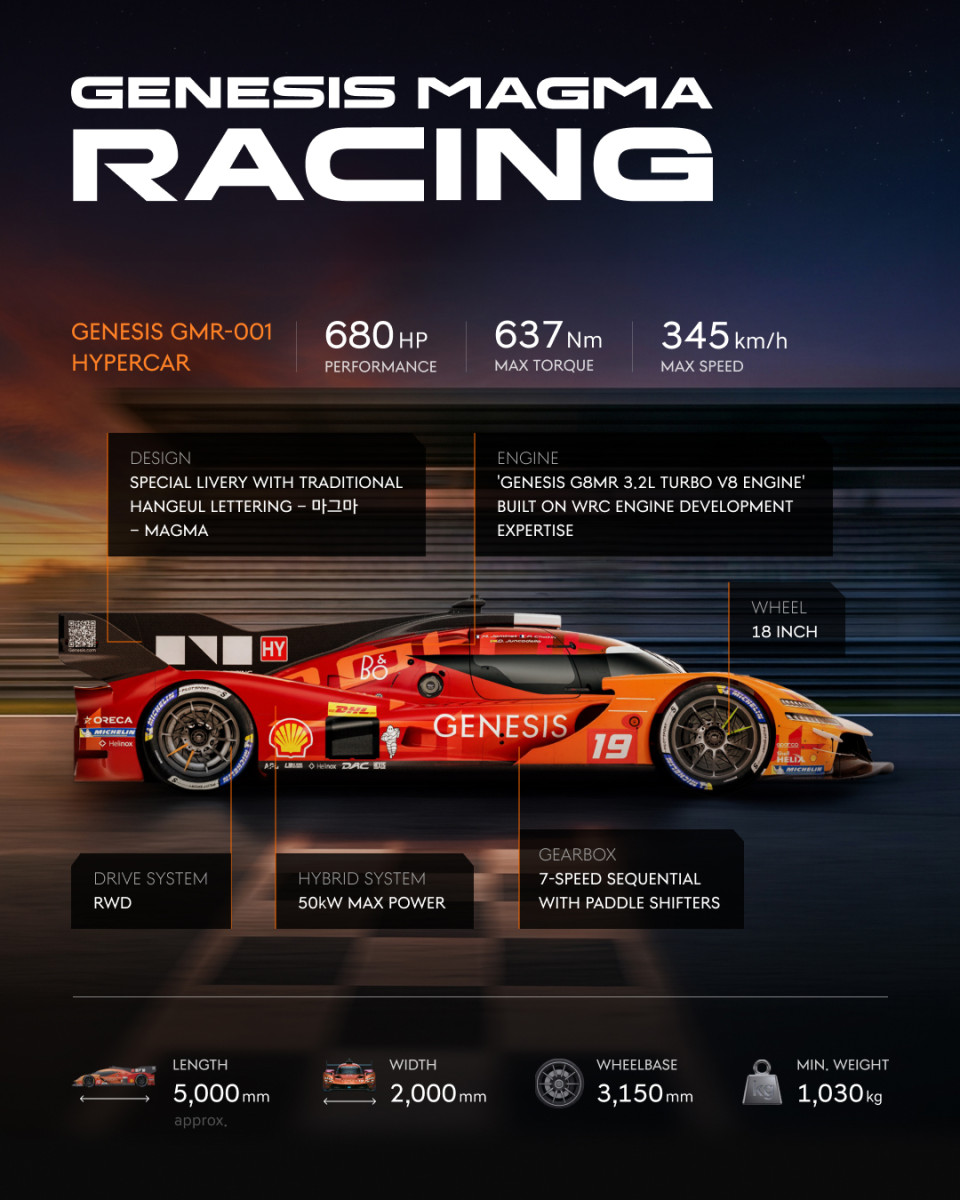
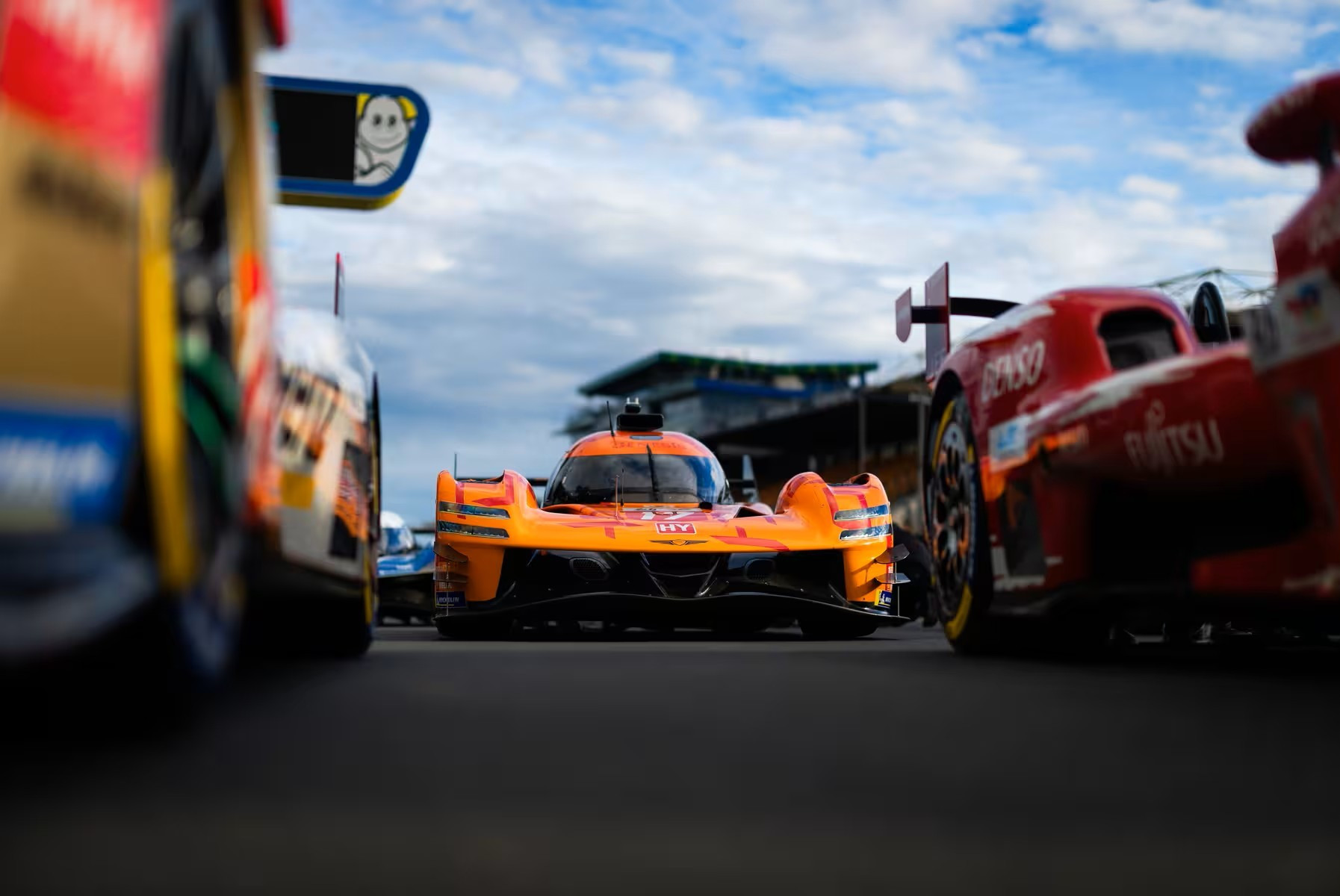
During the qualifying session on June 10, both cars unexpectedly advanced to the Hyperpole shootout the next day. The #19 car, driven by Paul-Loup Chatin, qualified sixth on the grid. The #17 car, driven by André Lotterer, qualified ninth.
"One of the biggest highlights at Le Mans was being able to qualify both cars in the top 10 — #19 started sixth and my car started ninth," Lotterer said. "That was a very remarkable performance from the team at such an early stage of experience, knowing that we are not yet able to extract everything from the car because we are young, we are still growing, we're still learning, we're still improving our resources to develop the car more, to understand it more."
The 24-Hour Trial
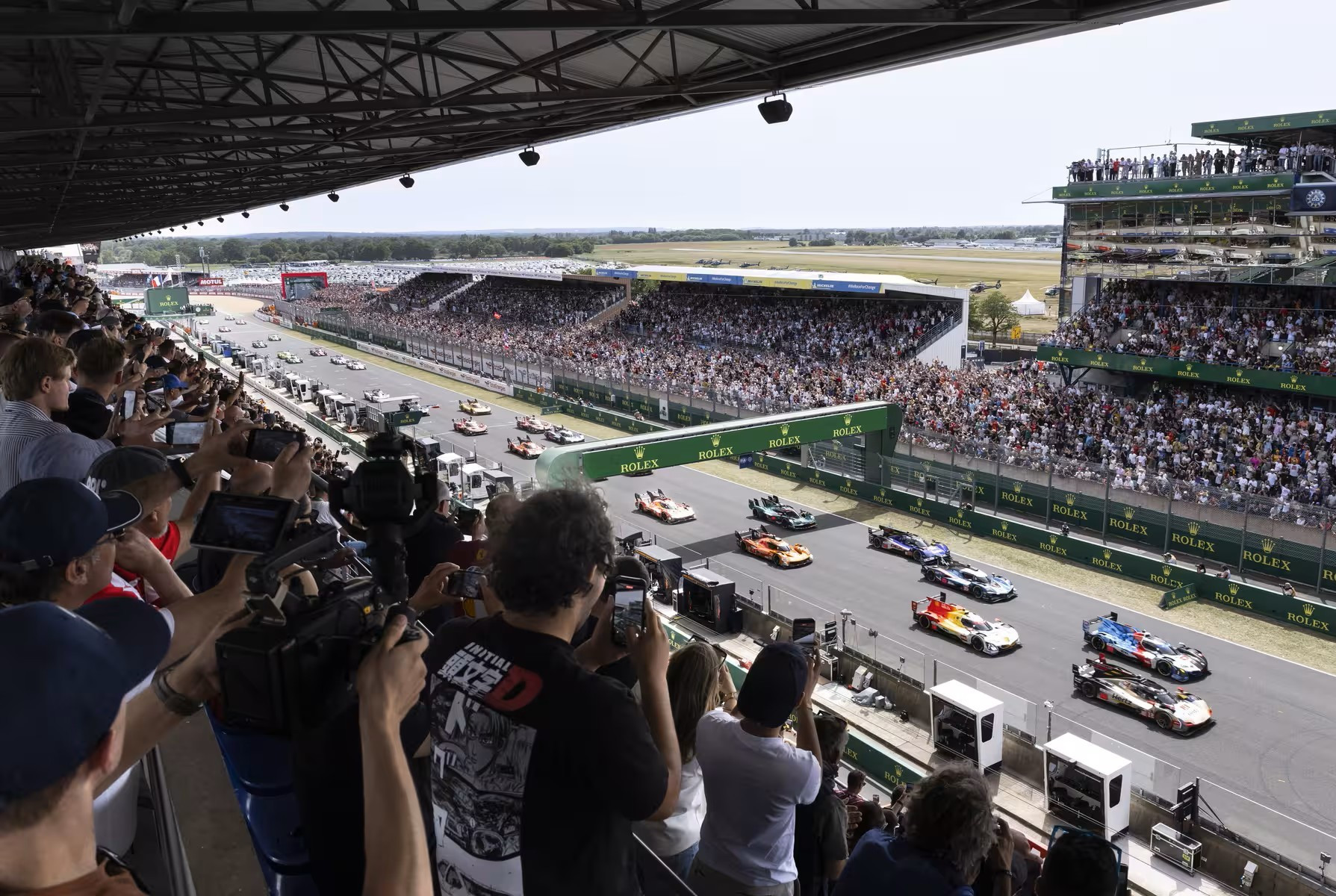
The race began Friday afternoon, June 13 at 4:00 p.m., under clear skies. Both Genesis Magma Racing Hypercars started the race with strong openings and settled into steady rhythms. Around them, familiar names battled — Ferrari, BMW, Toyota, Cadillac — manufacturers with decades of Le Mans experience. For the first six hours, Genesis Magma Racing focused on executing their strategy with efficiency and reliability.
The sun set six hours into the race. The Two-Line headlamp design of both GMR-001 Hypercars made them easy to identify in the darkness. “We have very unique and special lights, which is an iconic design feature of Genesis," said Lotterer. "And to achieve that very small, minimalistic line, there was nothing on the market that could replicate that. So, we developed our own light with new manufacturers. They are very powerful and definitely a nice crossover.”
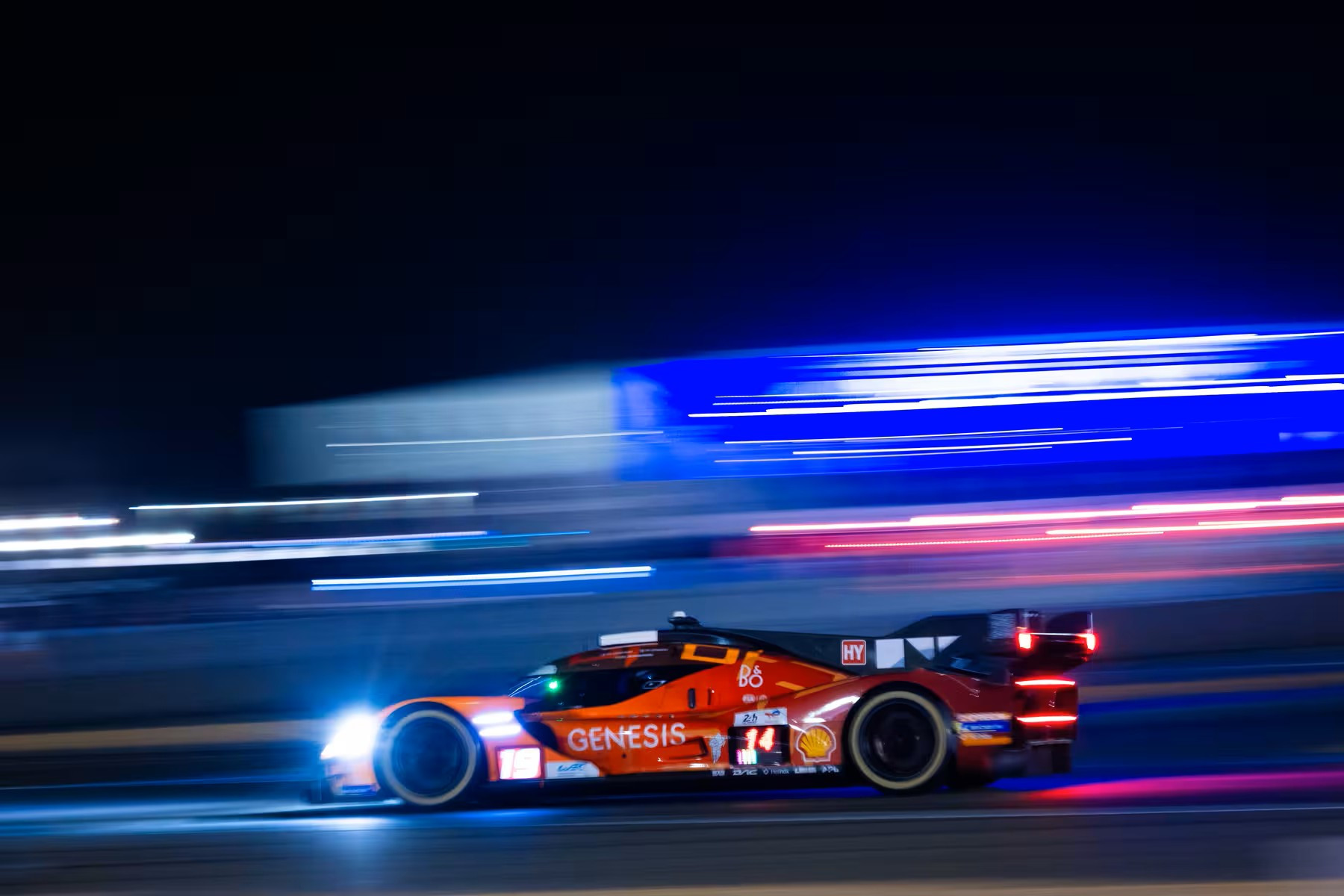
The race entered the dead zone 11 hours in, at 3 a.m. Just 17 minutes later, an LMP2 crash brought out a Full Course Yellow. Moments after that, the #19 car, driven by Chatin, lost engine power and rolled to a stop at the Arnage turn. With help only available from the team through the radio, Chatin had to restart the electronics himself. Thankfully, the car came back to life and Chatin resumed the race.
Exactly two hours later, the #19 car stopped on track again, and was restarted again. An unknown electrical issue had triggered the shutdowns.
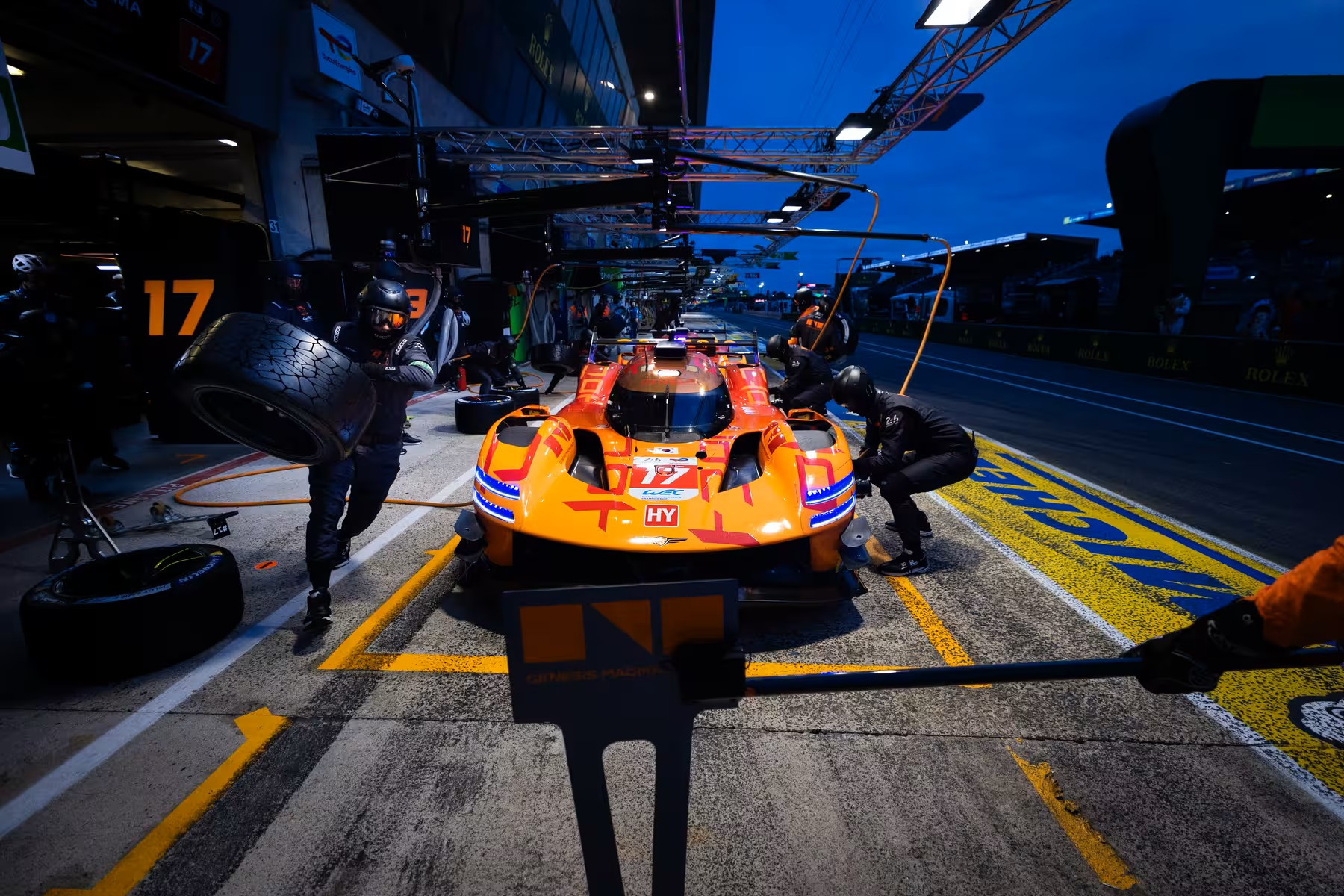
When the #19 pitted 18 minutes later, just a half hour before sunrise, the crew plugged in cables to check the car. Not finding anything, they signaled the car to leave. The engine cut out again just then in the pits — a nerve-wracking moment for a team trying to keep their Le Mans debut alive. But the car restarted once more and again rejoined the race safely. The stop cost the team roughly five minutes, dropping the car from 12th to 15th place.
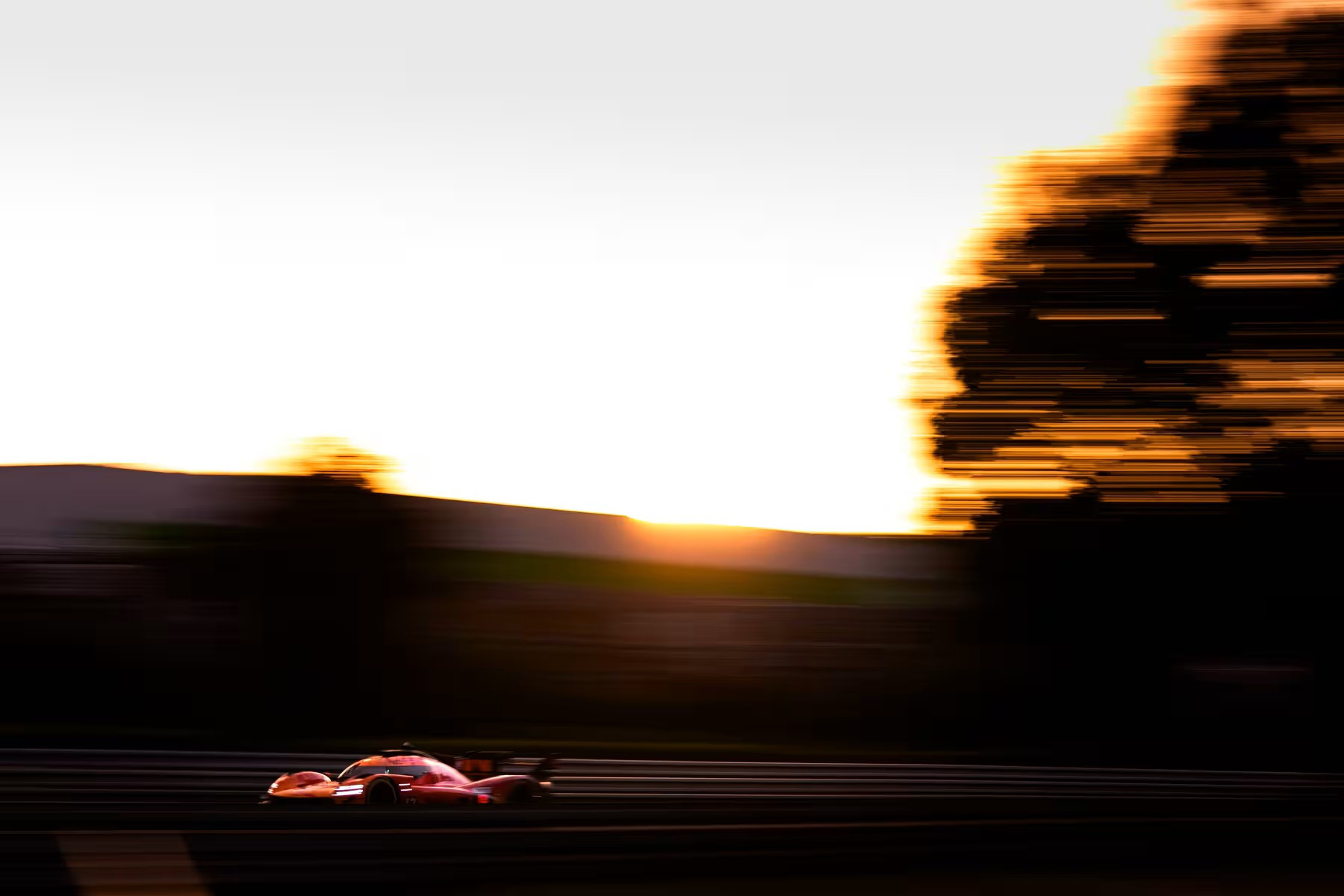
The sun rose at Hour 14. The #17 car was running smoothly. Lotterer, one of the drivers of the #17, later commented on how it feels to drive. "The feeling of the cars is really good," he said. "I am always very happy with the car balance and the feeling of the car, and it always gives us confidence that we have a good tool." The GMR-001 was strong in the corners and steady on pace, running 10th through the middle hours. Real hope emerged that both Genesis cars might make it through to the finish.
But in the final stretch, with only seven and a half hours to go, Jaubert, who had been steadily running the #17, took a curb too aggressively. The impact damaged the right front suspension. The car could not continue. After running cleanly all race, the #17 was forced to retire.
Still, the #19 remained on track. Despite mysterious electrical gremlins that had caused three restarts and a fall far down the order, it was still running, still in contention to finish. Paul-Loup Chatin took the wheel again for the final hours. The car was running 14th and 15th — bouncing around the order as other cars ahead suffered mechanical failures or pit stop disasters.
As the final laps approached, the order began to crystallize. The #19 was running 13th. The car had the pace to maybe climb higher, but time was running out.
Checkered Flag
After a troubled run, the #19 car finally approached the checkered flag. By the time it crossed the line, the crew had already climbed to the top of the pit wall, waving, yelling and celebrating, having accomplished what they set out to do.
"At Le Mans, the race always tests you. The only thing you can choose is how you respond. Our team never stopped pushing. Every lap, every challenge and every piece of data helped us learn. And that’s what motorsport is really about," Lotterer said. “For us, this is only the beginning. We’re learning, improving and getting stronger every time we go racing. I hope you're as excited as we are!”
"At Le Mans, we didn't have any issue with the engines themselves," Lotterer said. “On the #19 car, there was a software glitch where during a Full Course Yellow phase the car had to be reset, but there was nothing from the hardware itself, from the internals, from the engine that had any issues. On my car, #17, there were zero issues at all. This is quite remarkable because in the short time we had to prepare, the engine was the longest it had ever run.”

A Historic Moment for Korean Motorsport
For Genesis, a homegrown Korean brand daring to step onto the sacred asphalt of Le Mans, this was the moment a dream became reality. Genesis Magma Racing left the starting grid as newcomers, proving themselves to be serious competitors. After 24 relentless hours, the team emerged on the other side of the gauntlet. In a sport where simply reaching the finish is an achievement in itself, the #19 Hypercar finishing was not just a successful debut — it was a historic arrival. They had carved their name permanently into Le Mans history.
"Our dream is obviously to win, but we are very humble and we respect our opponents," Lotterer said. “We know that in the first year this is something very difficult to achieve, and we've already achieved more than what we hoped for. The more time goes on, the more expectations will be higher because we won't have the excuse of being rookies anymore. There we will have to show our true performance. In the near future, we are definitely aiming to be a winning team and not just participate. So, this is clearly an objective, and this is why it’s important now to establish ourselves correctly for the years to come.”