

EMPTINESS, ESSENCE AND HERITAGE: EXPLORING AESTHETICS OF THE NEOLUN CONCEPT AT CHEONGJU CRAFT BIENNALE
Genesis Cheongju’s craft exhibition “Night in Motion,” held in September 2025 in collaboration with the Cheongju Craft Biennale, went beyond a simple car exhibition to present a new intersection of art and technology, leaving a strong impression on visitors. Centered around Genesis’ first full-size electric SUV concept, Neolun, this exhibition offered a profound artistic experience of the harmonious aesthetics created by the works of emerging domestic artisans.
Meet three artisans who illuminated this exhibition and read about them discussing their craftsmanship in realizing art with different materials, their collaboration with Genesis through the 2025 Cheongju Craft Biennale, and the aesthetic inspiration they felt from Neolun.
Artist Soyun Jung: Landscape of “Emptiness” Stitched in Thread
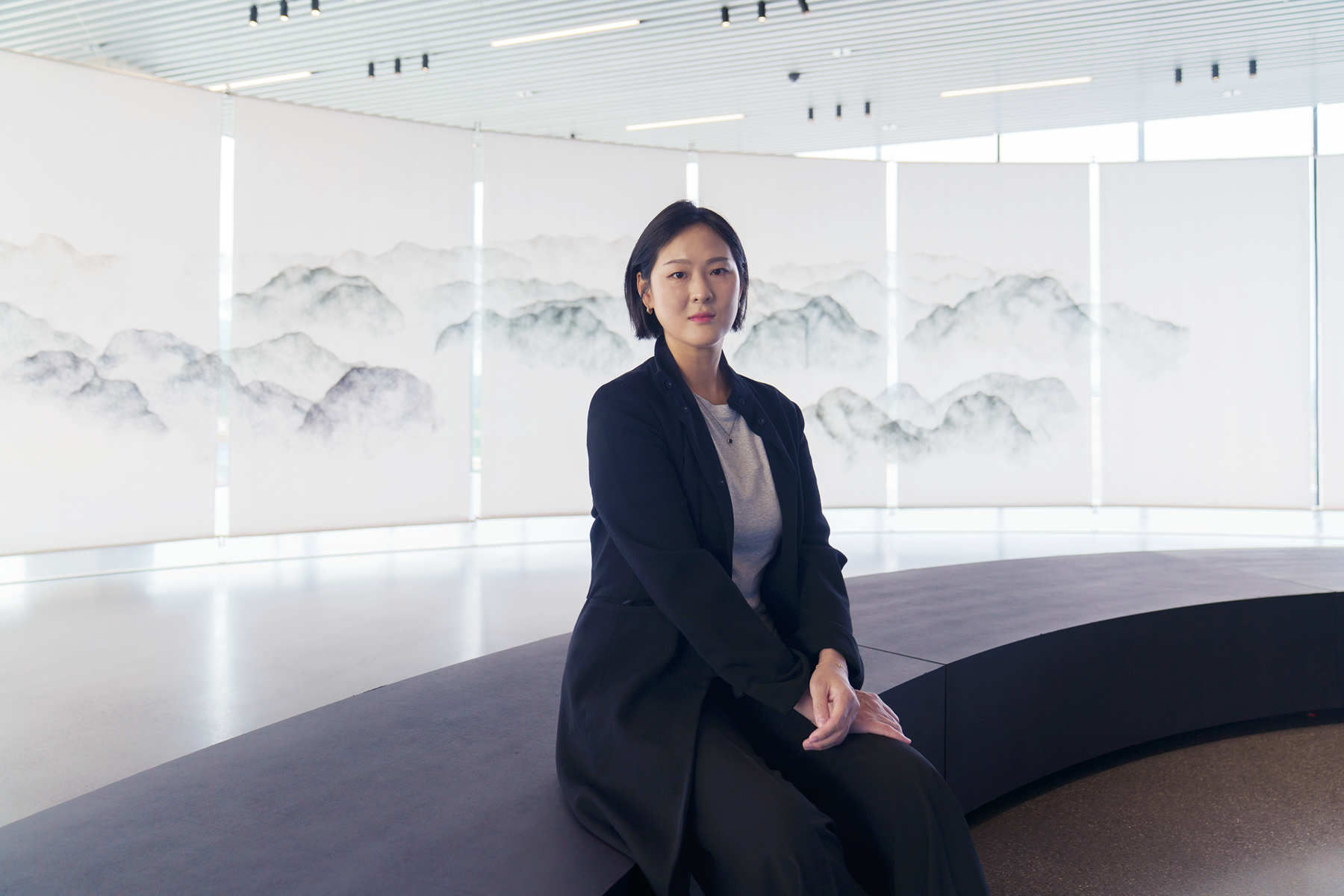
An expansive landscape envelops the Genesis Cheongju exhibition hall, a work by Soyun Jung, focusing on nature and the human body through the medium of textiles. She finds inspiration by contemplating human existence and attitudes toward life amidst its challenges, aiming to convey a positive perspective on life as a part of nature in her artwork.
Your craftsmanship is evident in the artwork that depicts landscapes stitched with thread. I'm curious about what inspired you to create this piece using thread as your medium.
While majoring in textile art, I naturally learned how to work with thread. When I first began drawing with thread, the act itself felt incredibly fresh and intriguing. Over time, thread evolved from a simple material into an essential tool, much like a pencil. I believe my encounter with thread was a fateful moment that helped me discover the essence of creation.
I heard that your work was inspired by views of mountains seen through the window during a journey. What does the experience of movement mean to you?
During the production of the piece, I frequently traveled between Seoul and Yecheon. The endless mountain ranges unfolding outside my car window during those journeys became the core motif of my work. That time of movement became moments of contemplation and healing, allowing me to alleviate pain I held in my heart. The piece I exhibited this time also captures the “memories that the car provided.”
While exhibiting the Neolun concept alongside your work, did you make any specific efforts to harmonize the arrangement of the two pieces with your first impression of the vehicle?
First of all, I found the name “Neolun” to be incredibly poetic, almost like a work of art in itself. When I first saw Neolun, its simplicity and weighty presence struck me powerfully, and I could naturally sense the essence of craftsmanship embodied within it. Additionally, its colors create a subtle harmony between black and blue, so I adjusted the colors of the thread used in the mountain ranges at the forefront of my landscape to harmonize with Neolun’s color palette.
Not only the color but also the design philosophy of Genesis, which emphasizes the “Beauty of White Space,” is evident in your landscape. What does white space mean to you?
From an artistic perspective, white space is truly challenging. Every artist hopes to spend more time on their work hoping that the more time they invest, the more it will be refined. Therefore, I believe that negative space is a powerful tool for creating a profound atmosphere.
Genesis also embraces the philosophy of the Beauty of White Space, and I realized that this concept of emptiness is reflected in Neolun’s interior design through the implementation of “passenger comfort” and “simplicity of operation.” In fact, I haven't had many opportunities to be deeply exposed to the field of industrial design, so this collaboration with Genesis provided me with a valuable learning experience to gain a deeper understanding of the brand’s philosophy.
Artist Hojung Kim: The Sustainability of Ceramics Shaping “Heritage"
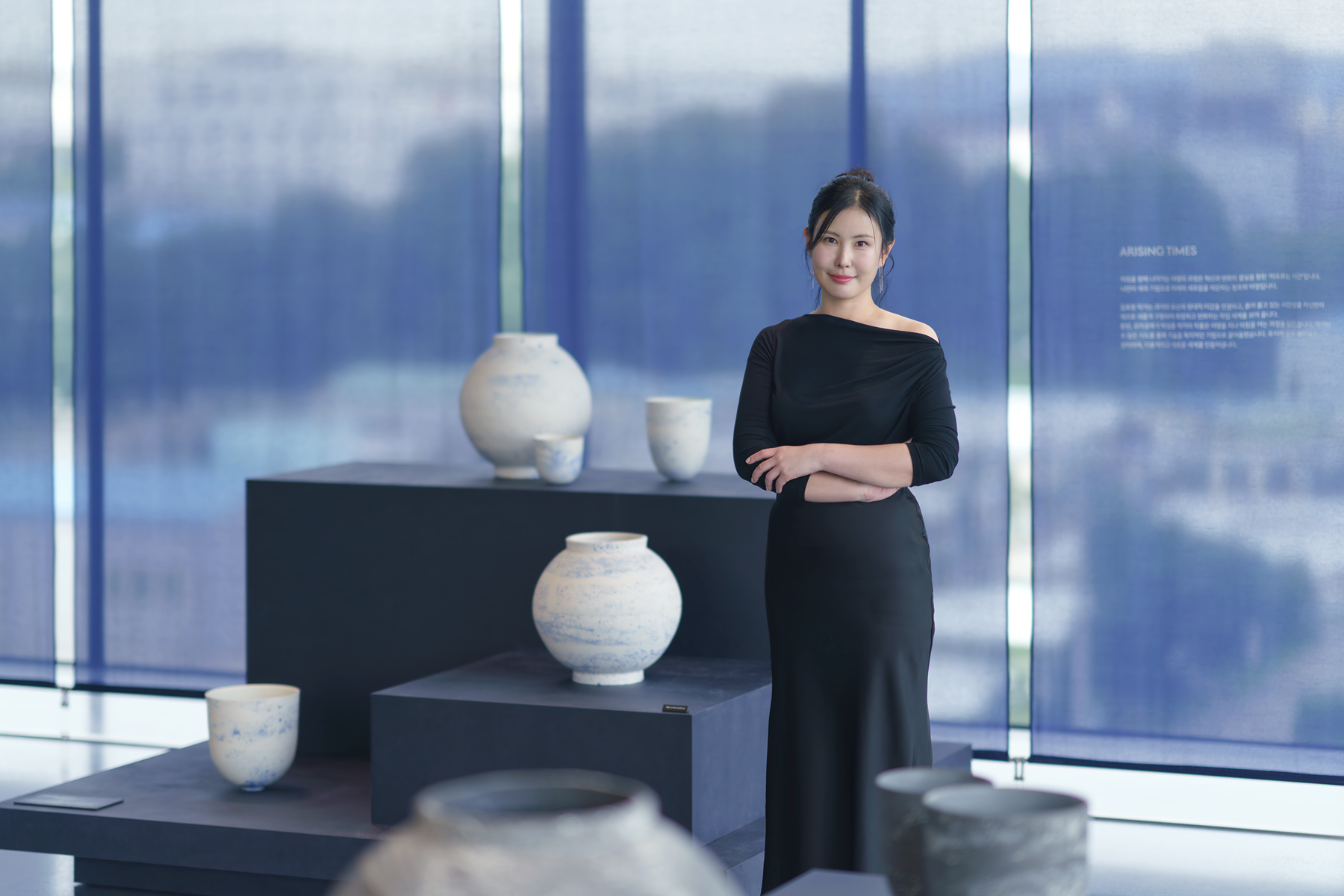
Hojung Kim reinterprets the essence and flow of tradition in a modern way through the material of clay. Her ceramics exhibited at Genesis Cheongju do not merely restore tradition; they showcase the temporality inherent in clay, reimagined in its own colors, showcasing an ever-expanding and evolving transformation. She discusses the perspective of sustainability in heritage and the Korean aesthetics shared with the Neolun Concept.
Your works that reinterpret Korean heritage in a modern context, such as comb-patterned pottery and moon jars, are impressive. What perspective do you prioritize most in the process of interpreting past heritage for a contemporary audience?
I place the highest importance on sustainability. Rather than simply following trends or being swayed by emotions, I constantly consider how my pieces can have a positive social impact and what values they can pass on to future generations.
Ceramics are not merely the legacy of the past; they are a cultural asset that has continuously evolved and developed. I study how the essence of clay has been connected to humanity. And just as the first ceramics significantly improved the quality of human life, I aim to go beyond simply reproducing ceramics. My goal is to add new value to the blueprints of the past, transforming them into a sustainable cultural heritage that future generations can inherit.
Ceramics, as a heritage that connects the past, present and future, seem to resonate with Genesis’ brand philosophy as well.
While exploring the Genesis website, I thought that the brand's vision “Genesis is committed to a sustainable future” is deeply connected to my work. Especially since I am exhibiting my moon jar series at Genesis Cheongju, I was very pleased to learn that the Neolun Concept was also inspired by the Latin word ‘luna,’ meaning moon.
I was impressed by how Neolun incorporates distinctly Korean cultural elements, such as the sliding doors of traditional “hanok” and “ondol,” into a timeless design. I felt that Genesis’ effort to maintain its unique value even with new technologies, rather than simply creating something new based on trends, resonates with the essence of my profession.
The Korean style and unique color tones captured in your work seem to connect with the aesthetics pursued by Genesis. What does color mean to you, and how do you perceive the Korean style and color tones presented by Genesis from the perspective of craft aesthetics and craftsmanship?
The colors used in my work are categorized as natural hues, which can be seen as similar to Genesis’ approach of applying color names based on regions. In particular, the “Red Series” of my “Flow Collection” captures the essential colors of clay in different regions by utilizing the subtle differences of in soil composition.
In examining the indigo color used in Neolun during this exhibition, I noticed that it is not limited to a simple blue but possesses a mysterious and profound depth. This color gives a strong impression that Neolun embodies an iconic aesthetic representing Korea, transcending the notion of just being a car.
I'm curious if participating in a project with a luxury car brand like Genesis has brought any changes to your creative process or artistic perspective.
I believe that Genesis’ efforts to introduce vehicles with distinctly Korean elements in major markets like the U.S. and Europe resonate deeply with my vision of the modern promotion of Korean aesthetics while working abroad.
I was particularly impressed by how the Neolun Concept reflects not only Genesis’ vehicle technology but also incorporates elements of Korean architecture, design and traditional culture in an innovative way. I look forward to seeing Genesis showcase these unique values on a broader global stage and establish itself as an icon representing Korean culture.
Artist Seonghoon Park: The “Essence” of Light and Space Captured in Glass
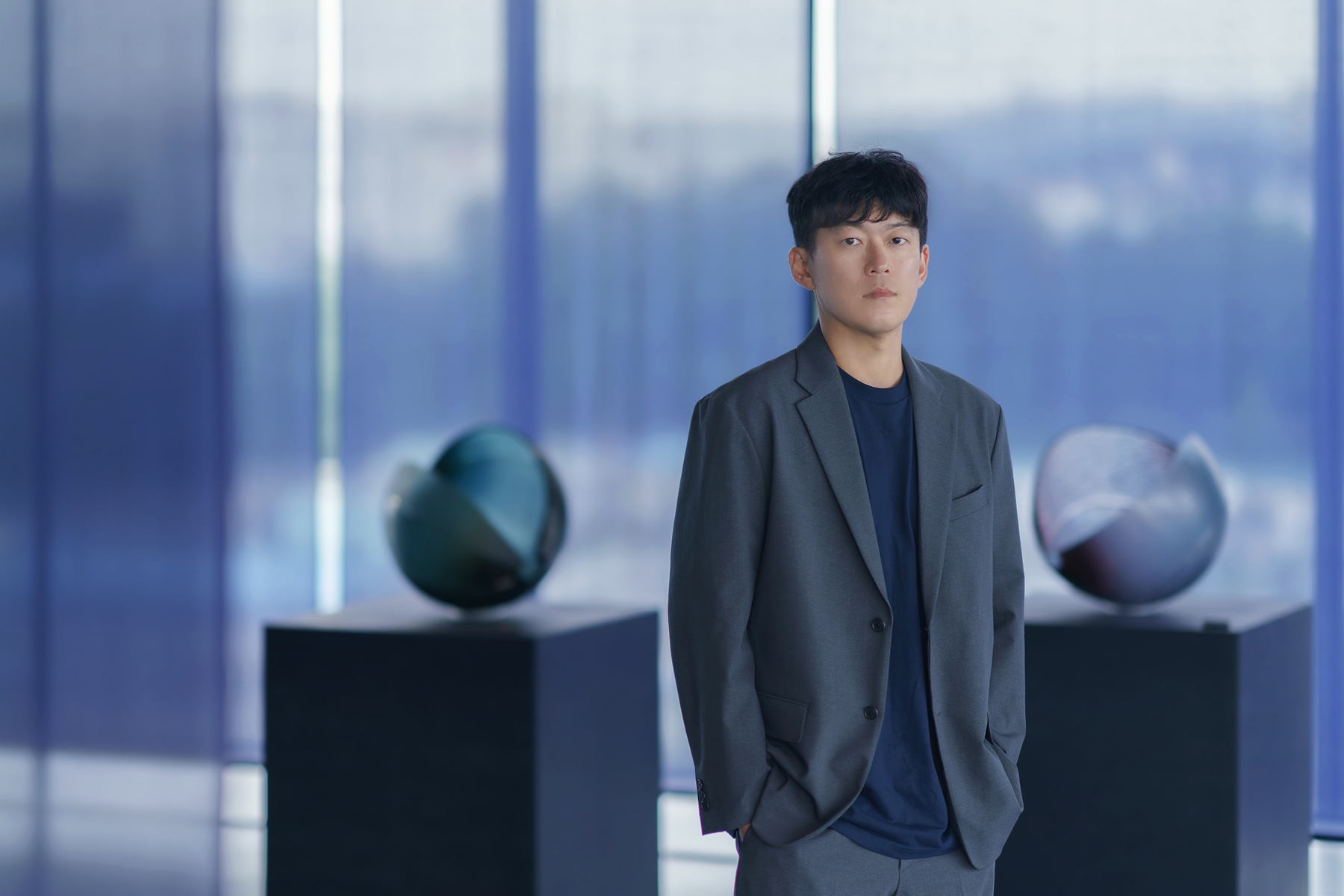
Seonghoon Park is a master of glassblowing techniques where he blows air into molten transparent glass at temperatures reaching 1,200 degrees Celsius, to create desired shapes. Exhibiting his signature works, the “VOID” and “SEED” series, alongside the Neolun Concept, he discusses the allure of glass art, which requires advanced technical skills, and the continuous pursuit of the essence of each work.
I understand that the processes of blowing and polishing are two halves of your technique of artistic expression. It seems that completing a piece involves endless repetition and training. How much time does it take to create a work?
To put it simply, blowing is the process of creating the canvas that serves as the foundation for the artwork, while polishing is the act of painting on that canvas. Polishing actually takes up a much larger portion of the process than blowing. After focusing on blowing for two weeks, I dedicate the remaining nine to 10 months solely to polishing. Assuming I work an average of 12 hours a day on the largest pieces, it takes about 12 days just for polishing. This lengthy process to make each piece is part of the journey toward finding its essence, contributing to the joy I feel upon completing a work.
I'm curious about the details of the work and the philosophy behind your production process.
The forms of my works always focus on the sphere. When beginners learn glass art they typically start with shapes that are easier to understand, like cups or plates. However, the origin of all these forms begins with the sphere. I believe that the sphere is the most fundamentally pure shape, containing all possibilities, and I adhere to this form to embody the foundational essence of glass itself.
I’m curious about the meanings behind your works, the “SEED” and “VOID” series, featured in this exhibition. Additionally, how do these two pieces connect with the Neolun concept?
The “VOID” series explores the pure form and aesthetics of glass, seeking essence through the process of eliminating unnecessary elements. In contrast, the “SEED” series symbolizes new beginnings and constantly evolving vitality by opening the entrance of the spherical form. Each piece embodies the philosophies of “seeking essence through reduction” and “future-oriented movement,” which I believe are connected to the Neolun Concept. In particular, they demonstrate a dynamic vitality focused on essential values while striving for innovation that moves toward the future. This resonates with my journey of exploring the essence of the sphere through glass art since 2006, where I have consistently concentrated on glassblowing and on the essence of my work.
As this is your first time collaborating with Genesis, what has been your most memorable moment so far? And is there a particular aspect of Genesis’ philosophy that resonates with you.
Before preparing for the exhibition, I participated in a docent tour at Genesis Cheongju, and I found it fascinating that there is a unique inspiration and story for each Genesis vehicle color. While glass art allows for nearly infinite color combinations, I had previously viewed colors merely as pigments that could be used freely. Based on what I’ve learned about Genesis’ color stories, I plan to explore the narratives of color in my own work.
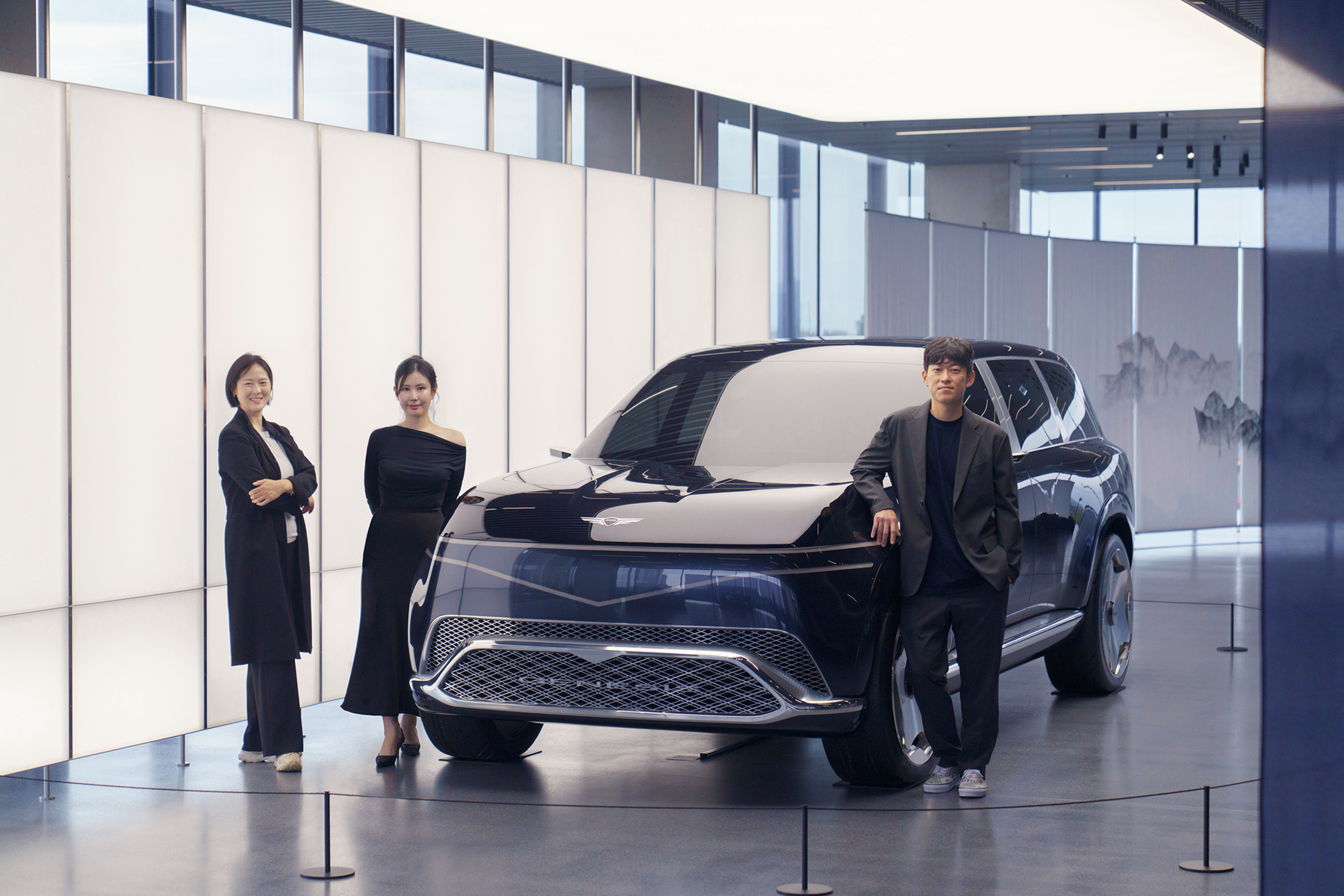
Genesis continues to show its commitment to the community not only through the craft exhibition held at Genesis Cheongju but also through various other collaborations with local artists. At the same time, it is accelerating its efforts to spread artistic value globally through programs like Genesis Art Initiatives that drive extensive cultural support activities on international stages, such as Tate Modern, and the Metropolitan Museum of Art. Soyun Jung stated, “I believe that collaborating with the Biennale, which symbolizes Cheongju, is Genesis’ contribution to regional revitalization,” while Hojung Kim expressed support by saying, “Genesis’ contributions to art through its sponsorship of Tate Modern and the Metropolitan Museum of Art are very positive, providing opportunities that inspire hope for artists.”
The artists encourage visitors attending the exhibition “Night in Motion,” which runs until Nov. 2, to fully experience the harmonious aesthetics created by their works and the Neolun Concept. Soyun Jung expressed, “I hope many people come and feel the synergy created by Neolun and my artwork firsthand,” while Seonghoon Park stated, “I hope visitors enjoy the visual harmony between Neolun and my glass art, and appreciate the messages of my works in an engaging way.” Lastly, Hojung Kim added, “I hope this is an opportunity to understand Neolun’s story more deeply via the connection between the artworks and the vehicle.”