

2025 IIHS TOP SAFETY PICK-AWARDED GENESIS CARS OFFER BOTH LUXURY AND PEACE OF MIND
Note: This content has been revised to include the 2026 G80 (built after June 2025) in the list of TSP+ awardees following the IIHS rating update announced on Dec. 23, 2025.
SEOUL, Nov. 19, 2025 — True luxury isn’t just about sophisticated design and cutting-edge technology; it’s about safety. More than a luxury vehicle, Genesis is a sanctuary where advanced safety features and exceptional craftsmanship come together to create an elevated driving experience.
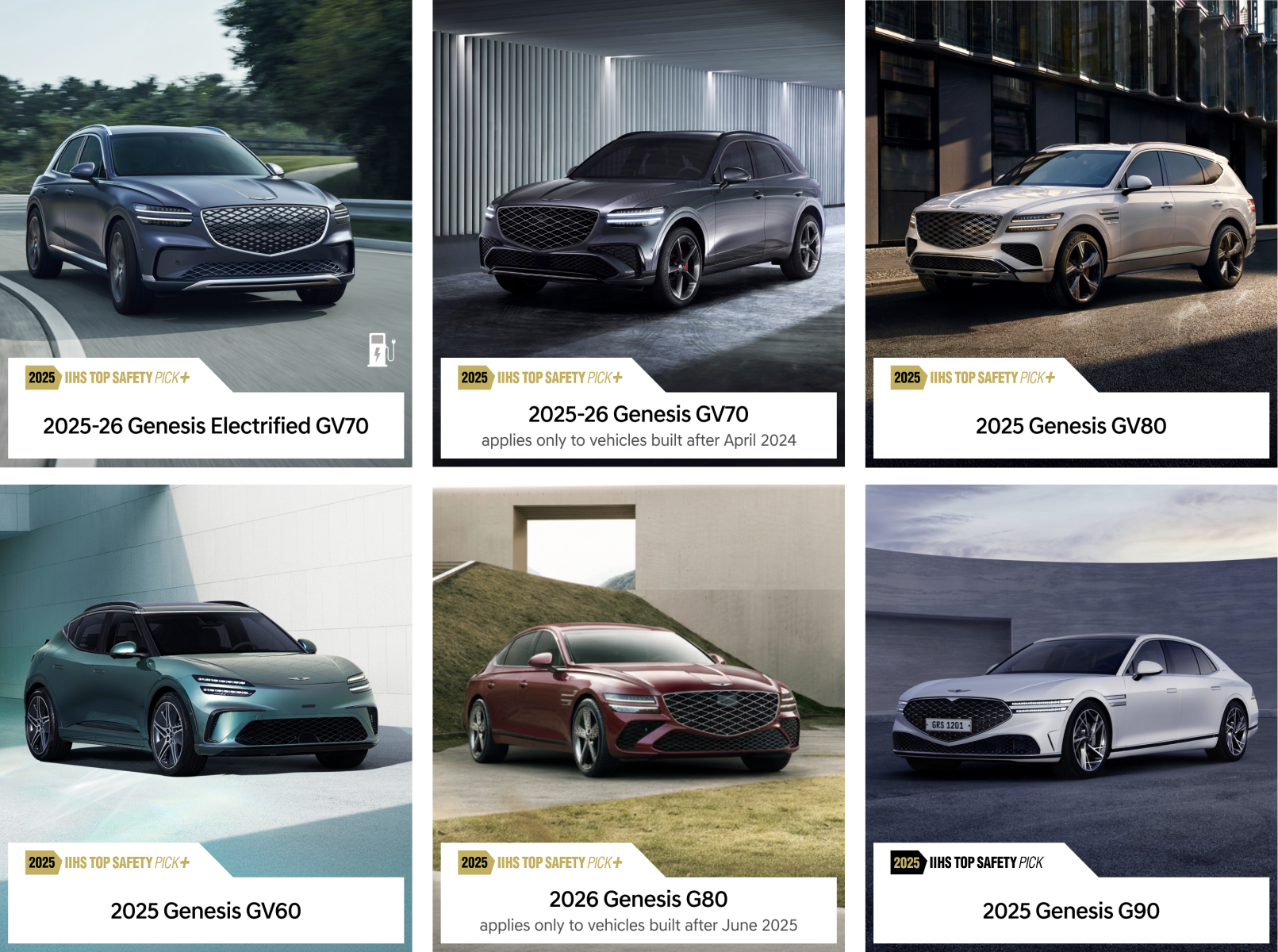
Several of the marque’s models have been independently recognized for their safety features, passing the most strenuous safety testing with flying colors. Most recently, six Genesis models were recognized for their excellent safety performance by the Insurance Institute for Highway Safety (IIHS).
Independently Recognized
The IIHS awarded the 2025 GV60, 2025-26 GV70 (built after April 2024), 2025-26 Electrified GV70, 2026 G80 (built after June 2025) and 2025 GV80 models the 2025 TOP SAFETY PICK+ (TSP+) rating. IIHS also awarded the 2025 Genesis G90 the 2025 TOP SAFETY PICK (TSP) rating. IIHS awards only apply to U.S. models.
But what is the IIHS and what do these ratings mean? The IIHS is an independent, nonprofit scientific and educational organization dedicated to reducing deaths, injuries and property damage from motor vehicle crashes through research and evaluation and through education of consumers, policymakers and safety professionals.
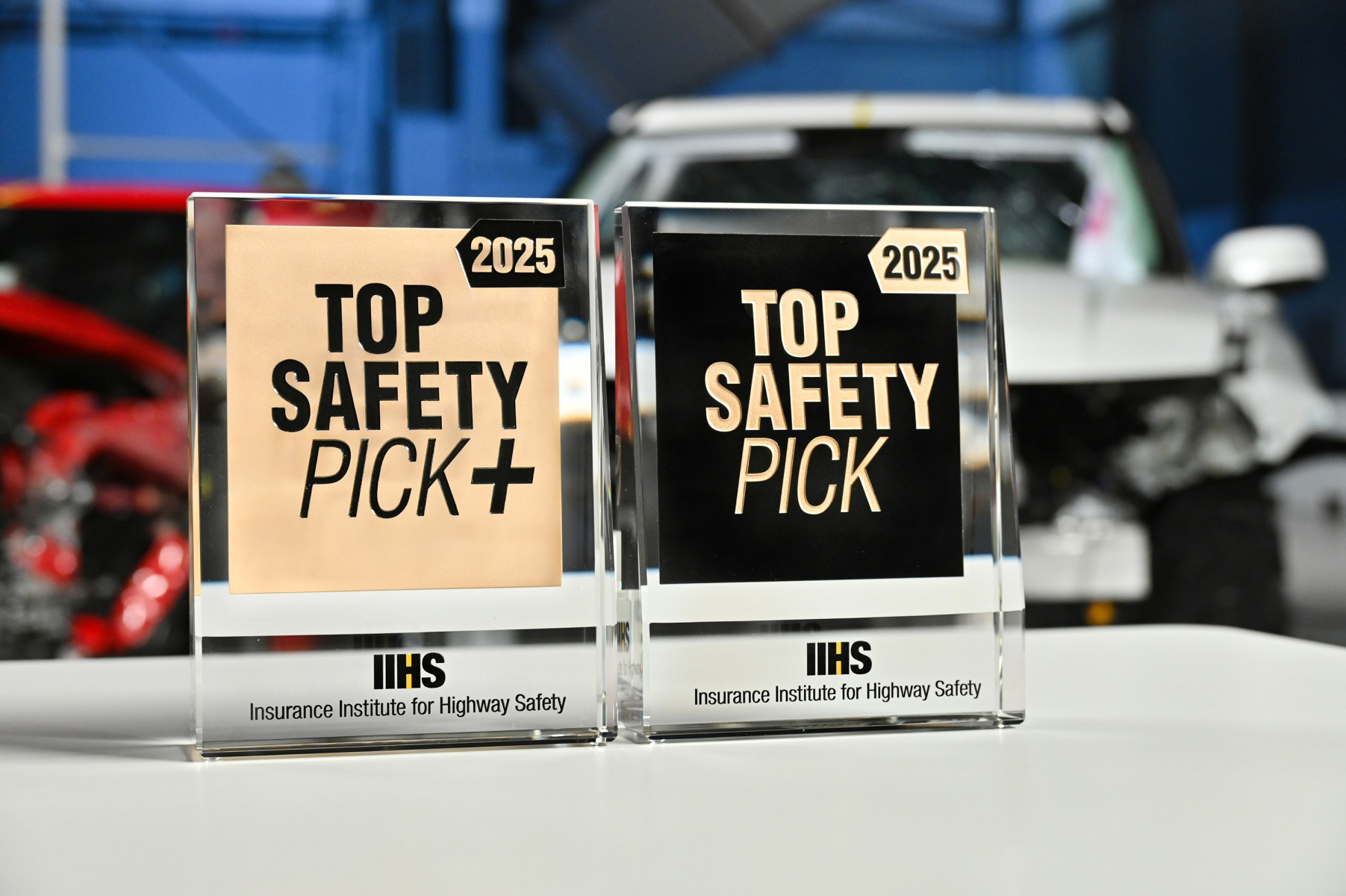
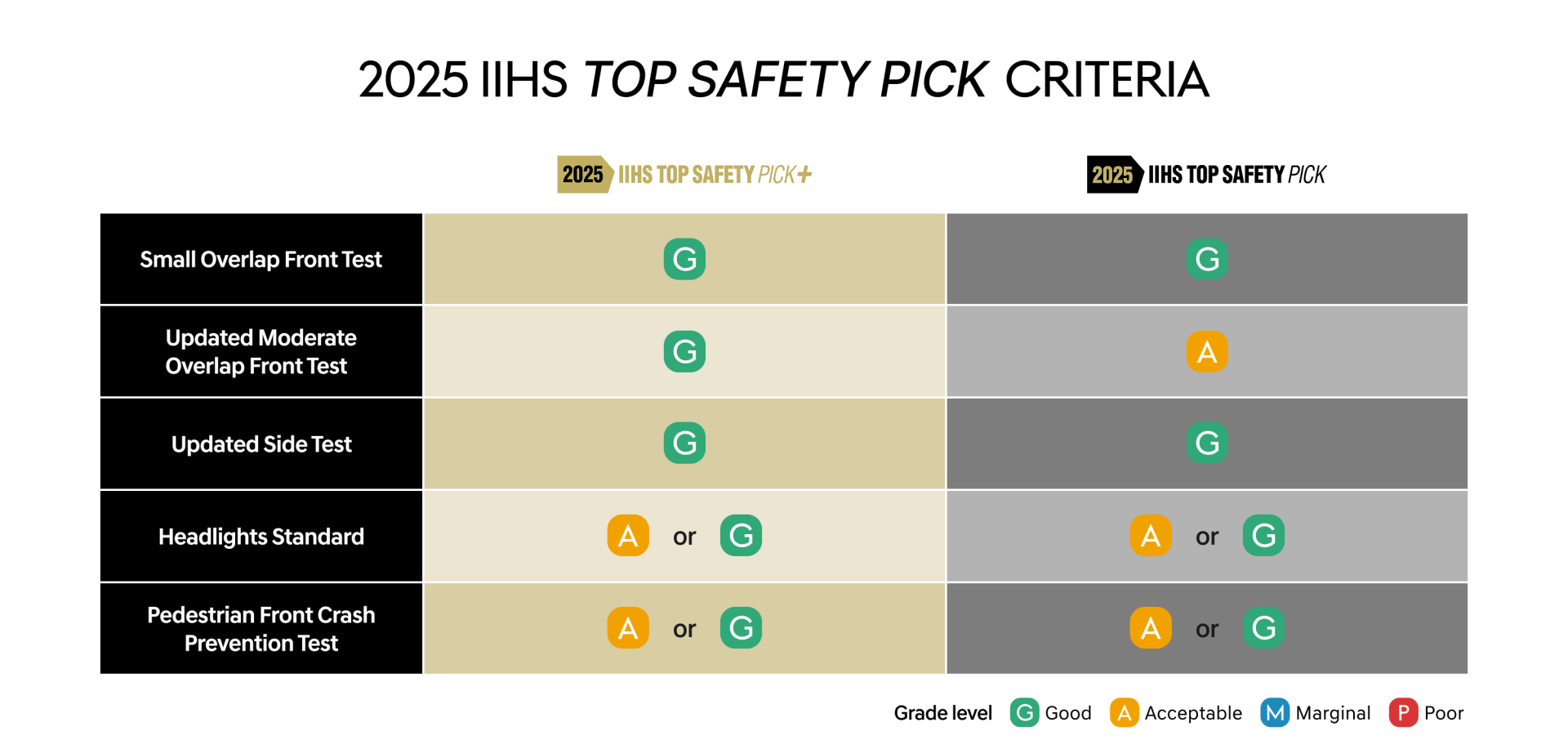
Based on a vehicle’s performance in crashworthiness tests (small overlap front, moderate overlap front: updated test, and side: updated test) as well as crash avoidance and mitigation tests (headlights and front crash prevention: pedestrian), the IIHS assigns a rating for each test.
To qualify for 2025 IIHS TOP SAFETY PICK, a vehicle must earn good ratings in the small overlap front and updated side tests and an acceptable rating in the updated moderate overlap front test. It also must earn an acceptable or good rating for pedestrian front crash prevention and come with standard acceptable- or good-rated headlights.
To qualify for 2025 IIHS TOP SAFETY PICK+, a vehicle must earn good ratings in the small overlap front, updated moderate overlap front and updated side tests. It also must earn an acceptable or good rating for pedestrian front crash prevention and come with standard acceptable- or good-rated headlights.
Earning the 2025 IIHS TSP and TSP+ awards positively promotes Genesis’ reputation as a manufacturer of safe vehicles in the U.S. market. This is because American consumers trust the IIHS’s scientific and systematic safety evaluation methods.
Raising Safety Standards
Earning these ratings is becoming increasingly challenging, as the IIHS’s evaluation standards have become more stringent over the past few years. In 2023, IIHS increased the weight and speed it uses in the side impact test. The same year, a nighttime vehicle-to-pedestrian front crash prevention evaluation was added. In 2025, IIHS updated the criteria to earn the 2025 IIHS TOP SAFETY PICK awards, including the requirement of better protection for second-row occupants.
Genesis welcomed the new, tougher criteria and stepped up to the plate. A total of six Genesis models earned the coveted 2025 IIHS TSP and TSP+ ratings under the more stringent IIHS regulations in 2025 — the 2025 GV60, 2025-26 GV70 (built after April 2024), 2025-26 Electrified GV70, 2026 G80 (built after June 2025), 2025 GV80, and 2025 Genesis G90. IIHS awards only apply to U.S. models.
However, over in Europe, Genesis has also won top honors from the European New Car Assessment Programme (NCAP). The Genesis G70, GV70, G80 and GV80 won “5-star” NCAP ratings in 2021, and the Genesis GV60 received a 5-star rating from NCAP in 2022.
Beyond Just Crash Testing
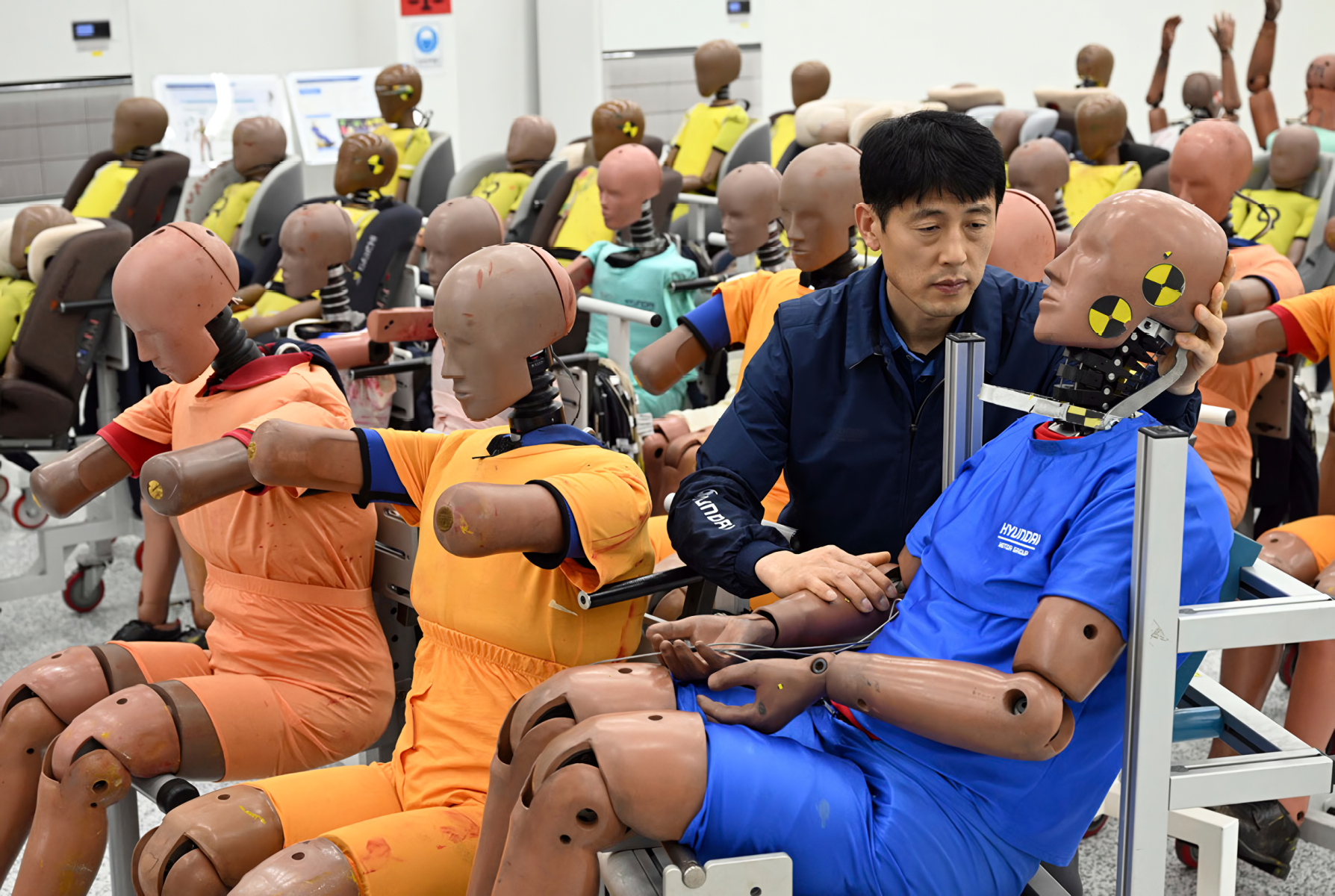
Genesis vehicles do well in independent safety evaluations because they are a part of a rigorous and comprehensive Group-level culture of safety technology development and testing. Before Hyundai Motor Group even releases a new model or submits it for outside testing, it tests it in-house at its R&D Center in Namyang, a 40,000-square-meter facility specifically designed and built in 2005 for thorough safety testing.
Within the Center, the Group spends about 4,000 hours and $7 million to run approximately 100 crash tests involving 27 different types of crash test dummies to make sure each new car model has the highest possible level of crash safety. The crash tests are only a small part of the safety testing process; most of the time is taken up in analyzing the crash results to extract meaningful insights. This data, combined with real-world accident reports from national highway and safety organizations worldwide, is used to develop and refine safety features, including innovations like the world’s first composite crash airbag developed by the automaker in 2019.
The result of all this testing is a comprehensive suite of preventative technologies that work together to reduce the likelihood of accidents. Here are some of the most notable safety technologies that can be found in Genesis vehicles:
Forward Collision-Avoidance Assist (FCA): Uses a combination of radar and front-facing cameras to scan the road ahead for vehicles, pedestrians, cyclists and even oncoming traffic at intersections. If a potential collision is detected, the system issues visual and audible warnings to alert the driver. If the driver does not react to the warning sounds, FCA can apply partial or full braking to either mitigate or entirely avoid impact.
Blind-Spot Collision-Avoidance Assist (BCA): Uses radar sensors on the rear corners to monitor adjacent lanes for approaching traffic. If a vehicle is detected, a warning light appears in the side mirror and an alert sounds inside the cabin. If the driver ignores the warning and attempts a lane change anyway, the system can gently steer the vehicle back into its lane or, in some situations, apply selective braking to prevent a collision.
Advanced Airbags: Vehicles made by Genesis include 8-10 different airbags to protect passengers in a variety of potential collisions. Front airbags exist for both the driver and front passenger. Also included on the driver’s side is a driver’s knee airbag to prevent leg injuries in a head-on collision. Side airbags inflate between the driver and the door, and between the passenger and the door, to prevent injuries from side impact collisions. Between the driver and front passenger is also a center side airbag that pops in between the two seats, reducing the chance of first-row occupants hitting each other’s heads or other objects in the event of a side collision. Only 10 car models in the U.S. have this type of safety measure installed. There are also two rollover curtain airbags that deploy from both sides of the roof rails above the front and rear doors that further protect the heads of occupants in the car in the event of side impact collisions. They also deploy if a rollover is detected in models that have rollover sensors.
Note: Availability of models and configurations may vary by market.