

BRAND IN LINE WITH ART – GENESIS MEETS ARTIST SUNGHO CHO
CHEONGJU, Korea, July 15, 2025 — Genesis Cheongju aims to be more than just an automobile showroom. Beyond exhibiting vehicles and introducing the brand, it strives to establish itself as a cultural complex where the brand and the community can connect and thrive through close collaboration with local artists. As its first collaboration, it held a special exhibition featuring Sungho Cho, a metalwork artist based in Cheongju and a professor at the Craft and Design Department of Cheongju University.
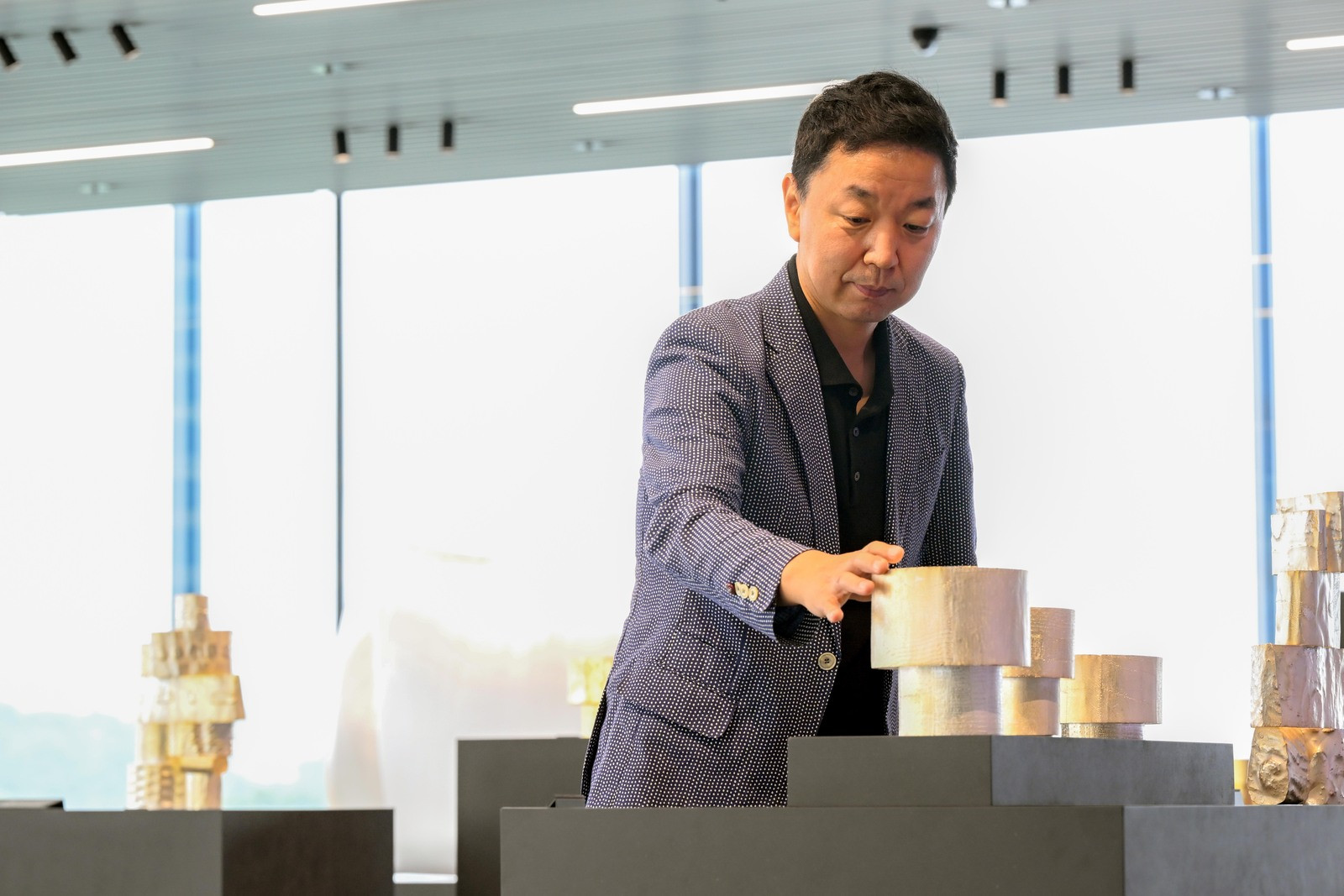
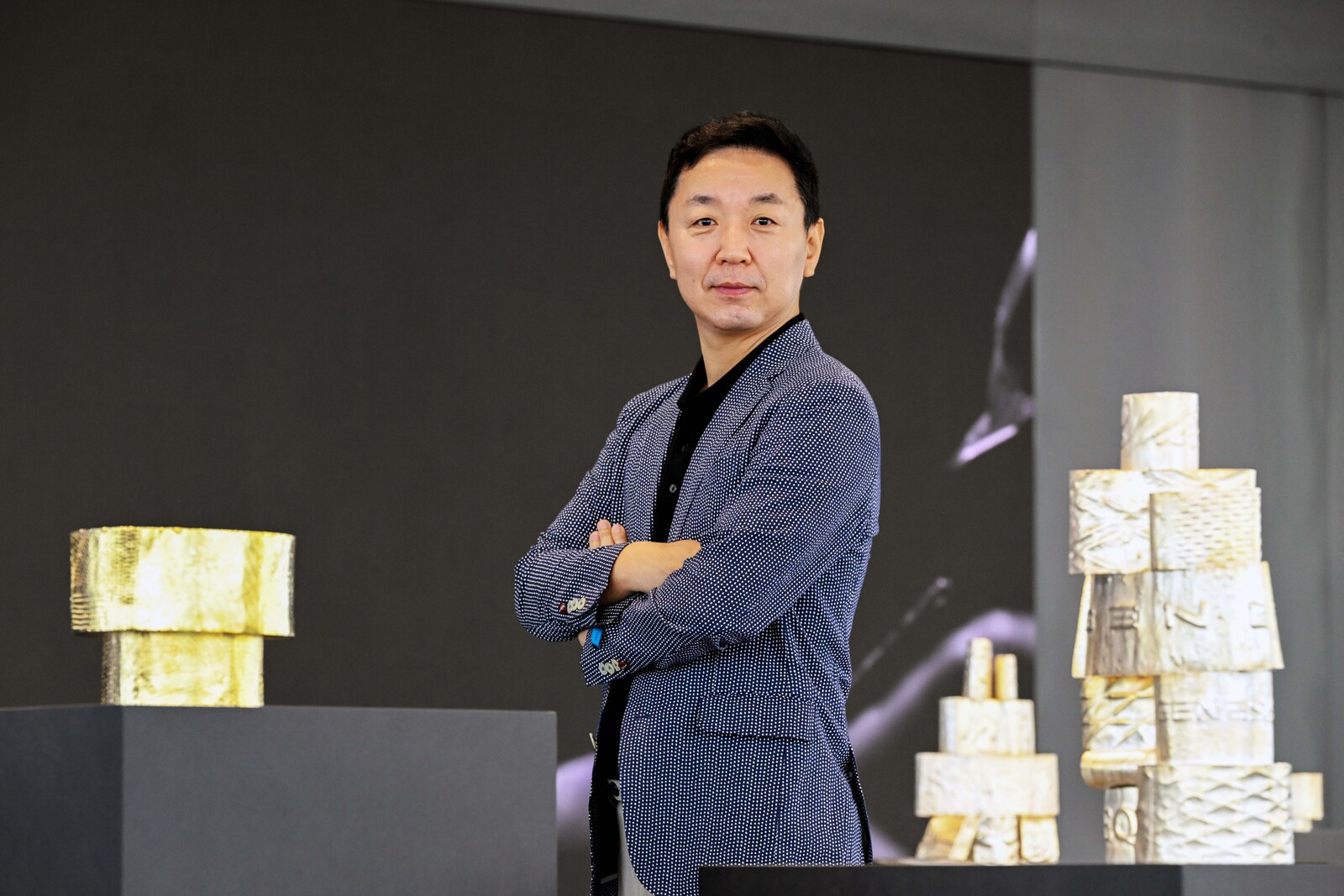
Cho is a metalwork artist recognized for his works that feature unique and complex patterns on metal. He primarily engages in creating art by embossing metal with the surfaces of surrounding structures or historical sites to visually depict the memories and emotions tied to specific places. Cho’s worldview of discovering and expressing unique sculptural beauty in objects that might otherwise pass unnoticed is closely aligned with Genesis’ meticulous approach to design, paying attention to not only visible elegance but also hidden details.
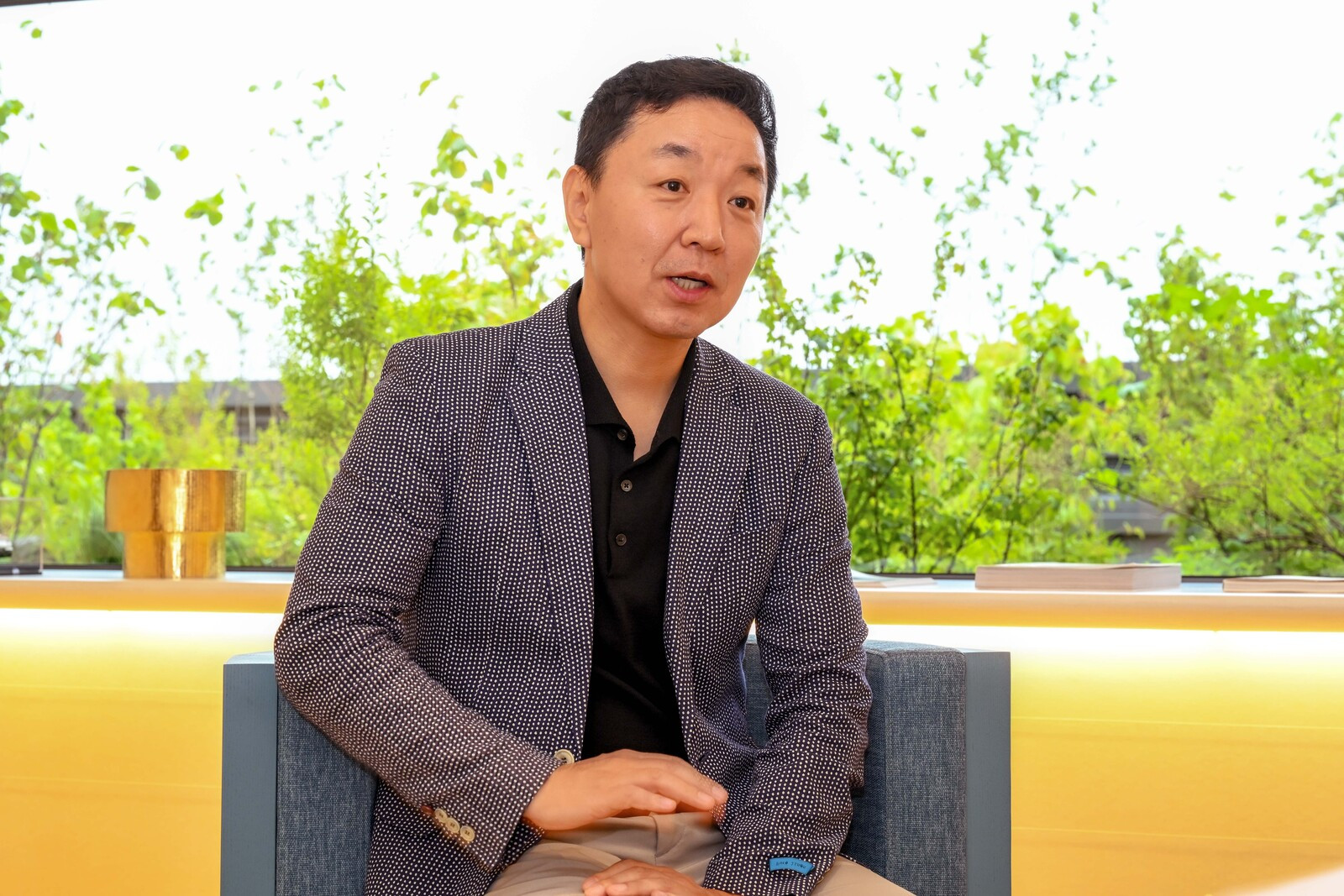
This is said to be your first collaborative exhibition with a commercial brand. What motivated or inspired your decision to work with Genesis?
The initial proposal came from the Cheongju Cultural Industry Promotion Foundation saying that Genesis will open a new showroom in Cheongju and aim to foster it into a complex cultural space where various cultural and social interactions happen. I was impressed and moved by the detailed, concrete proposal from a commercial brand. The main reason why Genesis reached out to me was probably because of my previous work that mainly involves metal, which is a commonality with automobiles. From my standpoint, I could feel that Genesis is sincerely determined to build a special space for local arts and culture. I am also proud and happy that I could show my students, who are contemplating careers in the arts, that there are many possibilities and opportunities they can take as artists.
The exhibited works, such as “Traces of Time” and “Layers of Time,” both center on the theme of time. What does time signify in your work?
Time flows continuously, whether we are aware of it or not. And within that passage of time lies a multitude of narratives. We record and utilize time by writing diaries, painting or creating movies. I chose to encapsulate time using metal. I especially felt that while recording time is important, there also needs to be a medium that allows us to reflect on the story within that time. Through such processes, even the moments we take for granted or thoughtlessly pass by can be meaningfully revisited. This is why I began collecting impressions of various objects and traces in my surroundings and recording them in metal objects.
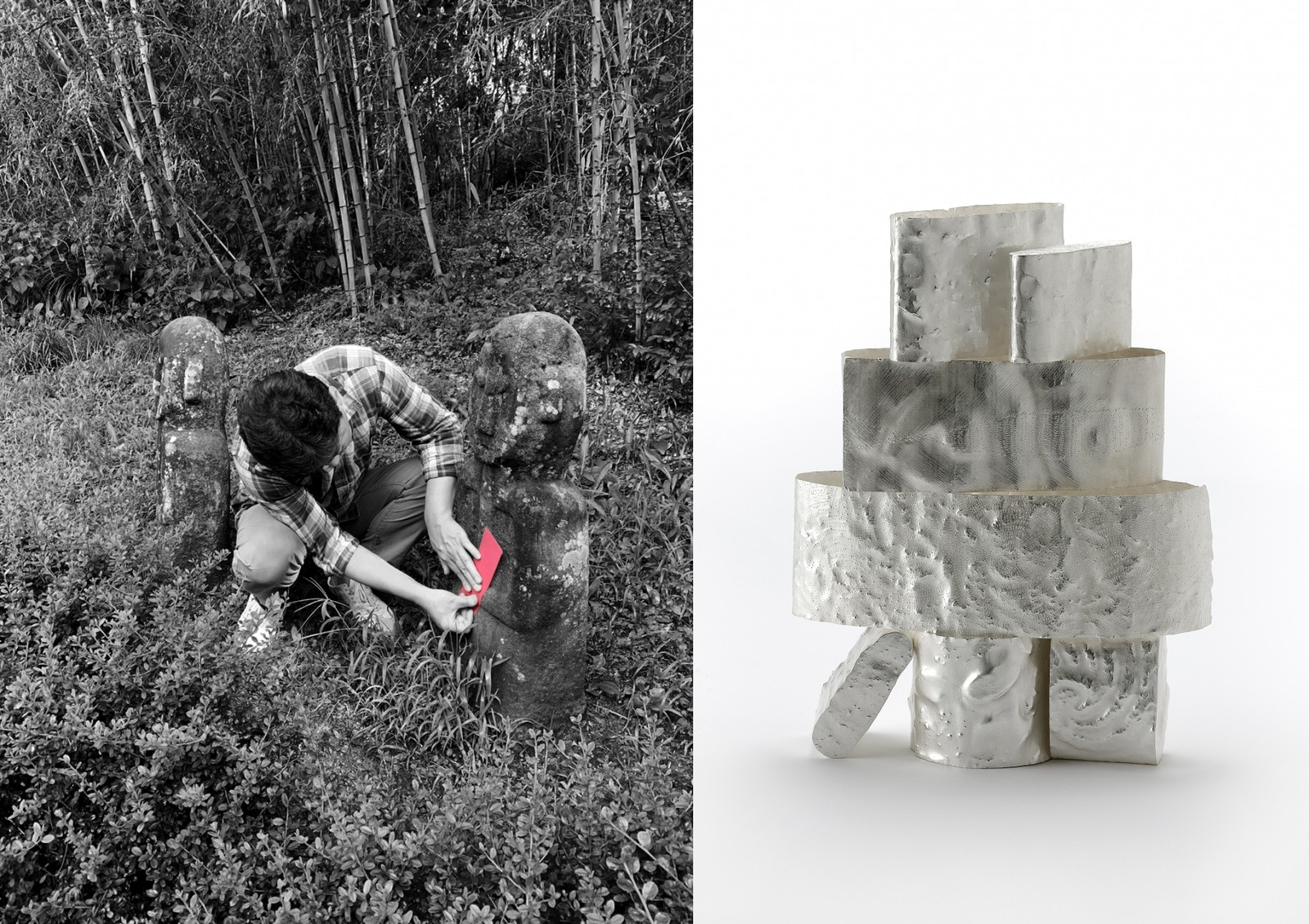
What led you to use metal as your main material, and what do you find attractive about it?
In my early days, I made contemporary jewelry by combining and adding various materials to metal. Later, I began creating works that focus on the inherent physical properties of metal. Among metals, I prefer to use silver. While silver is luxurious, it is more prone to tarnishing compared to gold, requiring care and attention to maintain its natural sheen. It’s a labor-intensive material, but I love it because it’s also a charming material that shows its true beauty the more delicately you work with it. This is somewhat parallel to why car enthusiasts prefer to handwash their cars — the appreciation and delicate care they willingly pour into their precious cars.
What else do you value in your work besides the material?
I enjoy not just appreciating the superficial appearance of a work or object but uncovering something new behind the intentions of the artist or engineer. For example, if it’s a piece that shows the cross-section of a product, I believe the true value lies in going beyond what is visible to discover detailed aspects like, “Ah, this is how the finish is done,” or “The groove is carved to this depth,” and observing every intricate detail. These details are also present in the Genesis-themed pieces. Each piece is inscribed with details of when and where the embossed impressions were taken and which part of the Genesis model was used to create the piece, allowing viewers to envision the story behind the external appearance. For example, there is a piece that combines an impression collected in Gyeongju — a city with rich historical legacy dating back to the Shilla Dynasty — with the story of Genesis. Different times and spaces coexist within a single piece, offering the joy of imagining a new narrative. It’s a work I feel particularly attached to.
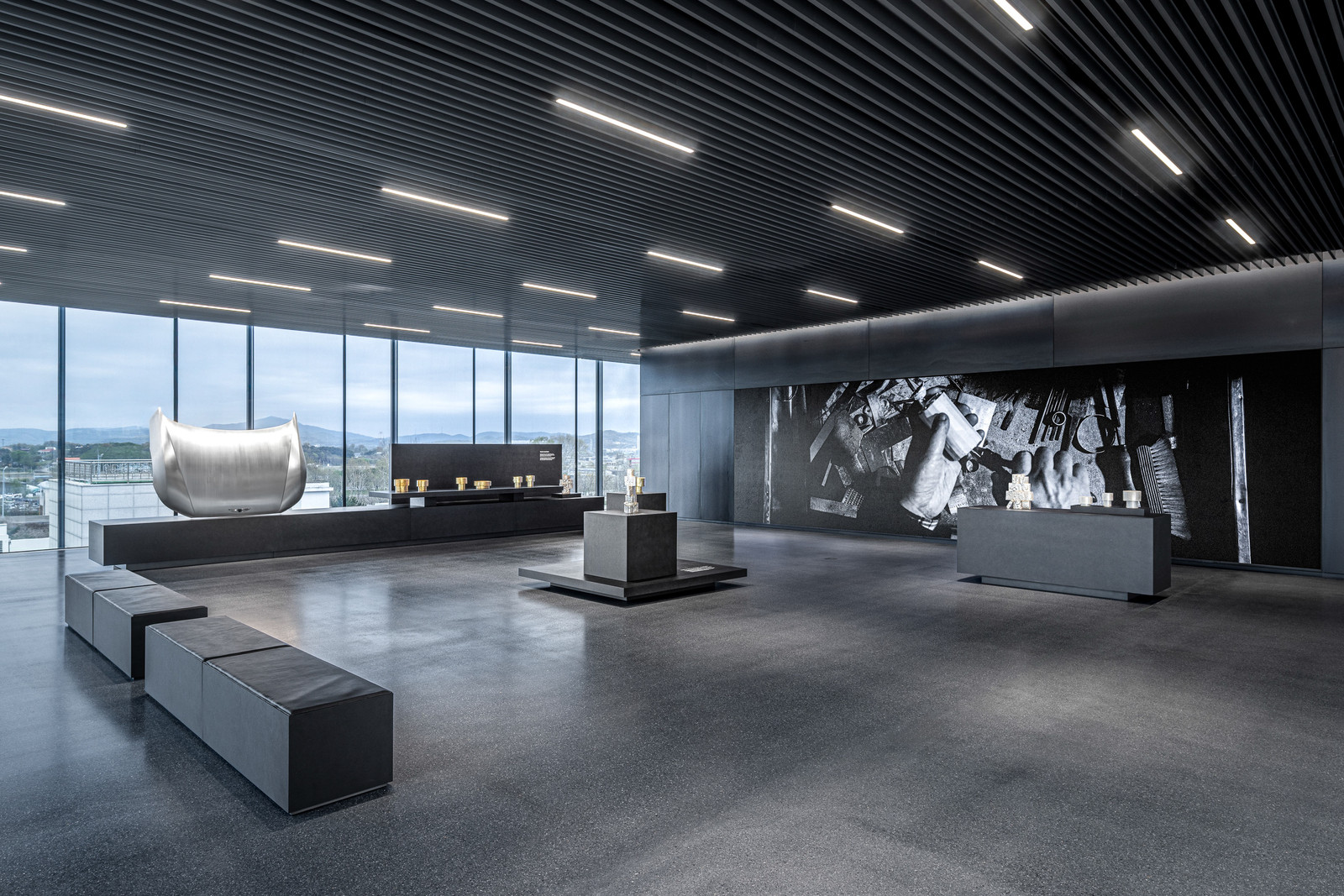
The engine hood displayed alongside the artwork is impressive. Is there a specific reason for including it in the exhibit?
This is one of the things that really impressed me about the Genesis brand. The clamshell hood, which I became aware of while collaborating with Genesis, is, in my view, a symbolic component that showcases the brand’s recognition and realization of the value of craftsmanship. It’s not just about production efficiency but also embodies the brand’s pursuit of innovation and unique design, making it feel like a piece of art in itself. The moment I saw it, I suggested displaying it alongside the other works. Many visitors to the exhibit take photos in front of it, carefully observing details such as what the underside of the hood looks like or how it appears from the side. I think this fits very well with the worldview of my work.
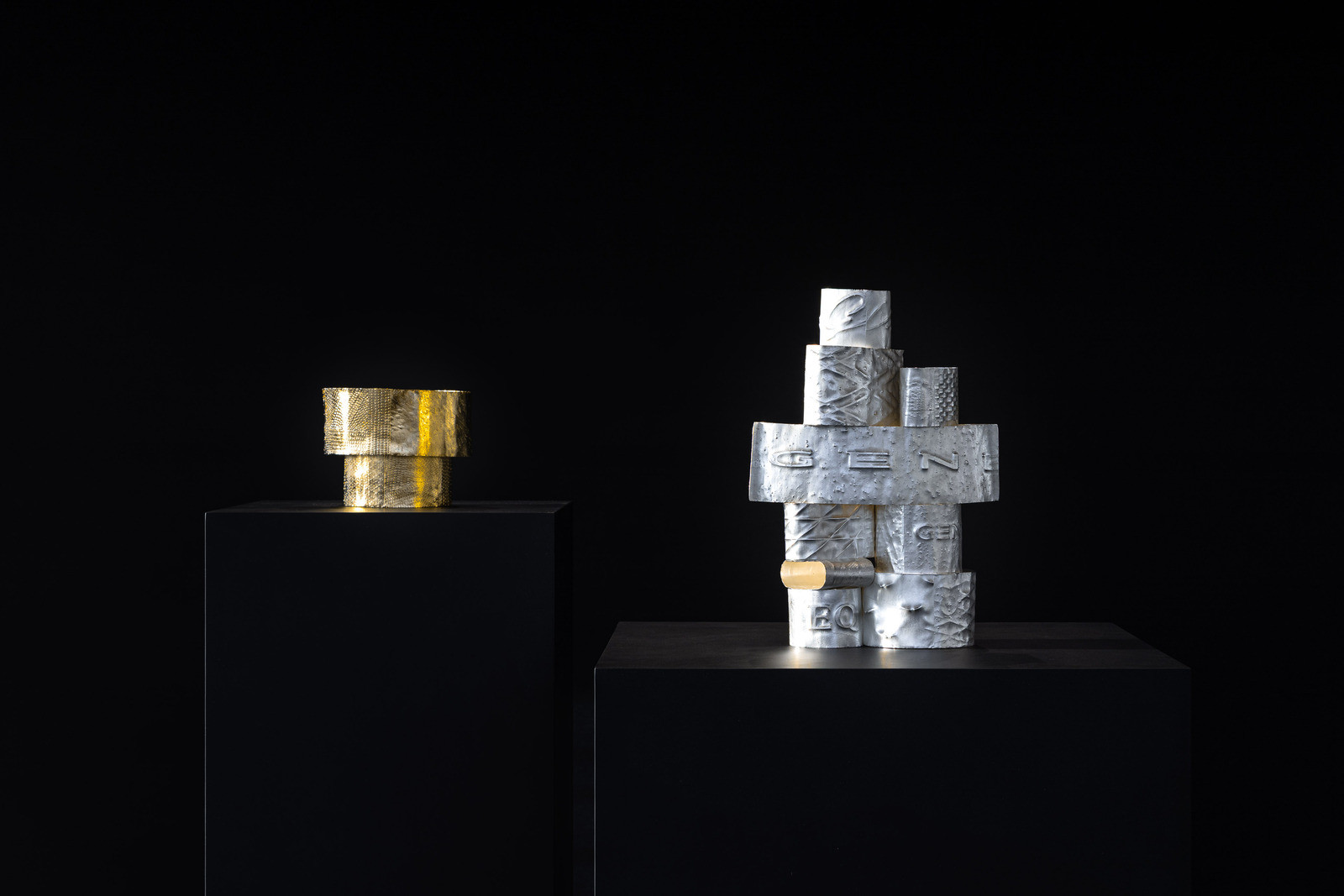
Did you experience any difficulties while working on your Genesis-inspired art pieces?
Working during the dead of winter was quite challenging, because the wax step of the embossing process, which forms the foundation of my work, is highly temperature sensitive. I had to use heaters to keep going. Moreover, the sleek design of Genesis vehicles made it difficult for me to find the right curves, rough surfaces or unique textures suitable for embossing. Despite these constraints, Genesis was kind enough to allow me to visit their archives, which enabled me to utilize a rich range of materials from past models like the Equus and various concept cars. Thanks to their support, I was able to create pieces that captured the journey of Genesis with an abundance of compelling elements.
What were your reflections while preparing and conducting the exhibition?
First, the exhibition changed my perception of Genesis from just a luxury car manufacturer. I was impressed by the fact that they have a clear philosophy based on craftsmanship and a spirit of constant challenge that goes beyond just making and selling products. I was also proud and inspired as an artist who emphasizes experiences, as we strive to provide an experience that takes into account the five senses of the customer, including smell, touch and taste.
I also spend considerable amounts of time contemplating the five senses when conceptualizing my works. In today’s world, where we live surrounded by abundant visual content, it’s easy to become overly immersed in visual elements. However, upon reflection, all our memories and experiences are composed not just of visual elements but also of sound, scent, taste, temperature and more. Depending on how we understand and empathize with these sensory elements, certain memories become clearer and certain experiences more precious.
For instance, the Genesis works I exhibited may be interpreted differently by those who have experienced driving a Genesis car versus those who haven’t. Details like how the seat felt, the legroom, the steering wheel’s tactile feedback, or the sound from the speakers all blend together to form memories. Visitors then view the works through the lens of their own experiences. For this reason, I believe my works from this exhibition will be uniquely reinterpreted by each visitor’s memories, leaving behind new and vibrant impressions beyond what I originally intended.
How has this collaboration influenced your artistic practices?
Collaborating with the brand was a great experience that broadened my scope of work, as I was able to create works with a clear purpose and target audience. I also learned a lot from the process of adjusting to the brand’s wishes without deviating from the existing direction of the work. Fortunately, Genesis was very receptive to many of my proposals and gave positive feedback on the outcomes. This allowed me to relax and approach the collaboration comfortably and enjoyably throughout the process. I also think this collaboration will be a good motivator for my students. I hope that this exhibition has shown them the diversity of career paths that they can pursue after graduation — whether as artists or designers — and that it will inspire them to pursue activities that combine art and industry.
Could you summarize your overall thoughts about collaborating with Genesis?
As an artist, I welcome the direction that Genesis is taking to develop Genesis Cheongju into a multicultural space where people can experience art beyond the car showroom and collaborate with artists. Many people feel a sense of psychological distance or burden when it comes to art, thinking of it as something difficult to approach. However, art is not just for the highly educated or sophisticated people with deep expertise. It is something that can be experienced closely and comfortably in everyday life, and it is a realm where people can actively participate. That said, I think this collaboration was a very meaningful and appreciative journey, and I hope that Genesis can widely propose this perspective to the public. Furthermore, because residents in areas with limited access to culture and arts, as compared to those living in metropolitan areas, I would be more than happy to see this space become a place where more diverse and vibrant cultural activities flourish.